










































































The Summer the Debate Shifted: Heat, Money and the Cost of Waiting
Western Europe has experienced its hottest June on record. A rapid attribution study concluded that comparable temperatures would have been virtually impossible in the climate of fifty years ago. The scientific foundations of human-caused warming are firmly established; the more difficult argument now concerns money, timing, responsibility and the management of risk.
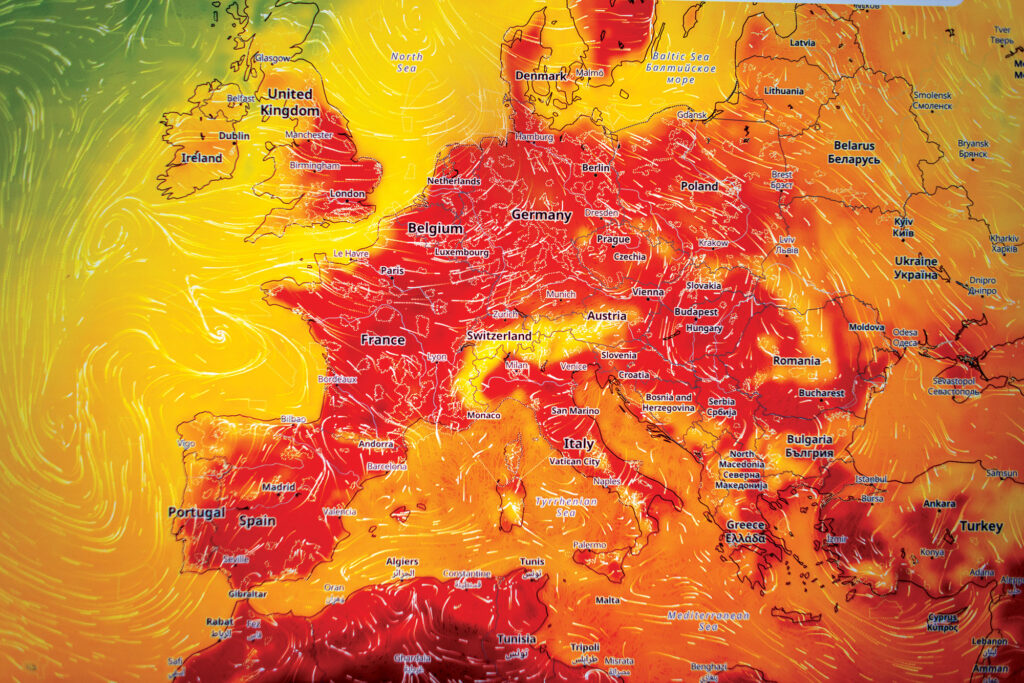
At Pissos, in the pine forests south of Bordeaux, the temperature reached 44.3°C on 23 June. Météo-France subsequently confirmed June 2026 as the hottest June recorded nationally, with unusually high temperatures continuing through much of the summer.
In Britain, Lingwood in Norfolk reached 38.0°C, setting a new UK record for June. England recorded its warmest June by mean temperature, while the UK as a whole experienced its second warmest in a series extending back to 1884.
Across continental Europe, authorities opened cooling centres, adjusted working arrangements and placed health services on emergency footing. Berlin police used water cannon to create cooling mist in public spaces. Paris temporarily restricted public alcohol consumption and takeaway sales to reduce pressure on emergency services.
The immediate mortality figures were still provisional. By 30 June, the World Health Organization’s European office reported that Spain’s monitoring system had estimated more than 300 heat-associated excess deaths over several days, while Italy reported five deaths in one 24-hour period. Such early estimates should not be confused with the more comprehensive mortality assessments produced after a heatwave has ended.
Copernicus later confirmed that June 2026 was the hottest June recorded for western Europe, the second hottest for Europe as a whole and the second hottest globally. The event therefore demands attention without requiring exaggerated claims about its geographical or historical status.
Is There Any Real Scientific Argument Left?
A single heatwave, however severe, does not establish a long-term climatic trend on its own. Weather is variable, and caution is appropriate when assigning the exact influence of climate change to an individual event.
Attribution science does not claim that climate change creates every weather system. It examines whether human-induced warming has altered the probability or intensity of the conditions associated with an event.
A rapid analysis by World Weather Attribution compared the June 2026 heatwave with similar atmospheric circulation patterns in earlier climates. It concluded that a comparable event would have been approximately 3.5°C cooler during the day and 2.4°C cooler at night in 1976.
The analysis found that the underlying circulation pattern was not unprecedented. What had changed was the temperature produced by that pattern against a warmer climatic baseline. The researchers estimated that comparable June temperatures would have been virtually impossible fifty years earlier.
The study also examined Wet Bulb Globe Temperature, a measure combining heat and humidity. It found that 45 percent of the European cities analysed exceeded indoor heat-stress thresholds during the event. The estimate was designed principally for sheltered or shaded conditions and should not be interpreted as a uniform outdoor temperature record.
The distinction matters. The scientific conclusion is not that every aspect of the heatwave was caused by greenhouse-gas emissions. It is that human-induced warming substantially increased the severity and probability of the temperatures experienced.
Against the central propositions—that the planet is warming, that human greenhouse-gas emissions are the principal cause and that further warming creates material risks—there is little dispute within mainstream climate science.
The legitimate arguments now concern the likely scale and timing of particular effects, the appropriate balance between mitigation and adaptation, the distribution of costs and the design of policies capable of reducing risk without causing avoidable economic or social damage.
The Climate Already in the System
Europe is the world’s fastest-warming continent. Copernicus estimates that it has warmed by approximately 2.5°C relative to pre-industrial conditions and at more than twice the global average rate.
The comparison is affected by geography, land warming, changes in atmospheric circulation, reduced air pollution and declining snow and ice cover. It does not mean that every part of Europe is warming at the same rate.
France’s experience illustrates the direction of travel. Météo-France identified 54 national heatwaves between 1947 and the end of summer 2026. Seventeen occurred before 2000 and 37 during the first 26 years of this century.
At the global level, the World Meteorological Organization estimated that the average surface temperature in 2025 was approximately 1.43°C above the 1850–1900 baseline. That was a single-year measurement rather than evidence that the Paris Agreement’s 1.5°C long-term threshold had formally been crossed.
The distinction between an individual year and sustained long-term warming is important. Even so, the remaining margin has narrowed. The United Nations Environment Programme estimates that policies currently in force would result in approximately 2.8°C of warming over this century. Full implementation of existing national commitments would produce a lower estimate of around 2.3°C to 2.5°C.
These figures are projections rather than predictions. They depend on future policies, technology, economic growth, energy use and the response of the climate system. Their practical implication is a change in probabilities rather than a single predetermined endpoint.
Events once regarded as exceptional become more frequent. New extremes move beyond the conditions for which buildings, transport systems, water networks and emergency plans were designed.
At higher levels of warming, more regions are expected to experience dangerous combinations of heat and humidity. Agriculture faces greater exposure to drought, heat and simultaneous disruption across food-producing areas. Coastal settlements confront rising protection and adaptation costs.
Some of the most consequential uncertainties involve ice sheets, ecosystems and ocean circulation. The timing and scale of these changes remain uncertain. That uncertainty does not prove that the most severe outcomes will occur, but neither does it justify treating them as negligible.
For businesses and governments, uncertainty surrounding a potentially serious loss is conventionally treated as a reason for risk assessment, contingency planning and proportionate protection.
The Economic Cost of Inaction
Estimates of the economic damage associated with climate change vary substantially.
The results depend on the warming pathway, the geographical and sectoral coverage of the model, assumptions about adaptation, the treatment of extreme events and the discount rate applied to future losses. Some models include only selected effects, while others attempt to capture productivity, health, infrastructure, migration and financial-system consequences.
Earlier economic models often produced relatively modest estimates of aggregate global damage. More recent empirical work has sometimes generated materially larger figures by examining observed relationships between temperature, productivity and economic performance.
These newer estimates are not beyond dispute. The Network for Greening the Financial System has cautioned that climate-damage functions still contain important methodological limitations. Long-range estimates should therefore be treated as scenarios for risk management rather than precise forecasts of future gross domestic product.
The transmission channels are nevertheless visible. Extreme heat can reduce labour productivity, interrupt construction and transport, affect agricultural output, increase healthcare demand and place additional pressure on electricity and water systems.
France’s electricity system experienced the effects of prolonged heat and drought during summer 2026. High river and air temperatures affected parts of the generation and transmission system, including the operating conditions of some nuclear facilities. France’s network operator subsequently concluded that the national security of electricity supply had not been threatened.
That distinction is important. Climate-related disruption does not necessarily produce system failure, particularly where infrastructure has operational safeguards and spare capacity. It can nevertheless increase costs, reduce efficiency and require additional investment in resilience.
Insurance provides another example. Extreme-weather losses do not disappear when they become expensive or difficult to insure. A larger uninsured share can transfer risk to households, businesses, lenders and governments.
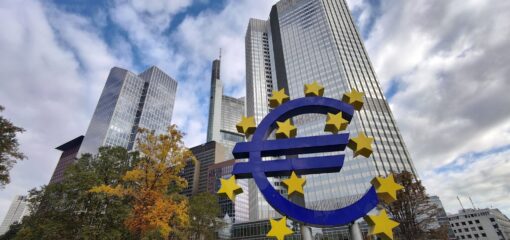
The European Central Bank and the European Insurance and Occupational Pensions Authority estimate that only about one-quarter of losses from extreme weather and climate-related events in the European Union have historically been insured. They warn that this protection gap could widen as damaging events become more frequent or severe.
The financial consequences may then appear in property values, credit risk, public disaster expenditure and corporate balance sheets. This is why central banks and financial regulators increasingly treat climate exposure as a conventional financial-stability issue rather than solely an environmental concern.
The Cost of Acting
The other side of the ledger is the cost and disruption associated with the transition.
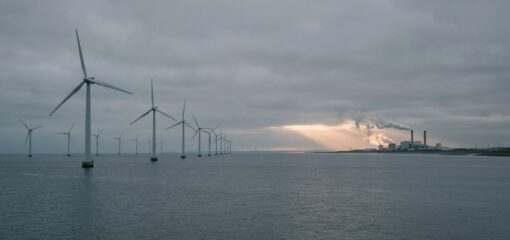
Reducing emissions requires extensive investment in electricity generation, networks, storage, transport, buildings and industrial processes. It can also impose adjustment costs on workers, regions and companies connected to emissions-intensive industries.
Estimates vary depending on whether they measure gross investment, genuinely additional expenditure or the wider economic cost after savings and revenues are considered.
For the European Union, detailed sector-based estimates have placed the additional investment requirement at approximately two to three percent of GDP annually. Broader economic models can produce considerably smaller estimates of the net aggregate effect because much of the expenditure replaces investment that would otherwise have occurred in conventional infrastructure.
Public and private costs also differ. Carbon-pricing revenues, lower expenditure on imported fuels and reduced operating costs can offset part of the gross investment requirement. Conversely, poorly designed policies can raise energy costs, strand assets or place a disproportionate burden on lower-income households and
You may have an interest in also reading…

How the Covid-19 Pandemic Reshaped the Business World
The crisis rocked global economies and upended daily business life in a series of upheavals and revolutions. Covid-19 impacted the

SegurCaixa Adeslas Emphasises Value Creation as a Way to Endure Its Sustainable Growth Strategy
The Spanish insurance company stands out for the digitalization of its proceses that allows it to offer more accesible, personalised

The Great ‘Ex-Retire Hire’: Over-50s Plugging Labour Shortages
Guy Garnett explores the fascinating return of retirees to the workforce, driven by labour shortages and economic pressures. A Surprising
