


































































Iran at the Crossroads
The strategic achievement available to Iran’s leaders is to give the next Iranian generation a reason to build its future in Iran. Iran is an ancient civilisation, a country of more than 90 million people, and potentially one of the Middle East’s prosperous states. Its people have, however, endured repression, sanctions, economic mismanagement and repeated confrontation.
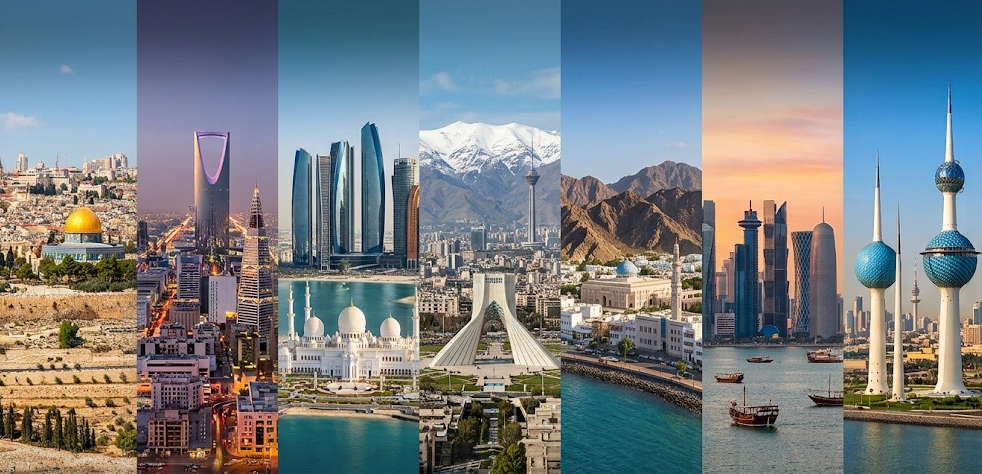
Iran cannot bomb, intimidate or enrich its way to lasting security, nor can its adversaries bomb Iran into lasting submission. The only sustainable outcome is a negotiated regional settlement backed by credible deterrence, verification and economic incentives.
The Islamic Republic has spent decades presenting resistance to Israel and America as an essential component of national security and revolutionary legitimacy. But permanent isolation has a price. Sanctions, economic isolation, capital flight and confrontation diminish Iran’s untapped economic strengths.
The military power of the Revolutionary Guard has reached diminishing returns. Current tensions over Hormuz illustrate the complexities. The Strait is one of the world’s critical commercial arteries which impacts all. The IRGC can make Iran feared but it cannot, by military means alone, make Iran secure, prosperous or trusted.
Balance is important. Arab states should not confuse a weakened Iran with a permanently defeated Iran. Saudi Arabia, the UAE and other Arab governments have legitimate concerns, but they should resist viewing Iranian weakness as an opportunity to establish permanent Arab predominance. Oman could be particularly relevant as an intermediary given its diplomatic role around Hormuz.
Israel has the fundamental unequivocal right to exist, and protect its citizenry. Iranian rhetoric threatening Israel, support for armed proxy organisations, attacking Israelis with ballistic missiles and drones, and any credible movement towards a nuclear weapon, are well-founded Israeli security concerns. Tactical dominance cannot substitute for strategic resolution. Israel can destroy facilities and weapons, but cannot destroy Iranian scientific knowledge, geography or nationalism. Israel’s strategic objective should ultimately therefore be a verified non-nuclear Iran embedded within a stable regional security structure, rather than indefinite cycles of preventive warfare.
And so to the great powers. To Washington and Brussels; strength must leave room for diplomacy. Western governments should remain clear about nuclear proliferation, attacks on allies, terrorism and freedom of navigation. But sanctions and military power need political objectives. The critical question, however, is what Iranian behaviour would actually produce sanctions relief? If Tehran concludes that sanctions remain regardless of its behaviour, sanctions cease to function effectively as bargaining leverage.
Beijing has historically stopped short of giving Tehran an unlimited defence commitment. China could become a lead negotiator and guarantor of a settlement. It is earning itself recognition as having global diplomatic influence. Helping prevent nuclear proliferation and assisting in guaranteeing freedom of navigation in the Gulf are examples that come with that responsibility. China has significant leverage because of its economic relationship with Tehran and dependence on stable international trade. Its relationship with Iran includes substantial energy and diplomatic interests.
Moscow benefits when American attention and resources are divided and when instability complicates Western strategy. But Moscow should consider the consequences of permanent Iranian confrontation. Nuclear proliferation and disrupted energy markets are not inherently in Russia’s long-term interests. Tehran, equally, should recognise the limits of the relationship. Diplomatic support does not translate into unlimited security guarantees. Russia should be encouraged to bring Iran into a durable settlement rather than use Iranian-Western confrontation as leverage elsewhere.
Iran must be given a choice. The objective should not be the humiliation of Iran, the destruction of Israel, or Arab domination of the Gulf. It should be more ambitious and difficult: coexistence. Iran should be offered a credible choice. Remain a revolutionary state organised around confrontation, or face containment, deterrence and economic isolation. Conversely, becoming a powerful and responsible regional sovereign state, assuming the responsibility of representative government, economically connected, secure within its borders and capable of giving its people the prosperity they deserve.
Criticism of the regime should never become hostility towards Iran as a nation. The choice is to be pro-Iranian without being pro-regime; pro-Israeli security without endorsing unlimited Israeli military action; sympathetic to legitimate Arab anxieties without promoting an anti-Iranian bloc; and supportive of Western deterrence while insisting that deterrence must have a diplomatic outcome.
Iran’s Next Test Is Prosperity
Iran is a rich country performing below its potential. Energy, minerals, industry, universities, engineers, scientists with a population large enough to support a versatile domestic market. It is strategically placed, linking the Gulf, Central Asia, the Caucasus, South Asia and Europe. An important question is whether Iran can convert survival into prosperity. That is the strategic challenge.
And yet, current economic life is defined by inflation, uncertainty, restricted opportunity and the fear that tomorrow will be harder than today. Sanctions matter. They have constrained finance, investment and trade. Beyond sanctions, domestic policy choices matter: currency instability, inefficient subsidies, corruption, privileged access, weak competition and the departure of talented young people all impose their own costs. Iran therefore needs more than economic reform. It needs a different definition of power.
The first priority is stability. Inflation corrodes more than purchasing power. It corrodes trust. Families cannot plan, businesses cannot invest and savings cannot perform their basic function when the value of money is uncertain. Restoring confidence in the currency should be treated as a national objective. That means stronger monetary discipline, a more credible central bank, tighter control over government borrowing and a clearer exchange-rate framework.
The private sector should be the engine of change. Subsidies must change. Iran should move progressively towards targeted support for poorer households, paired with letting prices find their level. Entrepreneurs should be able to build companies, raise finance, import equipment, export goods and compete for contracts without institutions operating under different rules. State enterprises, foundations, private firms and businesses linked to powerful institutions should progressively face the same standards of taxation, transparency and competition. It is an argument for fairness.
Energy reform is equally important. Iran should use oil and gas not simply to finance the state, but to finance the future. That means modernising production, reducing waste, improving electricity infrastructure, investing in renewables and ensuring that more hydrocarbon income is saved or invested in productive assets.
The strongest economic strategy is multi-vector diversification: trade with China, India, Russia, Europe, the Gulf and, if political conditions permit, the United States. The hardest economic reform would be foreign policy. Iran cannot achieve its full potential while substantially cut off from international capital, banking, technology and investment.
All countries in the near-region need mutual economic interest. Iran and Saudi Arabia do not need to agree on everything. Iran and the UAE do not need to become close allies. The country could become a commercial corridor, with Eurasia a natural partner connecting Central Asia and the Caucasus to the Gulf and Indian Ocean. Ports, railways, logistics hubs, digital infrastructure and customs modernisation could turn geography into revenue.
A successful country should have ambitious citizens remain to fulfil their ambitions. Universities need greater international engagement. Technology companies need global connectivity. Researchers need collaboration. Women should be able to participate fully in economic life. The diaspora should be encouraged to invest and return.
None of this works without transparency. Investors need rules they can understand. Businesses need contracts they can trust. Citizens need confidence that corruption does not defeat competition. Public institutions engaged in commerce should publish accounts. Procurement should be transparent. Ownership should be clear. Anti-corruption bodies should be able to investigate abuse without fear or favour.
Oil may be Iran’s wealth. Iranians its future. Iran does not need to become subordinate to Washington, Beijing, Moscow or any regional rival. It should understand that sovereignty is strongest when citizens prosper, institutions work and countries have a stake in success.
Iran’s Choice – and Ours
Iran is not merely a regime. It is a nation, an ancient civilisation, a substantial population and a geographical reality at the centre of the Middle East. Serious strategy must begin by recognising that fact.
The first responsibility rests however with Tehran. Iran’s leaders must decide what kind of power they ultimately want Iran to become. A country cannot indefinitely substitute geopolitical influence abroad for economic achievement and political confidence at home.
Iran’s Arab neighbours face their own choice. A prosperous Saudi Arabia and a prosperous Iran need not be mutually exclusive. The Gulf could become one of the world’s great economic regions if capital, energy, infrastructure and trade progressively replaced missiles, proxies and sectarian competition as instruments of influence.
Israel has every right to insist that its citizens must not live under threats of destruction or nuclear threat-backed pressure. But tactical military superiority cannot provide a complete political settlement. Israel’s ultimate strategic interest should therefore be an Iran that is demonstrably non-nuclear, constrained from supporting attacks against its neighbours and investing in regional economic stability. Russia and China should similarly decide what responsible great-power influence means.
Western governments face perhaps the most difficult intellectual adjustment. Deterrence remains necessary, but sanctions should have clearly defined objectives and equally clear routes to their removal. The objective should not be a humiliated Iran, a fragmented Iran or a permanently isolated Iran. This would not be weakness, but strength with a purpose. It is the beginning of a strategy.
Lord Waverley can be contacted at [email protected].
Attributed contributor content. This piece is Lord Waverley’s own, written on his own authority. CFI.co edits such work with the lightest touch and does not reinterpret its judgements; the house editorial process applied to CFI.co’s own and to commercially funded content is deliberately not applied to it.
You may have an interest in also reading…
QNB Egypt: Driving Financial Excellence and Inclusion in the Egyptian Market
QNB Egypt, one of the leading financial institutions in Egypt, has been a key player in the country’s banking sector

UAE’s COP28 Gathering Scores Some Initial Successes
White hydrogen and AI to the rescue…? Wim Romeijn reports. Beneath our feet, the Earth manufactures — and hides —
Keeping the Flame of Fascination Alive
Getting inside Emad Shahin’s work ethic at Ethra Invest The dynamic nature of the business world is of continual fascination
