










































































Oil at the Edge of the World
After fifteen years of delay, the Falkland Islands’ Sea Lion field has entered development. Successful delivery could reshape the territory’s economy while testing offshore execution, environmental safeguards and the political relationship between Britain and Argentina.
Stanley is not a capital accustomed to hosting a major offshore development. The 2021 census recorded 2,964 people in the town and 3,662 across the Falkland Islands as a whole. The economy remains heavily dependent on fisheries, supported by agriculture and tourism, but an industrial project taking shape around 220 kilometres north of the islands could alter that balance.
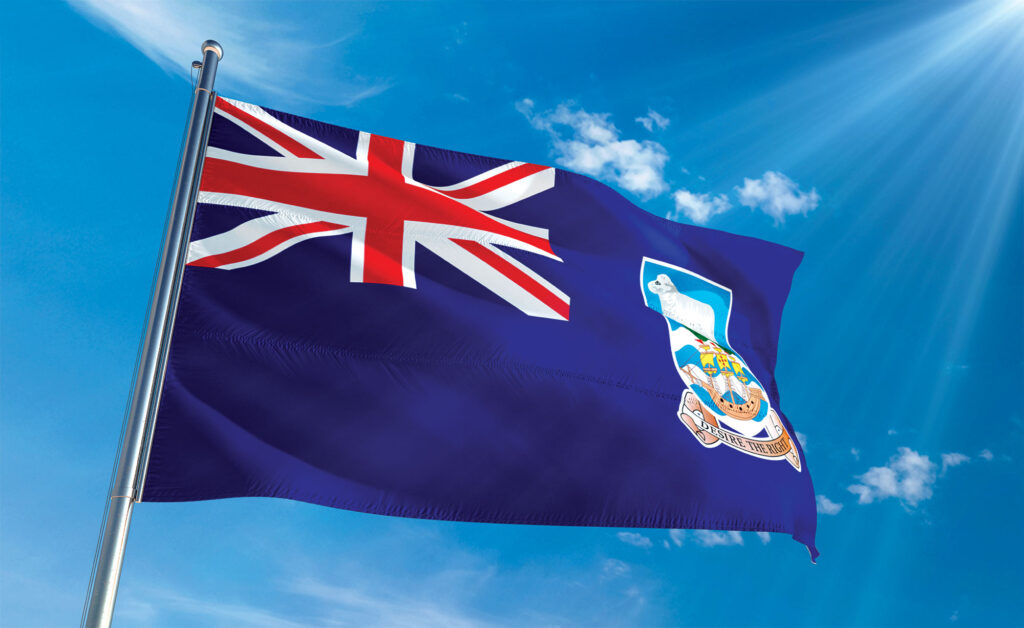
On 10 December 2025, operator Navitas Petroleum and its partner Rockhopper Exploration took a final investment decision on the first phase of the Sea Lion oil development. The decision followed approval by the Falkland Islands Government of the field development and production programme for the first two phases of the Northern Development Area. First production from the sanctioned phase is currently targeted for the first quarter of 2028.
The scale of Sea Lion requires careful definition. An independent assessment effective on 31 July 2026 assigned 314.3m barrels of gross proved and probable reserves to the first two Northern Development Area phases. It separately identified 626.1m barrels of gross best-estimate contingent resources across other parts of the field. These categories carry different degrees of commercial certainty and should not be combined as though all the oil were already covered by a sanctioned development plan.
The first phase is designed around eleven subsea wells and the redeployed Aoka Mizu floating production, storage and offloading vessel. Rockhopper has said the vessel will have capacity of approximately 55,000 barrels per day, while the initial phase targets recovery of about 170m barrels. Those figures remain operator and partner estimates rather than guaranteed production outcomes.
A Long Route to Development
Sea Lion was discovered by Rockhopper in 2010, prompting expectations that the North Falkland Basin might support a new petroleum industry. Appraisal drilling established a material resource, and Premier Oil agreed in 2012 to acquire a 60 percent interest and become operator. The transaction included a $231m upfront payment, a $722m development carry and a $48m exploration carry, rather than a single $1bn cash payment.
The development subsequently encountered a more difficult commercial environment. The fall in oil prices from 2014 weakened the case for capital-intensive frontier projects, while Sea Lion’s distance from established infrastructure added financing and execution complexity. After Premier became part of Harbour Energy, the ownership structure was reorganised and Navitas ultimately assumed operatorship and a 65 percent interest, leaving Rockhopper with 35 percent.
Navitas is an Israeli-listed oil and gas partnership chaired by Gideon Tadmor, who previously played a leading role in the development of the Tamar and Leviathan gas fields in the eastern Mediterranean. Its participation changed both the ownership structure and the development concept. Rockhopper’s funding arrangements also provided for part of its equity requirement to be met through loans from Navitas, reducing—but not eliminating—the financing demands on the London-listed company.
Earlier plans for a larger initial development were replaced by a phased approach using existing equipment where practical. The December 2025 financing plan estimated a post-investment-decision requirement of $1.8bn to reach first oil and $2.1bn through project completion, including contingencies and financing costs. These were budget estimates at that date, not assurances that final expenditure would remain unchanged.
From Approval to Execution
The decision to proceed has moved Sea Lion beyond the planning stage, although most of the construction and commissioning risk remains ahead. At sanction, Navitas entered contracts covering the Aoka Mizu charter, drilling services, the drilling rig and the subsea production network. By August 2026, Rockhopper reported that work in the islands was progressing on the quay, shore base, accommodation and infrastructure required for the drilling campaign, which is expected to begin in early 2027.
The Aoka Mizu completed production at its previous field and was disconnected before being sent for modification. On 24 August, Rockhopper said the vessel was travelling to a shipyard in Southeast Asia. The upgrade location had been moved from the Middle East following conflict involving Iran, adding an estimated $45m to the development budget and demonstrating how geopolitical events can affect even a project operating far from the principal centres of the oil industry.
The partners are also considering a larger development beyond the sanctioned first phase. Navitas has exercised an option to acquire a second production vessel, the OSX-1, which it proposes to use for the Central Development Area. The operator estimates that the vessel could eventually add 125,000 barrels per day of production capacity, but the associated development remains subject to acquisition arrangements, a detailed development plan, Falkland Islands Government approval and a separate final investment decision. Navitas has indicated that it is targeting that decision in the first half of 2028 and production from the first Central Development Area phase by the end of 2030.
The distinction is important. Sea Lion’s first phase is sanctioned and under development; the proposed Central Development Area expansion is not. Treating both as committed would understate the financing, regulatory and execution hurdles that remain.
A Transformative Fiscal Prospect
The Falkland Islands impose a 9 percent royalty on the market value of petroleum production and a 26 percent corporation tax on adjusted profits from exploration and extraction. If production develops as planned, those mechanisms could create public revenues on a scale well beyond the territory’s present tax base. The eventual receipts will nevertheless depend on production volumes, oil prices, operating expenditure, capital allowances and the timing of later phases.
The economic implications extend beyond headline revenue. Fisheries licence income currently plays a central role in funding public services, while the small labour market is already constrained. Offshore development will increase demand for housing, port capacity, transport, utilities and skilled workers, requiring the government to manage growth without allowing a temporary construction cycle to overwhelm local services.
Large resource revenues would also create questions about saving, investment and institutional capacity. A disciplined framework would need to distinguish recurring income from temporary windfalls, protect public finances from oil-price volatility and ensure that infrastructure commitments remain affordable if production or prices fall short of expectations. For a community measured in thousands of residents, the quality of fiscal governance may prove as consequential as the size of the resource.
Environmental Safeguards
The project’s environmental consequences remain a material part of the debate. In its July 2024 response to the environmental consultation, Falklands Conservation opposed the development and raised concerns about carbon emissions, the age and coverage of some seabird data, regulatory preparedness and decommissioning commitments. It also argued that a serious spill could affect marine wildlife and the fisheries on which the existing economy depends.
The Falkland Islands Government subjected the environmental impact statement for the first two Northern Development Area phases to statutory consultation and subsequently approved the project under its domestic processes. The regulatory framework requires operators to assess environmental effects, identify measures to reduce potential threats and maintain arrangements for responding to adverse events. Approval does not eliminate environmental risk, however, and the adequacy of monitoring, spill preparedness and financial provision for decommissioning will need continued scrutiny throughout construction and production.
Oil development also sits uneasily beside global decarbonisation objectives. The commercial case rests partly on expectations that oil demand will persist long enough to recover the investment, while critics argue that opening a new field is inconsistent with pathways designed to achieve net-zero emissions. Sea Lion therefore exposes the same tension affecting frontier developments elsewhere: investors and governments must judge long-lived infrastructure against an energy outlook that remains uncertain.
Britain’s Policy Divide
The project creates a political contrast with the United Kingdom’s domestic energy policy, but the constitutional responsibilities are separate. The British government’s North Sea plan provides that no new licences will be issued to explore new UK fields, while allowing existing fields and limited adjacent developments to continue. Hydrocarbon regulation in the Falkland Islands is a responsibility of the Falkland Islands Government; Britain retains responsibility for defence, security and international affairs.
The UK government has explicitly supported the islanders’ right to regulate their economy and develop their natural resources, including hydrocarbons. It presents that authority as part of the islands’ right to self-determination. The Falkland Islands Government likewise regards decisions over offshore resources as matters for its elected institutions and local law.
Argentina rejects that position. It maintains sovereignty over the islands, which it calls Islas Malvinas, and regards hydrocarbon activity authorised without consent from Buenos Aires as unlawful. In September 2026, the Argentine government announced further legal action connected with Sea Lion and renewed pressure on companies involved in or supplying the development.
The practical consequences remain contested. Navitas has said that it operates under valid licences granted by the Falkland Islands Government and does not expect the latest developments to have a material effect on the project timetable. The UK government has stated that Argentine domestic law does not apply within the islands and has offered support to companies facing pressure. Argentina, however, can still seek to influence businesses with commercial interests in its domestic market, adding a supply-chain and legal consideration that cannot be dismissed solely because the competing jurisdictional claims remain unresolved.
Execution and Expansion Risks
Sea Lion’s immediate test is the delivery of the sanctioned first phase. The project must coordinate drilling, subsea installation, vessel conversion and shore infrastructure across long distances and in demanding weather. Cost inflation, equipment delays, financing pressures or operational setbacks could affect both the timetable and the economics.
The wider development carries additional uncertainty. The first two Northern Development Area phases have an approved development programme, but subsequent areas require further technical work, capital commitments and regulatory decisions. Contingent resources may support future expansion, yet they do not have the same status as proved and probable reserves and are not assurances of commercial production.
The long-term oil market adds another variable. Sea Lion’s economics depend on prices remaining sufficient to cover development, operation and eventual decommissioning, while global policy and technology continue to reshape demand. The phased structure limits some initial exposure, but it also means that the emergence of a broader petroleum province will depend on repeated investment decisions rather than the success of a single start-up.
After years in which Sea Lion repeatedly appeared close to development, the evidence has nevertheless changed. The first phase has been sanctioned, principal contracts have been entered into, infrastructure work has begun and the production vessel has left its previous assignment for modification. Those are substantive milestones, even if they do not remove the risks ahead.
For the Falkland Islands, Sea Lion is therefore neither a guaranteed windfall nor merely a speculative discovery. It is an active industrial development with the capacity to alter public finances, infrastructure and the territory’s international profile. Its significance will ultimately be determined by execution, environmental performance and the institutions created to manage its consequences.
You may have an interest in also reading…

The Great ‘Ex-Retire Hire’: Over-50s Plugging Labour Shortages
Guy Garnett explores the fascinating return of retirees to the workforce, driven by labour shortages and economic pressures. A Surprising
The Cost Curve Did Not Reach the Balance Sheet: Reading Energy’s Latest Marks
Across energy filings struck between March 2025 and June 2026, the largest write-downs sat on low-carbon assets and the only

Moody’s Ratings: Leading in Transition Finance, and Embracing Digital Innovation
A new positioning based on boldness, clarity, and perceptiveness. Moody’s Investors Service Transition to Moody’s Ratings: The Brand Evolution In
