










































































Diamonds: A Girl’s Best Friend, at 93 Percent Off
Lab-grown diamonds are chemically identical to mined stones, optically indistinguishable and getting cheaper by the quarter. Their rise has halved engagement-ring budgets, broken the world’s most famous cartel and split one product into two markets: a gadget and an heirloom.
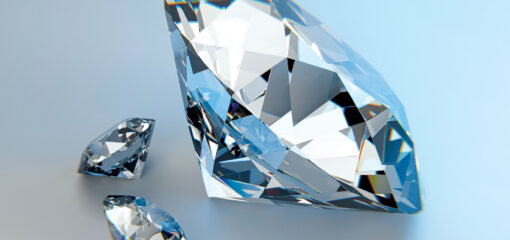
Place two one-carat round brilliant diamonds side by side. The colour grade is the same, the clarity is the same and the fire under the lights is indistinguishable. One may cost around $4,600; the other can be bought for a little over $300. No loupe will separate them, because both are crystallised carbon.
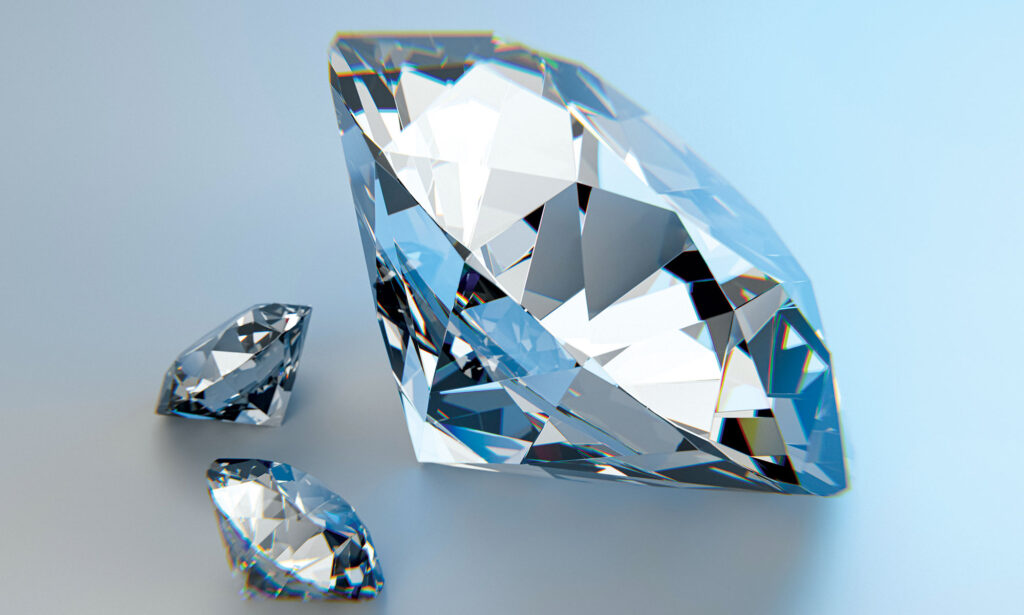
The difference is origin. One formed over immense geological time beneath the Earth’s surface. The other spent a few weeks inside an industrial reactor, in India or China. That price gap, and the discomfort it creates, defines the diamond trade.
In less than a decade, laboratory-grown stones have moved from novelty to a substantial share of the US engagement-ring market. They have collapsed their own prices, pressured natural-diamond values and forced the industry to confront a question it spent a century avoiding: what exactly is a diamond worth?
Pressure, Heat and Moore’s Law
Synthetic diamonds are not new. General Electric first produced them in the 1950s, and industrial users have relied on synthetic diamond grit for cutting, drilling and abrasives ever since. What changed in the 2010s was the ability to produce gem-quality stones at scale.
Two methods dominate. High-pressure, high-temperature systems recreate the conditions in which natural diamonds form, while chemical vapour deposition grows stones layer by layer from carbon-rich gas in a plasma reactor. The latter proved scalable, and global CVD capacity expanded rapidly across China and India’s diamond-processing centres.
The economics that followed resembled consumer electronics more than luxury goods. With no geological constraint, no cartel and improving production technology, prices fell sharply. Retail prices for lab-grown stones dropped by roughly three quarters between 2020 and 2025, while wholesale prices for some categories fell even further.
The direction matters more than the precise number. A one-carat lab-grown diamond that cost several thousand dollars a decade ago now sells for a fraction of that amount, through direct-to-consumer channels. The rate of decline may be slowing, but few in the trade expect price recovery.
Consumers have responded accordingly. Lab-grown stones represented a small fraction of US engagement-ring purchases in 2019 but had reached roughly 45 percent by 2024. The proposition is easy to understand: the same visual effect at a fraction of the price, or a significantly larger stone for the same budget.
For couples making a bridal purchase out of household income, this is not a marginal shift. It is a change in the structure of demand. At the volume end of the market, laboratory-grown diamonds increasingly behave like a technology product whose quality improves as its price declines.
The House That Cecil Built
No company embodies the pressure on the natural-diamond trade than De Beers. The business that helped create diamond demand, controlled supply and taught generations that “a diamond is forever” has spent the past three years demonstrating what happens when both pricing power and scarcity narratives weaken at the same time.
Its underlying earnings moved into loss in 2025, while production was cut and guidance reduced. Anglo American, which owns 85 percent of De Beers, has repeatedly written down the business, sharply reducing its carrying value as part of a wider restructuring around copper.
The sale process has become one of the more unusual corporate auctions in mining. Potential bidders have included former De Beers executives, Indian industry participants, private investors and producer governments including Botswana, which owns the remaining 15 percent and depends on diamonds for exports and public revenue.
The difficulty is obvious: how does one value a company whose central product is being undercut by an identical industrial alternative? The longer natural prices remain weak, the harder that valuation becomes.
De Beers’ own move into lab-grown diamonds is instructive. Its Lightbox brand was launched in 2018 with simple pricing intended to position synthetic stones as inexpensive fashion jewellery rather than substitutes for natural diamonds. In one sense, the strategy worked too well.
Lab-grown prices continued to fall, reinforcing the idea that synthetic stones are abundant and replaceable. But that same collapse also gave consumers permission to compare the two products directly on appearance and price, weakening the natural industry’s control over the middle of the market.
Rarity, Real and Manufactured
The natural-diamond industry has responded by moving upward. Its argument is that natural and lab-grown stones may look alike but belong to different categories: one is a finite geological artefact, the other an industrial product whose supply is constrained mainly by energy costs and reactor capacity.
There is substance to that claim. Major new diamond discoveries are rare, important mines are ageing or closing, and output is under pressure in several producing countries. Australia’s Argyle mine, once the source of the world’s rarest pink diamonds, closed in 2020, and exceptional stones from that category have appreciated.
Yet the industry has a credibility problem because diamond scarcity was never entirely natural. For much of the twentieth century, De Beers controlled much of rough supply, withheld inventory to support prices and invested in creating the social convention that engagement required a diamond.
That history matters now. A product whose scarcity was partly curated has difficulty relying on scarcity as its sole defence when consumers know a substitute exists.
The resale market reinforces the distinction. Natural diamonds recover only a fraction of their retail price when sold, while lab-grown stones often retain very little. Neither behaves like the investment product implied by older marketing, although natural stones still possess a resale floor because supply cannot be expanded at will.
The ethical case is complicated. Lab-grown sellers emphasise conflict-free provenance and reduced physical disruption to landscapes. Those arguments resonate after decades of concern around blood diamonds and mining conditions.
But synthetic production is energy-intensive, and a stone grown using electricity from a carbon-heavy grid can carry an environmental footprint. Natural-diamond producers counter that mining supports entire economies, particularly in countries such as Botswana, where diamond revenues fund public services and underpin fiscal stability.
The consumer looking for a virtuous choice therefore finds uncomfortable trade-offs on both sides. Even certification no longer separates the categories as neatly as before, because gemological laboratories now grade both natural and lab-grown stones at scale.
One Word, Two Markets
The most likely outcome is not that one category destroys the other, but that the word “diamond” describes two different markets.
At the volume end, laboratory-grown stones are becoming the choice for consumers who want appearance, size and affordability. Their economics will resemble branded jewellery, where value migrates towards design, setting, marketing and the precious metal surrounding the stone.
At the top end, natural diamonds are moving upward. Exceptional stones are being repositioned as scarce luxury assets, sold on provenance, certification and geological rarity to buyers for whom a high price is part of the appeal rather than a barrier.
The middle is where the pressure is greatest. For decades, the mass-market mined solitaire sat comfortably between costume jewellery and high luxury. That segment is now being squeezed by a synthetic alternative that delivers the same visible product at radically lower cost.
For investors, this is the more important lesson. The diamond market shows what happens when a near-perfect substitute arrives for a product whose value depends heavily on narrative. The narrative does not disappear, but it stops covering the whole market.
Assets priced on the assumption that every consumer values natural origin begin to reprice. Mines, cutting centres, inventories and companies such as De Beers all become more sensitive to the question of how many buyers are willing to pay for geological provenance once appearance can be replicated cheaply.
History suggests natural diamonds will survive. Quartz watches did not eliminate mechanical watches; instead, they destroyed much of the mass market and pushed Swiss watchmaking further into luxury. Cultured pearls did something similar to natural pearls.
The same pattern is increasingly visible here. The mined diamond may survive as the mechanical watch of gemstones: expensive, inefficient, emotionally freighted and desirable precisely because it is difficult to reproduce naturally.
What is unlikely to survive is the old universal proposition that every engagement, in every income bracket, must pay tribute to the mines. Laboratory production has broken that assumption permanently.
The diamond itself has not changed materially in the modern market. What has changed is the market’s willingness to pay for the story attached to its origin. That distinction is now dividing one of the world’s most carefully constructed luxury categories into two very different businesses.
You may have an interest in also reading…

Friendly by Name, Supportive and Creative by Nature: This Mutual is True to its Mission and Core Values
Scottish Friendly’s commitment remains firmly on helping its customers achieve optimal financial outcomes. Scottish Friendly remains resolute in its commitment

SegurCaixa Adeslas Emphasises Value Creation as a Way to Endure Its Sustainable Growth Strategy
The Spanish insurance company stands out for the digitalization of its proceses that allows it to offer more accesible, personalised

The Unseen Shift: How Creeping Normality Rewrites Our World
Gradual, barely perceptible shifts can normalise the unacceptable—reshaping everything from corporate decision-making to ecosystems and civil discourse. Understanding “creeping normality”
