










































































Judging the Book by Its Cover Price: First Editions as an Asset Class
A Shakespeare First Folio fetches $10m, a children’s book from 1997 changes hands for the price of a house, and the auction rooms have enjoyed record seasons. As artificial intelligence floods the world with infinite text, the scarce, authentic printed object looks more singular than ever. But do first editions of great literature actually reward the investor, or only the lover?
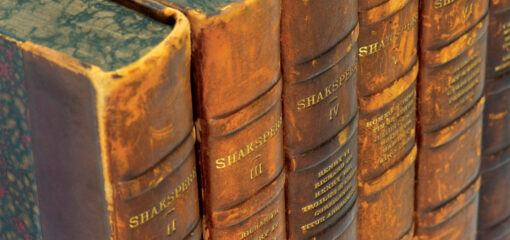
In October 2020, in a New York saleroom operating under pandemic restrictions, a copy of Mr William Shakespeares Comedies, Histories, & Tragedies, printed in 1623 and known simply as the First Folio, sold for $9.98m. Around 750 copies were printed and roughly 235 survive, most permanently lodged in institutions. The same copy had last changed hands in 2001 for $6.2m, a gain of about 60 percent over two decades.
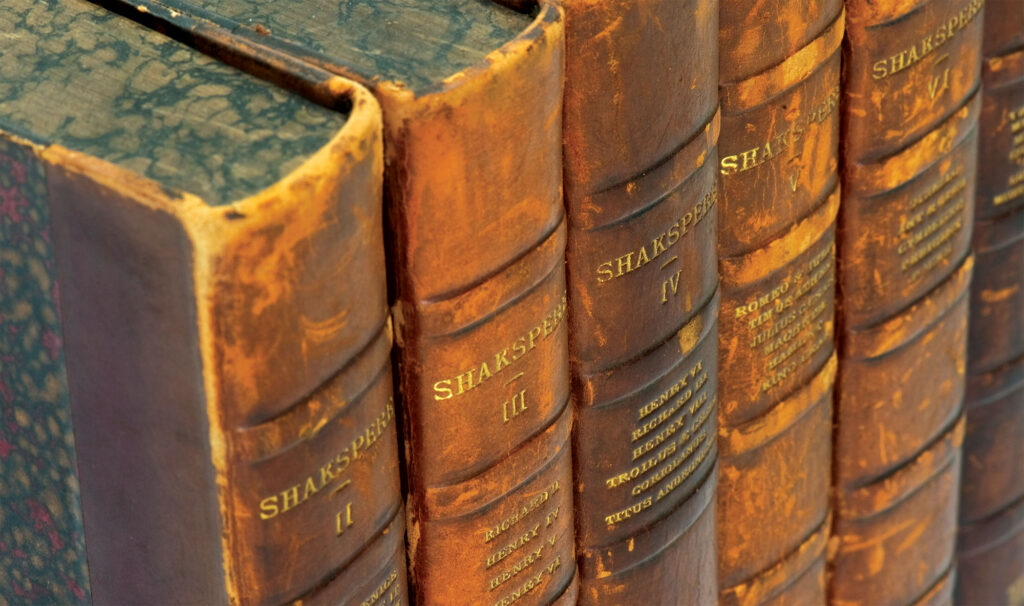
That return is respectable rather than spectacular. The longer view is the extraordinary one. A First Folio could be bought for a few hundred pounds in the nineteenth century, while collectors such as Henry Folger accumulated copies at prices that now look absurdly low. Held over generations, the supreme book in English has appreciated alongside the great financial assets while asking nothing more strenuous of its owner than careful storage.
That is the seductive face of rare books as an investment. The honest version includes long periods in which fashion turned cruel, liquidity disappeared and buyers discovered that age alone does not create value.
A Century of Booms, Busts and Forgotten Darlings
Modern book investing took shape during the Gilded Age, when Morgan, Huntington and Folger competed for the treasures of cash-poor European aristocrats. The 1911 Robert Hoe sale in New York became a landmark, demonstrating that books could command prices more commonly associated with paintings and jewels.
The lesson of the decades that followed is one every prospective investor should remember: literary fashion is ruthless. Authors whose first editions commanded formidable prices in the 1920s could fall out of favour within a generation. Galsworthy was once gold; later, much of the market treated him as gravel.
The acknowledged summits behaved differently. Shakespeare, the Gutenberg Bible, Austen and Darwin continued to rise through depression, war and inflation because their cultural importance deepened rather than faded. A Gutenberg Bible sold for $2.4m in 1978, yet a complete copy has not appeared at auction this century because supply has effectively reached zero.
Scarcity in this market is therefore not simply marketing. Once a great book enters a university library or national collection, it may never return to the market. Every institutional acquisition permanently tightens the tradable float.
Condition Becomes Destiny
The post-war market added another engine: the cult of the modern first edition, where condition can matter as much as authorship. The classic example is F. Scott Fitzgerald’s The Great Gatsby. The 1925 first edition is not impossibly rare, but its fragile dust jacket is.
A fine jacketed copy can command hundreds of thousands of dollars, while a copy without the jacket may be worth only a small fraction of that. The object being priced is therefore not simply the text but the surviving configuration in which the market first encountered it.
The same arithmetic elevated Ian Fleming, Tolkien and, most dramatically, J. K. Rowling. Harry Potter and the Philosopher’s Stone appeared in 1997 in a hardback first printing of roughly 500 copies, many sent to libraries. Fine survivors have sold for extraordinary sums, turning a children’s book into one of the clearest demonstrations that spectacular appreciation did not end with the Victorians.
The implication is important. Modern books can become serious assets, but only when scarcity, condition, cultural significance and provenance align. A signed book is not automatically valuable, and an old book is certainly not.
The Market Is Still Growing
Recent auction results suggest the market remains healthy. Sotheby’s books and manuscripts department reported a record year in 2025, helped by major single-owner collections and sustained demand for material of unquestioned importance.
Jane Austen’s 250th anniversary added another burst of attention to the market around her, while inscribed and association copies continued to command premiums far beyond ordinary first editions. In that part of the market, provenance can be almost as important as condition because it ties the physical object directly to the life of the author or the history of the work.
Industry estimates often place long-run appreciation for investment-grade rare books in the mid-single digits annually, broadly comparable with other collectibles. The numbers should be treated cautiously because indexes are thin, transactions are infrequent and the assets being compared are never perfectly homogeneous.
Yet the bidder base is clearly broadening. Online auctions have transformed a market once dependent on dealers’ catalogues and physical salerooms into a global marketplace. The tweed has acquired a browser tab, and collectors in Asia, Latin America and the Middle East can now compete instantly for material that once circulated mainly through London and New York.
The Small Print
The caveats are substantial. Books produce no income, require insurance and conservation, and trade through intermediaries whose charges are high. Buyer’s premiums at major auction houses can exceed 25 percent, while dealer spreads may be wider still.
Those costs create a considerable hurdle before an investor records any genuine return. The asset class therefore rewards long holding periods and punishes speculative turnover. A book bought well but sold too soon can lose money even if the hammer price rises.
Liquidity is equally uneven. The right buyer for a six-figure first edition may appear next month or next decade, and forced selling is dangerous. Condition risk, restoration, sophisticated forgery and the marriage of unrelated parts are perpetual concerns.
Above all sits the canon problem. The market reliably rewards only the relatively small shelf of books that civilisation continues to read, teach, quote and argue about. The acknowledged masterpiece in the finest obtainable state has historically had time on its side; the merely fashionable, merely signed or merely old may not.
That dispersion between the best and everything else is wider than in most conventional asset classes. Expertise is therefore not an accessory but the strategy itself, whether supplied by the collector or by a trusted specialist.
The AI Wager
The most intriguing argument for the future is that the printed first edition may become more, not less, desirable in an age of generative AI. As text becomes infinitely reproducible, cheap and increasingly detached from provenance, the finite physical object acquires a different kind of significance.
A first edition is a fixed witness to a particular cultural moment. It is the object through which a work first entered the world, complete with its original typography, binding, mistakes, advertisements and sometimes the marks of its earliest readers.
Every technology once predicted to kill the book has instead altered the hierarchy of value. Film, television and the e-reader reduced the necessity of owning ordinary printed matter while leaving the desire for exceptional objects intact. AI may intensify that distinction.
The Harry Potter market offers a useful clue. A generation raised with screens has shown no difficulty paying extraordinary sums for scarce physical books tied to its formative reading. Digital fluency has not abolished collecting; in some cases it has sharpened the appetite for authenticity.
Demographics may help as well. Supply of the great books continues to shrink as important copies move into permanent collections, while online platforms steadily enlarge the global bidder base. Scarcity and access are therefore moving in opposite directions, usually a favourable combination for prices.
An Investment, but Not Only an Investment
The risks remain obvious. If long-form reading itself weakens, the next generation of collectors may simply be smaller. Dickens, Austen or Fitzgerald can only sustain deep markets if enough people continue to care about the works before they care about the bindings.
For investors, the sensible conclusion is therefore restrained. First editions of major literature can function as a defensible, low-correlation store of value for patient money that buys canonical importance, exceptional condition and reliable provenance.
Returns are unlikely to match equities over long periods, while drawdowns may arrive not as crashes but as decades of indifference. The market also demands specialist knowledge and accepts no shortcut around quality.
Yet rare books possess one advantage unavailable to almost every other alternative asset. A collector can use them for the purpose for which they were made.
No share certificate can sit on a shelf and offer the exact object Austen’s first readers held, or preserve the dust jacket that introduced Gatsby to the world. In this asset class, the dividend is paid in the reading. That is not a reason to invest, but it is an excellent reason to collect, and history suggests the two disciplines sometimes arrive at the same destination over the very longest holding periods.
You may have an interest in also reading…

Deem Finance: Driving Financial Inclusion and Digital Transformation in the UAE
Deem Finance has established itself as one of the UAE’s most progressive non-bank financial institutions — redefining inclusion and innovation

Earning Through a War: UAE Lenders Bank Records in a Quarter of Conflict
UAE lenders posted record first-half profits through a quarter of regional war, Hormuz shipping disruption and rate uncertainty. At bank

The Economics of Christmas
Unwrapping the Global Trends in Online and High Street Shopping During the Festive Season The Christmas season has long been
