































































Rules over Discretion: What a Chinese-Owned Lithium Expansion Says About Argentina’s Investment Regime
A US$709m expansion of a Chinese-owned lithium project has cleared RIGI, Argentina’s incentive regime for large investments. The approval suggests a rules-based framework with a fixed closing date is beginning to do what decades of discretionary policy could not: convert resource endowment into bankable, contracted investment.
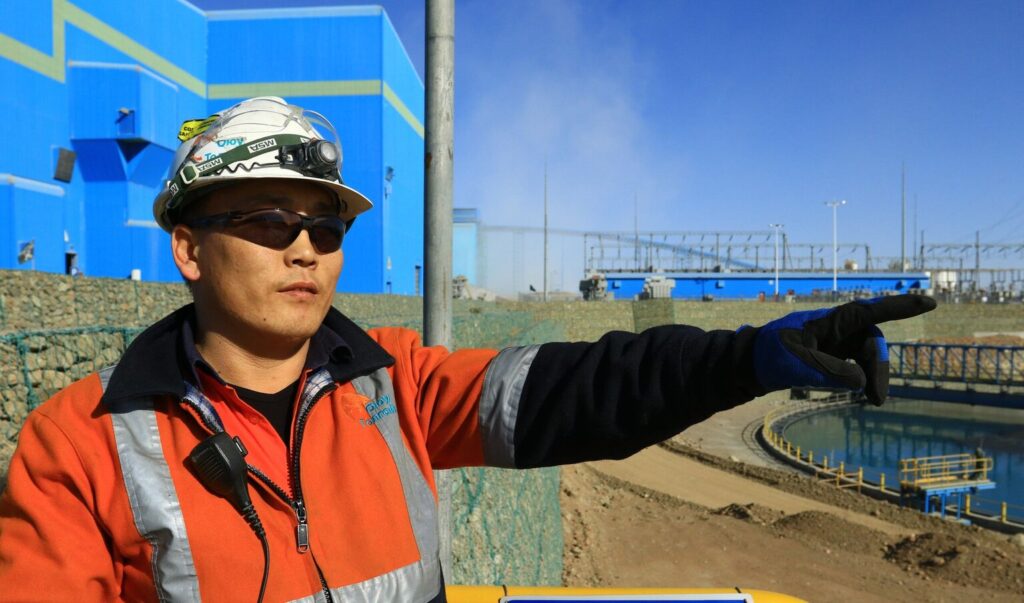
Photo: Orgildavaa Tsedensamba / Pexels
An Announcement Designed to Be Dull
On 14 July 2026, Argentina’s Economy Minister Luis Caputo announced that the evaluation committee of the Large Investment Incentive Regime (RIGI) had approved a US$709m expansion of the Tres Quebradas lithium project in Catamarca province. The investor is Liex, the Argentine subsidiary of China’s Zijin Mining. Infobae and the EFE wire carried it the same day, in the flattest available register: an application met published criteria, and a committee said yes.
That flatness is the story. Argentina holds world-class lithium brines and a long record of failing to finance them, because successive governments changed tax, export and currency rules faster than mines could be built. For a reader who allocates capital, the regime poses a narrow, testable question: can a statutory menu of incentives, open to all qualifying comers for a fixed period, convert geology into contracted investment where ministerial discretion could not? Tres Quebradas is one data point, and a usefully awkward one. The capital is Chinese, the commodity has been out of favour, and the approval still came through the ordinary channel.
Congress Set the Terms, and the Calendar
RIGI was created by the Bases Law that Argentina’s Congress passed in mid-2024 and implemented by decree in August of that year, amended that October; CFI.co covered the bill and the implementing decree at the time. Projects above US$200m in qualifying sectors receive a corporate income tax rate cut from 35 to 25 per cent, relief from export duties, phased access to foreign exchange, 30-year fiscal stability and recourse to international arbitration.
Two design features matter more than the generosity. Benefits are set by statute, so an applicant that meets the criteria has no need of a minister’s favour. And the clock binds the state as well as the investor: Decree 105/2026, published in the Boletin Oficial on 19 February 2026, used the law’s one-off power to extend the application window by a single year, to 8 July 2027. After that, no new entrants. Engineered scarcity of time is doing the work that investment-promotion agencies usually attempt with persuasion.
The Figures Behind the Approval
The approved second phase adds a plant designed, in Caputo’s words as reported by Panorama Minero on 15 July 2026, to be “capable of producing 40,000 tonnes per year of lithium carbonate”; Zijin’s own project materials describe the second phase as 30,000 tonnes a year, and the desk should reconcile the two before the figure is used elsewhere. The Economy Ministry’s figures, carried by Infobae on 14 July 2026, put the investment at US$709m, projected exports at around US$400m a year at full output, production life above 19 years, and employment at 4,406 direct and indirect jobs across construction and operation. The first phase is already running, producing since September 2025 at 20,000 tonnes a year, according to ESS News reporting of 17 July 2026.
Ownership is worth stating plainly. Zijin Mining entered Argentina by acquiring Canada’s Neo Lithium, and its subsidiary applied to RIGI on the same published terms as Rio Tinto, POSCO or Glencore. From a governance standpoint, a transparent, rules-based gate that Chinese capital walks through openly is preferable to bilateral deals negotiated in private. That judgment rests on the wire facts; the geopolitics of lithium supply chains is a separate argument, and this piece does not settle it.
Approved, Formalised, Queued
How big is the regime, three weeks into its third year? It depends which official number you read, and the gap between them is itself informative.
Committee-approved: 21 projects worth US$46.7bn in committed investment, per the Economy Ministry figures reported by Infobae on 14 July 2026, with the Liex approval the twenty-first.
Formalised by resolution: the ministry’s official RIGI registry lists 16 projects worth US$29.9bn, per the announcement that accompanied its launch, and counts only those whose adherence has been completed by formal resolution. El Cronista put the formalised count at eighteen by 23 July.
In the queue: 41 initiatives representing more than US$140bn, including applications still under evaluation, per the same registry announcement.
The commissioning desk’s rule of thumb, that totals shift weekly, holds. Between committee approval and formal resolution sits paperwork lag, and that is all it is. It is also precisely the interval a sceptical investor should track, because a regime’s credibility lives in the boring stretch between announcement and instrument.
Copper Is Following
The forward question when RIGI launched was whether copper, with its decade-long build times, would trust a framework younger than its feasibility studies. Early evidence says yes. In June 2026 the Vicuna project, the BHP and Lundin Mining joint venture combining the Josemaria and Filo del Sol deposits, became the first copper project approved under RIGI’s long-term strategic export category; Lundin’s release of 16 June 2026 cites Stage 1 capital expenditure of US$7.1bn from its February 2026 technical report. Jack Lundin, the company’s president and chief executive, called the ruling “a significant milestone for the Project”.
Glencore filed RIGI applications for El Pachon, at US$9.5bn for its first phase, and the US$4bn Agua Rica project in August 2025, with chief executive Gary Nagle saying the framework “has changed the investment landscape in Argentina”. Those two decisions are still pending, and they are the ones to watch before the window closes.
Three Ways It Could Unwind
Set the case against at full strength. Martin Reydo of the Buenos Aires think tank Fundar argued in May 2024 that RIGI is the most generous regime in Argentina’s history, locks in commodity specialisation without requiring local linkages, and carries the seeds of its own reversal: “RIGI is unsustainable: it undermines the stability of the businesses it promotes.” Thirty-year stability guarantees granted by one political coalition are, on Argentina’s record, a standing invitation to the next one to litigate them. What investors are buying is arbitration rights, and arbitration is compensation, never a mine.
Prices are the second exposure. Lithium remains far below its 2022 peak, and Argus analyst Pedro Consoli, quoted by Panorama Minero on 18 March 2026, expects “price fluctuations throughout the year” even after the market’s recovery from 2025 lows. A regime that concentrates approvals in lithium and copper concentrates its reputation in two price cycles.
Third, approval is not construction. The registry counts commitments, and commitments have yet to become camps, wells and payrolls. Nothing in the July figures proves conversion; that evidence arrives later.
Due by Year-End
Three things. Conversion first: how many of the 21 committee-approved projects show construction spending and formal resolutions rather than announcements. Then the copper decisions, El Pachon and Agua Rica, and whether they are approved before 8 July 2027. Then the registry itself. The ministry now publishes per-project data at argentina.gob.ar/economia/rigi, so an investor, or a journalist, can audit the gap between the two counts monthly. Readers with Argentine exposure should treat that page as the primary instrument, ahead of ministerial announcements.
What Argentina Has Actually Converted
One approval proves little. Twenty-one approvals, a functioning registry and copper majors queueing with ten-figure applications amount to a pattern. The mechanism travels: it holds in resource-rich middle-income economies where credible rules are the binding constraint on capital, and it holds far less where infrastructure, logistics or geology is the true bottleneck, since a fixed window mends none of those. Argentina has not yet converted endowment into production at scale under RIGI. It has converted endowment into contract, under published rules, on a public clock. By that country’s standards, that is the rarer achievement, and it is measurable.
Sources
1. Infobae (Economy section), “El Gobierno aprobo un nuevo RIGI: una minera invertira mas de USD 700 millones para producir litio en Catamarca”, 14 July 2026, (accessed 26 July 2026)
2. EFE via Infobae America, “La china Zijin accede a incentivos para millonario proyecto de litio en Argentina”, 14 July 2026, (accessed 26 July 2026)
3. Panorama Minero, “LIEX Secures RIGI Approval for US$709 Million Expansion of Argentina Lithium Project”, 15 July 2026, (accessed 26 July 2026)
4. ESS News, “Argentina approves $709 million lithium expansion project”, 17 July 2026, (accessed 26 July 2026)
5. Argentina.gob.ar (Ministry of Economy), “El Ministerio de Economia lanzo una web oficial con la informacion de los proyectos del RIGI”, 23 July 2026, (registry: (accessed 26 July 2026)
6. Boletin Oficial de la Republica Argentina, Decreto 105/2026, published 19 February 2026, (accessed 26 July 2026, via legal summaries at abogados.com.ar and bomchil.com)
7. Lundin Mining, “Vicuna Corp. Receives Approval for RIGI PEELP in Argentina”, 16 June 2026, (accessed 26 July 2026)
8. Glencore, “Glencore submits RIGI applications in respect of its Argentine copper projects”, 18 August 2025, (accessed 26 July 2026)
9. Fundar (Martin Reydo), “What is RIGI and why is it an anti-Argentina project? 5 keys to understand why”, 10 May 2024, (accessed 26 July 2026)
10. Panorama Minero, “Argus: Lithium Market to Remain Volatile Amid Ongoing Geopolitical Tensions”, 18 March 2026, (accessed 26 July 2026)
11. El Cronista, “RIGI: cuantos proyectos ya estan aprobados y que inversion representan”, 23 July 2026, (accessed 26 July 2026; cross-check only)
12. Panorama Minero, “Vicuna Project Approved to Join the RIGI as a Long-Term Strategic Export Project”, June 2026, (accessed 26 July 2026; cross-check only)
13. CFI.co, “EY: Argentina Publishes Decree Implementing Incentive Regime for Large Investments (RIGI)”, October 2024, (linked in copy)
14. CFI.co, “EY Argentina: New Tax Bill for Argentina’s Congress to ‘Incentivise FDI'”, July 2024, (linked in copy)
You may have an interest in also reading…
A Bold Shift in the Desert: Saudi Arabia’s $100bn Mining Venture and the Future of Battery Metals
Saudi Arabia is accelerating its economic transformation. In its latest move to reduce reliance on the oil that has long

Ten Recent Technology Advances That Asset Allocators Should Have on the Radar
A CFI.co briefing on the engineering breakthroughs, grid innovations and early deployments that are compressing cost curves and reshaping the

Boards and AI: From Oversight to Insight
How AI can improve the effectiveness of boards THE SHORT VERSION AI is now supporting boards to do their work.
