































































From Ledger to Legacy: The Businesses Behind Some of the World’s Largest Philanthropic Fortunes
The world’s greatest philanthropists were first some of its most formidable businesspeople. From steel and oil to software and e-commerce, the industries, ownership structures and disciplines that created exceptional fortunes have also shaped how those fortunes are given away.
The history of large-scale philanthropy is closely tied to the history of large-scale business. Andrew Carnegie built his fortune in steel, John D. Rockefeller in oil, Bill Gates in software, Warren Buffett in capital allocation and MacKenzie Scott through the equity value created by Amazon. The industries changed, but the pattern remained consistent: exceptional fortunes were created in businesses capable of operating at enormous scale, and the methods used to build them often shaped the way they were later distributed.
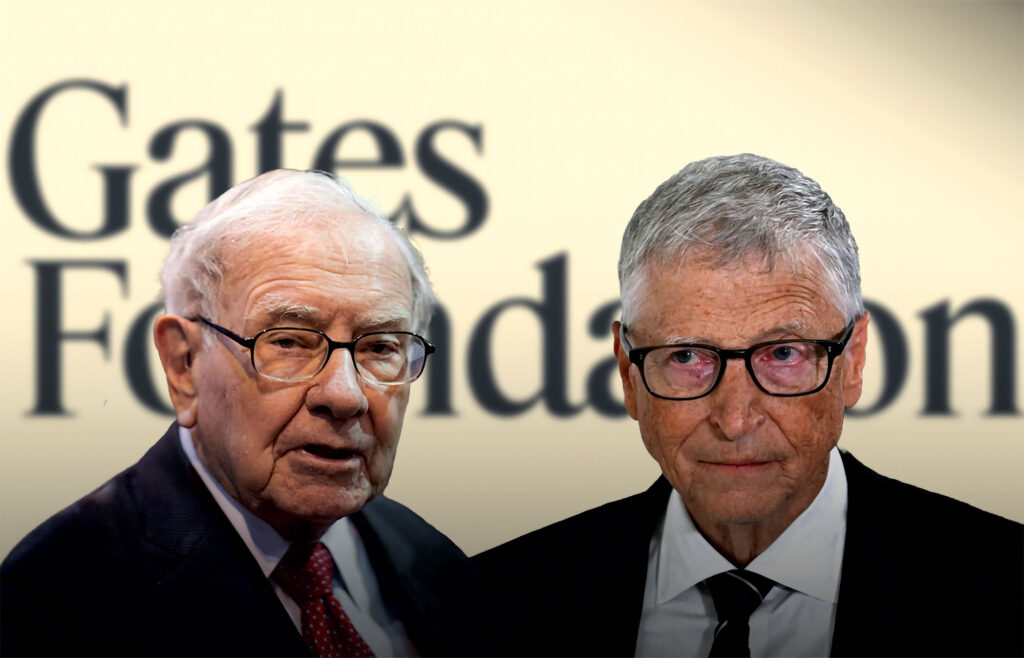
Warren Buffett & Bill Gates. Photo art: Diego Gómez
Philanthropy at this level is rarely separate from the commercial experience that preceded it. Business disciplines migrate into giving, influencing the causes selected, the structures created and the pace at which capital is deployed. The history of the world’s largest donors is therefore also a study in how business models continue to exert influence after wealth has been created.
The Industrial Origins of Modern Giving
Modern philanthropy emerged alongside the great industrial fortunes of the late nineteenth and early twentieth centuries. Carnegie’s wealth came from steel, the infrastructure technology of the railway age, where cost control, reinvestment and scale created extraordinary competitive advantage. When he sold Carnegie Steel to J. P. Morgan in 1901 for $480m, he became one of the wealthiest individuals in the world.
His 1889 essay, The Gospel of Wealth, argued that great fortunes carried obligations and should be administered during the owner’s lifetime rather than simply transferred to heirs. His library programme reflected the same operating discipline: a standardised model, clear conditions for participation and requirements for local co-investment. More than 2,500 libraries were ultimately funded across the English-speaking world.
Rockefeller introduced a different model. Standard Oil had reached extraordinary levels of market concentration, and the fortune it generated was channelled into institutions designed to survive their founder. With adviser Frederick Gates, Rockefeller pursued what became known as “scientific giving”, focusing on underlying causes rather than immediate symptoms. Funding helped establish the University of Chicago and Rockefeller University, supported medical research and public-health programmes, and contributed to campaigns against hookworm and yellow fever. Later programmes helped seed agricultural research associated with the Green Revolution.
Other industrial-era philanthropists developed variations on the same theme. Julius Rosenwald, whose fortune came from Sears, Roebuck, rejected perpetual foundations and required his charitable structure to spend itself down. His programme helped finance nearly 5,000 schools for Black children across the segregated American South, often using matching contributions from local communities.
Alfred Nobel converted wealth generated from explosives into a system of prizes that still defines international scientific and cultural recognition. George Peabody used a merchant-banking fortune to finance social housing in London, while Jamsetji Tata and his successors embedded philanthropy directly into corporate ownership. The Tata charitable trusts came to hold a controlling interest in Tata Sons, allowing a significant proportion of the group’s dividend income to flow towards charitable purposes. Henry Wellcome’s pharmaceutical fortune similarly became the foundation of the Wellcome Trust, today one of the world’s largest charitable funders of medical research.
Software and the Modern Mega-Gift
The late twentieth century reproduced the same dynamic in technology and finance. Microsoft created one of the most profitable software businesses in history, while Bill Gates later applied an engineering mindset to global health through the Gates Foundation. The organisation has focused heavily on measurable outcomes, cost efficiency and interventions capable of being deployed at scale.
Together with Melinda French Gates, Gates has given away tens of billions of dollars, while the foundation has become a major force in vaccination, disease prevention and global health. Its decision to spend down its assets and close by 2045 revives an older idea: foundations need not exist indefinitely to create lasting impact.
Warren Buffett represents a different approach. His philosophy was built around compounding and opportunity cost, and his philanthropy followed the same logic. Rather than distributing a large proportion of his wealth early, Buffett allowed his Berkshire Hathaway holdings to compound over decades before committing the majority of his fortune to charitable causes.
In 2006, he pledged the bulk of that wealth, initially with the Gates Foundation as the principal recipient. His lifetime giving has reached roughly $65bn, while later plans have shifted more responsibility towards foundations associated with his children. The method is recognisably Buffett: allow capital to compound, then allocate it through organisations considered capable of using it efficiently.
Other modern donors reflect the same transfer of business philosophy into philanthropy. Chuck Feeney gave away almost his entire fortune during his lifetime. George Soros used investment wealth to support open-society institutions, while Michael Bloomberg has directed a financial-data fortune towards public health, climate and urban policy. In India, Azim Premji transferred a substantial portion of his Wipro holdings to a foundation focused on education.
A New Model of Distribution
MacKenzie Scott has introduced one of the most significant changes to modern philanthropic practice. Her fortune is largely represented by the Amazon equity she received in the couple’s 2019 divorce settlement, but her method of distribution has differed sharply from the traditional foundation model.
Through Yield Giving, Scott has made large unrestricted grants to organisations selected through research rather than lengthy application processes. The approach removes many of the conditions traditionally attached to institutional philanthropy, allowing recipient organisations to decide how funds should be used. In less than seven years, she has distributed more than $26bn to thousands of organisations, including historically Black colleges and universities, community groups and social-service providers.
The model can be understood as an operational critique of philanthropic bureaucracy. Scott’s approach places greater emphasis on trust, speed and decentralised decision-making, transferring responsibility to organisations closer to the problems being addressed.
This reflects the same pattern visible throughout philanthropic history. Carnegie standardised and replicated; Rockefeller institutionalised research; Buffett compounded and delegated capital allocation. Scott has applied a model more closely associated with modern digital businesses: fewer intermediaries, lower transaction costs and rapid distribution at scale.
The Business Logic of Giving
Across two centuries, several characteristics repeatedly appear in the creation of major philanthropic fortunes. The first is industry economics. Steel, oil, mass retail, pharmaceuticals, software, financial services and e-commerce all created businesses capable of producing returns far beyond the personal consumption needs of their founders.
The second is concentrated ownership. Mega-giving is frequently associated with founders and families rather than professional managers. Large stockholdings can be transferred directly into foundations or charitable vehicles, while compounding can continue for decades before the capital is distributed. This helps explain why the largest gifts tend to emerge from businesses where founders retain substantial control.
The third is the transfer of method. Carnegie franchised a repeatable model, Rockefeller built institutions, Gates emphasised measurable outcomes, Buffett allocated capital through established operators and Scott reduced intermediation. The source of wealth and the mechanics of giving are often connected.
Wealth alone is insufficient. The decisive factor is often whether the founder treats philanthropy as a strategic allocation problem requiring the same attention as the business that created the capital.
The Limits of the Model
The relationship between concentrated wealth and concentrated giving also creates tensions. Philanthropy allows individuals to direct private fortunes towards public objectives without the democratic accountability attached to taxation or public expenditure. The larger the fortune, the greater the influence a donor can exercise over areas such as health, education, scientific research and public policy.
The Giving Pledge, launched by Gates, Melinda French Gates and Buffett in 2010, attempted to make large-scale giving a norm among the world’s wealthiest individuals. More than 250 people and couples have signed, committing to give away at least half their wealth. Yet the pace of new commitments has slowed, and some major fortunes continue to grow faster than donations are distributed.
The reputational dimension has also changed. Carnegie and Rockefeller saw their public images transformed by philanthropy, but modern audiences are more sceptical that charitable giving can offset aggressive business practices or extreme concentrations of wealth. Foundations increasingly face scrutiny over governance and transparency.
From Fortune to Institution
Some of the most durable models go further by embedding philanthropy directly into ownership structures. The Wellcome Trust, Tata Trusts and other charitable arrangements demonstrate that the distinction between successful business and philanthropic institution can sometimes be reduced or removed altogether.
These structures create a different form of legacy. Rather than waiting for a founder to distribute accumulated wealth, the enterprise itself can become a continuing source of funding for public purposes.
The broader lesson is that philanthropy is rarely independent of the businesses that finance it. The industries that generate extraordinary fortunes shape both the scale of giving and its operating methods. The most successful donors have approached philanthropy as a new application of the strategic discipline used to create the wealth.
For corporate leaders, the implications are clear. Wealth creation and wealth deployment are increasingly judged together, particularly as founder-controlled companies become larger and more influential. The next generation of major fortunes is likely to emerge from artificial intelligence, biotechnology and other scale industries. The more important question is whether their founders will develop equally ambitious models for converting private success into durable public value.
You may have an interest in also reading…

Digital Health’s Q1 2025 Unicorn Baby Boom: Investors Bet Big on Innovation
The first quarter of 2025 saw an unprecedented rise in the valuation of digital health startups, with a surge of

Otaviano Canuto: The Multiple Frontlines of the US-China Technological Rivalry
The United States leads in most fundamental advanced technologies, while China leads in practical implementation. China has reduced its technological
Otaviano Canuto: Growth Implications from a Fractured Trading System
To understand the implications of a fractured trading system, let’s use the period known as hyper-globalisation, or globalisation 2.0, as
