




































































The IMF’s Crosscurrents Update: Africa Is on the Wrong Side of Both Shocks, and Still Outgrowing the World
The July World Economic Outlook Update barely moves the Fund’s Africa forecasts, and its baseline has already been overtaken: the Strait of Hormuz was assumed to begin reopening in mid-July, and by 13 July fighting had resumed instead. Beneath the flat average the Fund sorts the continent into the cushioned, the upgraded and the squeezed, while sub-Saharan Africa keeps outgrowing the world with both crosscurrents against it.
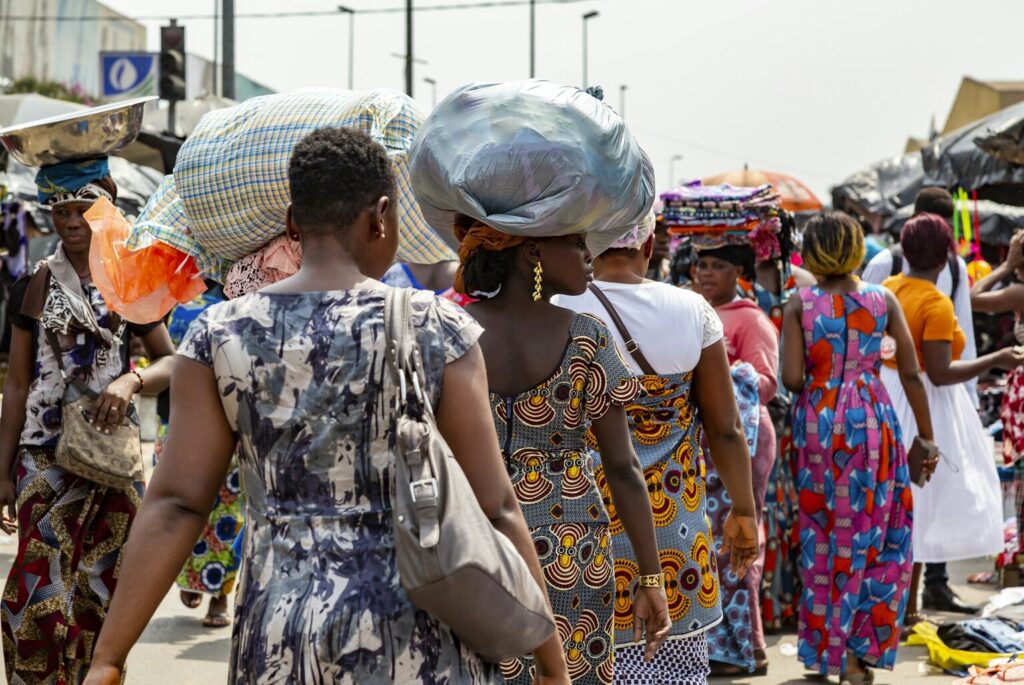
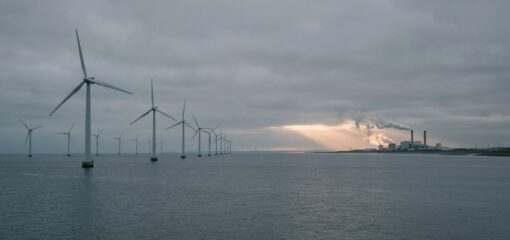
Photo by Eva Blue on Unsplash
The least informative numbers in the International Monetary Fund’s (IMF) July update are the ones Africa-watchers will quote most. Sub-Saharan Africa is projected to grow by 4.3 per cent in 2026, a revision from April of exactly zero, and by 4.5 per cent in 2027, a revision of plus 0.1 points. On that evidence, nothing happened.
The rest of the World Economic Outlook Update, published on 8 July as “Global Economy in Crosscurrents of War and Technology”, describes a world pulled in two directions: a Middle East war that has closed the Strait of Hormuz and left energy prices roughly 25 per cent above prewar levels, and an AI investment boom lifting the economies wired into the technology supply chain. Africa sits on the wrong side of both. The Fund’s own text concedes what its table conceals: the regional figure “masks substantial divergence across countries, reflecting differences in policy space, reform implementation, and exposure to external shocks”.
Even so, the region clears the world’s bar comfortably. With global growth projected at 3.0 per cent in 2026 and 3.4 per cent in 2027, sub-Saharan Africa outgrows the world by 1.3 points this year and 1.1 next. “The world economy has weathered the shock from the war better than feared so far, with limited evidence of second round effects,” Petya Koeva Brooks, deputy director of the IMF’s research department, told the launch press conference. Africa is weathering it without the offset.
A Boom That Passes the Continent By
The Update’s arithmetic of winners is blunt. The four largest net exporters of AI-related hardware (Taiwan Province of China, Korea, Thailand and Malaysia) beat the Fund’s first-quarter growth projections by an average of 4.4 percentage points; the rest of the world undershot by 0.3 points. Korea alone grew at an annualised 7.5 per cent against the 1.8 per cent projected in April. That boom is what rescues the global 2027 number. None of its named beneficiaries is African.
The war’s channels, by contrast, run straight through African import bills. On market pricing as of 10 June, the Fund assumes oil averaging $89 a barrel in 2026 and projects fertiliser prices rising 26 per cent and food prices 8 per cent this year. For oil-importing, non-resource-intensive economies, those three lines largely are the forecast. The Update’s most consequential sentence for the continent concerns even its bigger economies, which “are largely absent from the AI-driven global technology upswing and face headwinds from the decline in official development assistance”.
Cushioned, Upgraded, Squeezed
The near-flat average is the sum of three different fates.
The cushioned. Nigeria holds at 4.1 per cent for 2026 and 4.3 per cent for 2027, unchanged from April, supported in the Fund’s words by “improved macroeconomic stability and favorable terms-of-trade effects”. The same paragraph expects costlier essentials to “further aggravate poverty and food insecurity”; a terms-of-trade cushion is not a welfare policy. Angola’s cushion is thinner still. The Fund’s Article IV consultation, concluded in May, called higher oil prices “a temporary offset” to a structural revenue decline, with production down nearly 40 per cent to about 1.05 million barrels a day in 2025. Price is doing the work that barrels no longer can.
The upgraded. Egypt earned the continent’s largest revision, upgraded 0.4 points to 4.6 per cent growth for the 2026/27 fiscal year. The award came while the Fund expects the wider Middle East and North Africa region to contract by 0.5 per cent in 2026. The reasoning is policy: regional business press points to reform delivery and firmer macroeconomic stability under its Extended Fund Facility programme. South Africa’s move is smaller, up 0.1 points to 1.1 per cent for 2026, credited to “strengthened policy frameworks and ongoing structural reforms”. Just three African economies are named in the Update’s tables; the two upgrades among them were earned in finance ministries, not commodity markets.
The squeezed. Strip out Nigeria and South Africa and the rest of the region slows from 5.6 per cent in 2025 to 5.2 per cent in both 2026 and 2027, on the Update’s figures. Inside that average sit the economies holding none of the cards: importers of fuel and fertiliser, borrowers exposed to any repricing of sovereign risk, and states that depend on shrinking aid. Abebe Selassie, director of the IMF’s African department, put the regional forecast some 0.3 points below its pre-war path in April, and observed that the aid decline lands hardest on fragile, low-income countries where assistance finances budgets, healthcare and food programmes.
The sorting is a reading of external accounts, not geography: it holds wherever fuel, fertiliser and foreign assistance dominate the balance of payments, and it breaks where policy credibility outweighs commodity exposure.
The Shock Absorber Is Being Removed
What separates this war shock from earlier ones is what no longer arrives afterwards. The Fund’s April Regional Economic Outlook, “Hard-Won Gains Under Pressure”, gave the subject its own chapter, “Aid Cuts in Sub-Saharan Africa: This Time Is Different”, estimating that bilateral aid was cut by 16 to 28 per cent in 2025 and judging the contraction “larger, more synchronized across countries, and predominantly donor driven” than past episodes. Earlier aid cycles turned: donors retrenched, then returned. This one, on the Fund’s reading, is structural. The July Update lists the consequence among its risks: shrinking official development assistance complicates fiscal adjustment in low-income countries just as an Ebola public health emergency and an extraordinarily strong El Niño loom. Lord Waverley argued in these pages last September that Africa’s new optimism rests on partnership rather than paternalism, and warned that Western aid withdrawal would leave vacuums for others to fill. The Fund has now put numbers on the withdrawal.
What to Be Sceptical About
The flat 4.3 rests on an assumption that failed within days of publication. The Update’s baseline had the reopening of the Strait of Hormuz beginning in mid-July, with conditions broadly back to prewar norms by March 2027. Instead the mid-June truce between Washington and Tehran unravelled: strikes had resumed by 13 July, when Iran’s military said it had struck two tankers in the strait, and US Central Command reimposed the naval blockade of Iranian ports the next day. By late July the fighting had widened further, with US-Iran talks over control of the strait deadlocked and the waterway still shut. Bloomberg tanker tracking put crude flows through the strait at about 5.5 million barrels a day in the seven days to 15 July, down from roughly 9.4 million the week before. The downside the Fund sketched, inventories near multiyear lows and every import-price channel widening, is now materialising. It sharpens rather than overturns the sorting above: each contested week widens the gap between the cushioned, the upgraded and the squeezed. The technology side has its own warning label: the Update flags “frothy equity valuations” in AI-exposed markets, and a correction would shrink the very world number Africa outgrows. Convergence against a stalling world is consolation by arithmetic. Egypt’s upgrade is partly timing: the Fund removed 0.4 points from fiscal 2027/28 as it added them to 2026/27. And the unchanged regional aggregate is largely two heavyweight anchors sitting on a slowing remainder.
The Markers That Will Decide It
Whether the region’s fastest growth run in a decade, 4.5 per cent in 2025 by the Fund’s April estimate, survives 2026-27 hangs on watchable things. Whether the strait reopens on anything like the Fund’s timetable, and which economies’ foreign reserves and fiscal buffers hold while it stays contested. Fertiliser and food prices into the coming planting seasons, the channel the Fund’s darkest scenario runs through: smallholder food systems that it says cannot outbid wealthier buyers. Donor budgets, which will test how structural the aid contraction proves. Reform continuity where the upgrades were earned, Egypt’s programme reviews above all. Furthest out, whether any African economy begins plugging into the technology cycle; the Update names the preconditions without sentiment: electricity supply, digital infrastructure, skills. That is the playbook the World Bank’s Indermit Gill and M Ayhan Kose set out for developing economies in 2024: investment booms, they argued, are engineered by policy packages. The growth premium is real, and it has survived the first year of a war it did not start. What it has not yet won is a share of the boom on the far side of the crosscurrent. The 2027 columns will show whether that has begun to change.
Sources
1. IMF, World Economic Outlook Update, July 2026: “Global Economy in Crosscurrents of War and Technology”, 8 July 2026. https://www.imf.org/en/publications/weo/issues/2026/07/08/world-economic-outlook-update-july-2026 (PDF: https://www.imf.org/-/media/files/publications/weo/2026/update/july/english/text.pdf). Accessed 18 July 2026. Full text read via a byte-identical mirror copy (https://ent.news/2026/7/361.pdf) because imf.org returned HTTP 403 to the research tools; all figures cross-checked against independent reports (sources 9-11).
2. IMF Media Center, “IMF – July 26 World Economic Outlook Update” (press-conference summary, remarks by Petya Koeva Brooks), 8 July 2026. https://mediacenter.imf.org/news/imf—july-26-world-economic-outlook-update/s/26e6f084-64f7-435a-8dee-331f26a4d2ce. Accessed 18 July 2026.
3. IMF, Press Briefing Transcript: World Economic Outlook Update, 8 July 2026. https://www.imf.org/en/news/articles/2026/07/08/tr070826-weo-press-briefing-transcript-july-8-2026. Existence confirmed via search; page not retrievable in-session (HTTP 403). Accessed 18 July 2026.
4. IMF, Regional Economic Outlook for Sub-Saharan Africa, April 2026: “Hard-Won Gains Under Pressure”, 16 April 2026. https://www.imf.org/en/publications/reo/ssa/issues/2026/04/16/regional-economic-outlook-for-sub-saharan-africa-april-2026. Content obtained via search excerpts (PDF blocked in-session). Accessed 18 July 2026.
5. IMF, REO Sub-Saharan Africa April 2026, Chapter 2: “Aid Cuts in Sub-Saharan Africa: This Time Is Different”. https://www.imf.org/-/media/files/publications/reo/afr/2026/april/english/ch2.pdf. Content via search excerpts. Accessed 18 July 2026.
6. Abebe Selassie, Introductory Remarks, IMF African Department Press Briefing, 2026 Spring Meetings, 16 April 2026. https://www.imf.org/en/news/articles/2026/04/16/sp041626-subsaharan-africa-press-briefing-abebe-selassie. Content via search excerpts. Accessed 18 July 2026.
7. IMF, World Economic Outlook, April 2026: “Global Economy in the Shadow of War”, 14 April 2026 (comparison baseline: global growth 3.1 per cent 2026, 3.2 per cent 2027). https://www.imf.org/en/publications/weo/issues/2026/04/14/world-economic-outlook-april-2026. Accessed 18 July 2026.
8. IMF, Press Release No. 26/135: “IMF Executive Board Concludes 2026 Article IV Consultation with Angola”, 1 May 2026. https://www.imf.org/en/news/articles/2026/05/01/pr26135imf-executive-board-concludes-2026-article-iv-consultation-with-angola. Content via search excerpts. Accessed 18 July 2026.
9. Zawya (Arab Finance), “IMF raises Egypt’s FY2026/27 GDP growth forecast to 4.6%”, July 2026. https://www.zawya.com/en/economy/north-africa/imf-raises-egypts-fy2026-27-gdp-growth-forecast-to-46-gtjv3wti. Accessed 18 July 2026.
10. The Astana Times, “IMF Sees Global Growth Holding Steady Despite Middle East War Shock”, July 2026. https://astanatimes.com/2026/07/imf-sees-global-growth-holding-steady-despite-middle-east-war-shock/. Fetched 18 July 2026.
11. CNBC Africa, “IMF’s July 2026 World Economic Outlook” (interview with Deniz Igan, Division Chief, IMF Research Department), July 2026. https://www.cnbcafrica.com/media/7783529459895/imfs-july-2026-world-economic-outlook. Fetched 18 July 2026.
12. CFI.co, Lord Waverley, “Africa Enters an Age of Optimism”, 7 September 2025. https://cfi.co/africa/2025/09/africa-enters-an-age-of-optimism/. Fetched 18 July 2026.
13. CFI.co, “World Bank: How to Accelerate Growth and Progress in Developing Economies”, 26 March 2024. https://cfi.co/menu/multilaterals/2024/03/world-bank-how-to-accelerate-growth-and-progress-in-developing-economies/. Fetched 18 July 2026.
14. CNN live coverage, “US resumes strikes while Iran says it struck two tankers in Strait of Hormuz”, 13 July 2026. https://www.cnn.com/2026/07/13/world/live-news/iran-war-trump. Headline and summary via search, 18 July 2026.
15. CNN live coverage, “US naval blockade of Iranian ports goes into effect”, 14 July 2026. https://www.cnn.com/2026/07/14/world/live-news/iran-war-trump. Via search, 18 July 2026.
16. NPR, “The U.S. is back to blockading Iran as the Strait of Hormuz standoff escalates”, 14 July 2026. https://www.npr.org/2026/07/14/nx-s1-5893257/us-iran-updates. Via search, 18 July 2026.
17. Bloomberg, “US-Iran Truce Collapses as Attacks Worsen and Hormuz Blockade Returns”, 14 July 2026. https://www.bloomberg.com/news/articles/2026-07-14/us-iran-truce-collapses-as-attacks-worsen-and-blockade-returns. Headline via search, 18 July 2026.
18. Bloomberg (syndicated in The Spokesman-Review), “Iran-US hostilities worsen as Hormuz shipping traffic falls”, 16 July 2026. https://www.spokesman.com/stories/2026/jul/16/iran-us-hostilities-worsen-as-hormuz-shipping-traf/. Via search, 18 July 2026 (source of the tanker-tracking flow figures).
19. CNN live coverage, “Iran and US widen attacks as renewed conflict shows no sign of de-escalating”, 17 July 2026. https://www.cnn.com/2026/07/17/world/live-news/iran-war-trump. Headline via search, 18 July 2026. Cross-checks: ABC News timeline of the ceasefire/MOU breakdown (https://abcnews.com/Politics/us-iran-ceasefire-mou-broke-timeline/story?id=134622392); Wikipedia, “2026 Strait of Hormuz crisis” (timeline cross-reference only, fetched 18 July 2026).
You may have an interest in also reading…

Banco Société Générale Moçambique: Established, Respected, Clear on Priorities, and Transparent in All its Dealings
Mozambique institution has a major European player as a shareholder — and an A rating from S&P… With a presence
Ploughing a Determined Path to Lead the Field in Financial Sector
MD and CEO of Nigeria’s Jaiz Bank Haruna Musa has many strings to his bow — and many accolades for
Strategic FDI: How Developing Economies Can Attract Investment That Transforms
Foreign Direct Investment (FDI) remains a cornerstone of development strategies across emerging markets—but quality, not just quantity, determines its impact.
