












































































The Mastermind: How Taylor Swift Rewrote the Rules of the Global Economy
She does not just top the charts; she moves the needle on national GDPs. From the $2bn Eras Tour to the unprecedented reclaiming of her intellectual property, Taylor Swift has built a $1.6bn empire on the radical idea that the artist should be the CEO. In 2026, as she enters her third decade of dominance, the “Swift Model” offers valuable lessons for boardrooms across Britain.
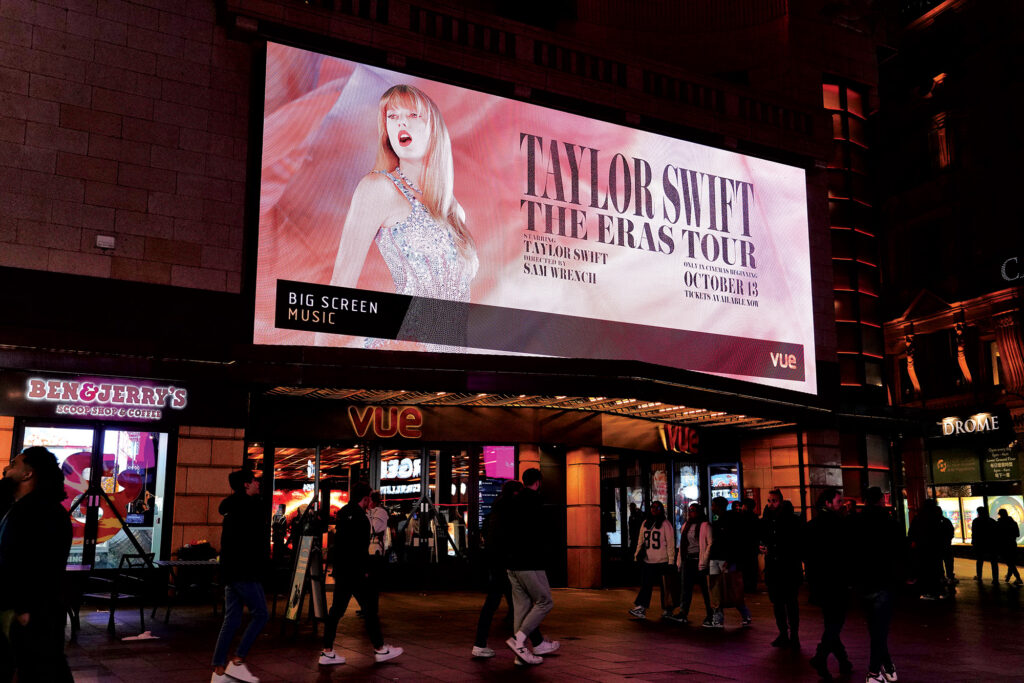
In the summer of 2024, a curious phenomenon caught the attention of central bankers from Singapore to Stockholm. It was not a shift in interest rate policy or a spike in oil prices, but the economic impact of a 34-year-old American artist with a 44-song setlist.
The “Swift Lift”, the surge in local economic activity accompanying each stop of the Eras Tour, became a defining case study in the experience economy. In Toronto alone, Swift’s six-night residency generated an estimated $282m in economic impact, equivalent to hosting a Super Bowl multiple times over the course of a single tour cycle.
To view Swift merely as a high-performing product, however, is to overlook the structural sophistication of the enterprise she has built. As of early 2026, her net worth stands at approximately $1.6bn. Unlike peers who diversified into consumer goods, Swift reached this level largely through music, transforming artistic output into a vertically integrated business model.
This is the story of how a performer became a sovereign economic force.
Vertical Integration and the “Taylor’s Version” Strategy
One of the most consequential decisions in the modern music industry came in 2019, when Swift responded to the sale of her master recordings by re-recording her early catalogue. Rather than contest ownership through traditional channels, she effectively rebuilt the asset base.
By releasing “Taylor’s Version” albums, she redirected consumer demand towards assets she fully controlled. The originals, while still technically valuable, became commercially less relevant for licensing and streaming, effectively shifting the centre of economic gravity back into her own portfolio.
The strategy represents a clear example of vertical integration. Swift leveraged brand loyalty to migrate her audience to a product she owned outright. By 2026, her catalogue is estimated to be worth approximately $600m, underscoring the long-term value of intellectual property ownership in the digital economy.
Reinventing Scarcity: The Era Framework
Where many global brands struggle with longevity, Swift has institutionalised reinvention. Each album cycle is positioned as a distinct “Era”, complete with its own aesthetic, narrative, and audience segmentation.
This approach enables continuous renewal while maintaining brand coherence. Strategic shifts, from country to pop to indie-folk, have allowed Swift to capture multiple demographic cohorts simultaneously.
Her marketing strategy further amplifies engagement. The use of embedded clues and narrative continuity transforms passive listeners into active participants, creating a feedback loop of sustained attention and organic promotion.
Swiftonomics: The Power of the Core Audience
Conventional business theory often favours broad customer acquisition. Swift’s model prioritises depth over breadth. By cultivating a highly engaged core audience, she has created a resilient and self-reinforcing ecosystem.
The Eras Tour exceeded $2bn in ticket sales, becoming the highest-grossing tour in history. Ancillary revenues proved equally significant, with merchandise sales averaging approximately $2m per night. Her 2025 album release achieved record-breaking global sales within 24 hours, driven in part by multiple collectible formats.
This model effectively turns consumers into advocates. Fans do not simply purchase products; they amplify them, defend the brand, and extend its reach across digital platforms.
Strategic Partnerships: From Endorsement to Integration
The evolution of brand partnerships is another pillar of the Swift Model. Traditional endorsements have given way to integrated collaborations that deliver measurable value.
Her partnership with Capital One illustrates this shift. Beyond brand visibility, the collaboration provided exclusive ticket access, driving customer acquisition and retention. Reports suggest a 22 percent higher retention rate compared to standard campaigns.
Swift’s approach positions her brand as a controlled gateway. Access is selective and aligned with audience benefit, reinforcing both exclusivity and loyalty.
The 2026 Outlook: A Sovereign Brand
By 2026, Swift’s business model is studied in leading academic institutions for its adaptability and strategic coherence. She has navigated key structural challenges shaping the modern economy, positioning her as a benchmark for intellectual property strategy and brand-led value creation.
In the face of AI-generated content, her emphasis on authenticity and narrative complexity creates defensible differentiation. Control over masters and distribution reduces exposure to streaming platform economics. Meanwhile, the success of live experiences demonstrates resilience in periods of economic uncertainty.
Swift now operates less as an artist and more as a diversified intellectual property enterprise, with a scale comparable to mid-tier listed companies.
For executives, the implications are clear. Competitive advantage increasingly lies in ownership of narrative, depth of community, and control of intellectual property. In a market defined by attention scarcity, those who build enduring ecosystems around their brands will capture long-term value.
The Swift Model suggests a shift away from transactional relationships towards ecosystem building. In a global marketplace defined by trust and attention, those who master this transition will shape the next phase of economic value creation.
The ‘Swift Lift’ by the Numbers
While the “Taylor’s Version” model highlights long-term asset control, the immediate economic impact of the Eras Tour delivered a powerful boost to the UK’s post-pandemic hospitality sector. Analysts at Barclays and UK Music have since quantified the phenomenon, coining the term “Swiftonomics” to capture its scale.
The National Balance Sheet
• £997m: Estimated total contribution to the UK economy from the 1.2 million fans attending 15 tour dates.
• £848: Average spend per attendee per show, more than 12 times the cost of a typical UK night out (£67) and roughly double the average spend of a UK wedding guest.
• 62 percent surge: Year-on-year increase in international music tourism to the UK in 2024, driven largely by North American fans opting for the European leg.
London: The Global Capital of Eras
With eight nights at Wembley Stadium, more than any other city, London became the focal point of the tour’s economic impact.
• £300m: Estimated boost to London’s economy, according to the Greater London Authority.
• 150,000+ daily Tube entries: Wembley Park station recorded its highest footfall since the 2012 Olympics, exceeding pre-pandemic levels.
• 94 percent hotel occupancy: August 2024 saw record occupancy rates, with room prices in Wembley and North West London rising by an average of 27 percent.
The Inflationary ‘Glitch’
The scale of the tour was sufficient to influence macroeconomic indicators. “Swiftflation” emerged as a talking point within the Bank of England, as services inflation held at 5.7 percent in June 2024, partly driven by temporary increases in accommodation and transport costs during peak tour periods.
You may have an interest in also reading…

In a Barbie World, Why Do Women Still Seem to Be on the Losing End of the Deal?
The Summer of Barbie has been impossible to avoid as the doll’s popularity reached new heights. A heavily marketed lead-up

Otaviano Canuto: The US Elections Will Have Global Economic Impact
On Tuesday, US voters will decide who will control the White House, the Senate, and the House of Representatives. Kamala

ARTICO Equity Team at Serafin Asset Management: Sustainable Investing Will Work — If the Performance is Right
Sustainability and ESG criteria have taken on new importance in the world of finance — but the ARTICO Equity Team
