






































































The Reno Siege: Rupert Murdoch and the Great Succession Schism
As Rupert Murdoch approaches the twilight of his reign, a $3.3bn settlement in a Nevada courtroom has resolved the question of control over one of the world’s most influential media empires. Yet the attempt to impose “family harmony” has instead exposed the structural and emotional fault lines of dynastic succession, offering a stark lesson in the limits of founder control.
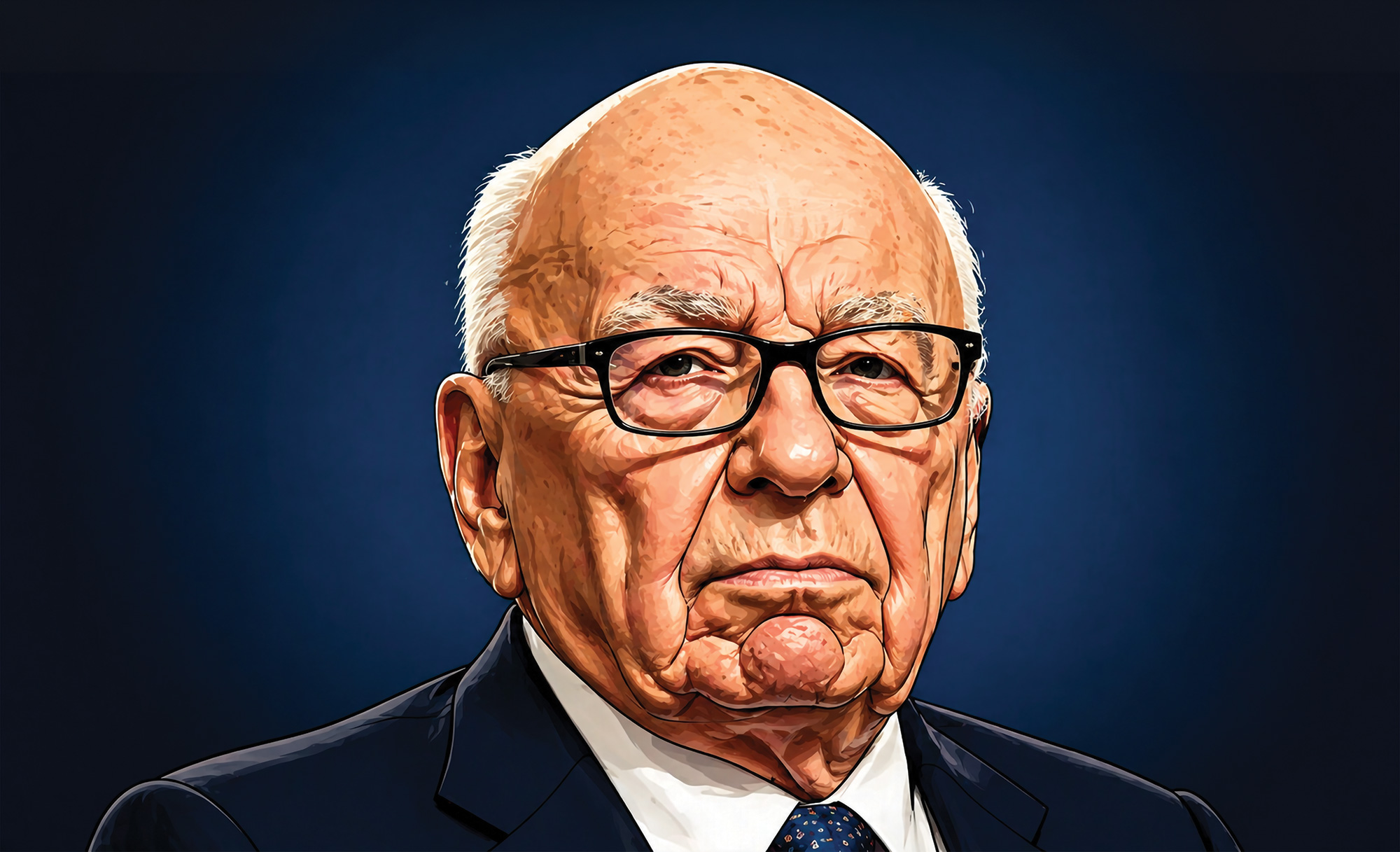
Rupert Murdoch
In 2026, Murdoch remains a formidable presence at ninety-five, but the architecture of his empire has been permanently altered. The release of Dynasty: The Murdochs has brought renewed attention to a legal battle that unfolded largely out of public view, culminating in what one court official described as “the most expensive sibling rivalry in history.”
The conflict reached its formal conclusion in September 2025, though its implications are only now being fully absorbed across corporate boardrooms. For decades, the question of succession within the Murdoch empire invited speculation. The eventual outcome was neither consensus nor continuity, but a costly resolution financed through a multi-billion-dollar settlement.
The Limits of the “Irrevocable”
At the centre of the dispute stood the Murdoch Family Trust, established in 1999 following Murdoch’s divorce from Anna Torv. Designed as an irrevocable structure, it granted equal voting power to his four eldest children: Prudence, Elisabeth, Lachlan, and James.
Over time, however, the trust became a source of constraint rather than stability. As ideological divisions within the family deepened, particularly over the editorial direction of key assets, the original framework proved increasingly incompatible with Murdoch’s strategic preferences.
In late 2023, Rupert Murdoch, supported by Lachlan, sought to amend the trust to consolidate control. The proposal would have removed voting rights from the other siblings and transferred full authority to Lachlan. The rationale was framed as preserving editorial consistency and protecting asset value, but the courts took a different view.
In December 2024, Probate Commissioner Edmund Gorman Jr rejected the attempt, describing it as a “carefully crafted charade” executed in bad faith. The ruling underscored a fundamental principle: once established, a trust cannot be reshaped to reflect shifting personal priorities.
The Cost of Resolution
By mid-2025, the dispute had reached an impasse. Internal divisions threatened both governance and valuation, while prolonged uncertainty risked destabilising key assets.
The eventual settlement, announced in September 2025, resolved the deadlock but at significant cost. James, Elisabeth, and Prudence agreed to exit the trust and relinquish their voting rights in exchange for a combined payout of $3.3bn. Each received approximately $1.1bn, effectively monetising their position while severing formal ties to the family’s control structure.
Lachlan Murdoch emerged as the sole controlling figure, with authority secured well into the coming decades. However, the consolidation of power came at the expense of internal cohesion and diversity of perspective within the ownership structure.
Governance Under Strain
The episode highlights the vulnerabilities inherent in dual-class share systems. While such structures can enable long-term strategic focus, they also concentrate decision-making power in ways that can amplify internal conflict.
In the Murdoch case, the trust controlled roughly 41 percent of voting power while holding a significantly smaller economic stake. This imbalance allowed governance outcomes to be determined by family dynamics rather than market mechanisms.
For investors, the lesson is clear. When control structures depend on personal relationships rather than institutional processes, the risk profile becomes less predictable. Succession disputes in such frameworks are not merely personal matters; they are corporate events with material consequences.
Ideology and Succession
A further dimension of the conflict was ideological alignment. Murdoch’s preference for Lachlan was closely tied to a shared editorial vision, particularly regarding the positioning of Fox News and related assets.
This raises a broader question. Succession based on ideological continuity may preserve short-term identity, but it can constrain adaptability. In rapidly evolving media and technology environments, long-term resilience depends on flexibility rather than alignment with a founder’s worldview.
The Murdoch case illustrates the tension between legacy preservation and future relevance. In prioritising the former, the structure of succession may have limited the strategic optionality of the business.
The Human Dimension
Beyond governance and capital allocation, the episode reflects a deeper breakdown in family cohesion. The settlement formalised not only a transfer of control but also a separation of interests that appears unlikely to be reversed.
The siblings remain subject to a long-term standstill agreement, preventing further intervention in the business. While financially compensated, they are effectively removed from the enterprise that defined the family’s identity.
For James Murdoch, the transition has involved a shift toward investment and philanthropic activities. Others have adopted a lower profile, reflecting a broader disengagement from the family’s core media assets.
Implications for Global Business
As other founder-led empires approach generational transition, the Murdoch case serves as a cautionary precedent. It highlights three critical considerations.
First, legal structures must be treated as binding commitments. Attempts to retroactively alter foundational agreements risk both legal defeat and reputational damage.
Second, succession planning should prioritise institutional resilience over personal preference. A company’s future cannot be anchored solely in a founder’s perspective.
Third, the financial cost of unresolved succession can be substantial. The $3.3bn settlement represents capital diverted from investment, innovation, and strategic expansion.
A Redefined Empire
Rupert Murdoch remains Chairman Emeritus, a role that suggests continuity but masks a fundamental shift in power. Lachlan Murdoch now leads an empire that has been reshaped by conflict as much as by strategy.
The “Reno Siege” has left a lasting imprint. It has clarified control, but it has also exposed the fragility of dynastic governance in a modern corporate context.
As the media landscape continues to evolve, the central question is no longer who inherits the empire, but whether its structure is equipped to adapt beyond its founder’s influence.
The Murdoch succession was ultimately resolved through capital, not consensus. For global business leaders, it stands as a reminder that succession is not merely a legal exercise. It is a test of governance, discipline, and the ability to design for a future that cannot be fully controlled.
You may have an interest in also reading…

How Will Artificial Intelligence Affect the Economy?
Artificial intelligence (AI) is the name given to the broad spectrum of technologies by which machines can perceive, interpret, learn,

The Ultimate Investment Pitch: How to Win Funding on Conviction, Not Cash
Forget glossy decks and expensive consultants. Capital is not secured through ornamentation, but through belief. The strongest pitches are built

Wall Street Checkmate: The Intriguing Story of Chess Expertise and Business
High-level finance is a combat zone, and every choice can make or break a career. Move carefully… Can the strategies
