

































































Maldives Islamic Bank at $1bn: From Niche Pioneer to National Banking Force
Maldives Islamic Bank (MIB) has crossed the $1bn asset threshold, a milestone that says as much about strategic execution as it does about scale. In just 15 years, the country’s first dedicated Islamic bank has moved from specialist challenger to mainstream force — growing profits, deposits, financing and digital reach while improving asset quality and rising to become the Maldives’ second-largest bank by assets.
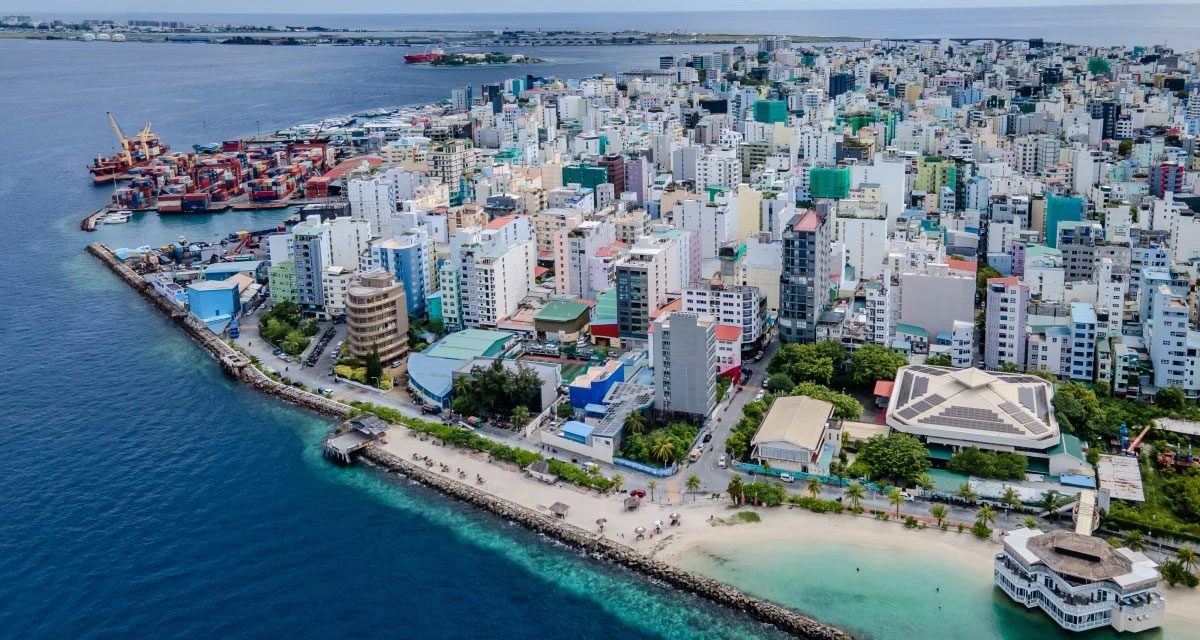
Maldives: Malé
In banking, growth is easy to celebrate and hard to judge. A larger balance sheet can signal ambition, but it can just as easily conceal weaker underwriting, overstretched systems or a business model that has outrun its controls. What makes Maldives Islamic Bank’s latest milestone noteworthy is not simply that total assets surpassed $1bn in 2025. It is that the bank appears to have grown on multiple fronts at once — scale, profitability, market share, asset quality and digital reach — without the usual signs of strategic compromise.
That is a significant achievement for a bank that opened only 15 years ago as the pioneer of Islamic banking in the Maldives. At launch, MIB represented a niche proposition in a market long dominated by conventional lenders. Today, it serves more than 218,000 customers, has become the second-largest bank in the country by total assets, and has turned Shariah-compliant banking from an alternative into a mainstream choice for Maldivian households and businesses.
The numbers are striking. Between 2022 and 2025, total assets rose from MVR 6.2bn to MVR 16.65bn, customer deposits climbed from MVR 5.14bn to MVR 13.64bn, and net financing expanded from MVR 2.82bn to MVR 7.51bn. Profit after tax more than tripled, rising from MVR 121mn to MVR 371mn, while return on equity improved from 16.8 percent to 28.4 percent. Over the same period, the non-performing advances ratio declined from 4.59 percent to 3.0 percent. In other words, the bank did not simply become larger; it became more profitable and more resilient.
That combination matters. Fast-growing banks often weaken somewhere as they scale — through looser credit discipline, heavier concentration risk or mounting cost pressures. MIB’s recent performance suggests a more disciplined trajectory. The bank’s operating income rose from MVR 343mn to MVR 897mn, but growth was not driven by financing income alone. Fee and commission income increased by more than 300 percent, while other operating income expanded even faster, pointing to a more diversified and therefore more resilient earnings base. The implication is important: MIB is less dependent on pure profit-rate spreads than it once was, and more able to generate income across payments, trade finance and digital banking activity.
The competitive significance is equally clear. The Maldivian banking sector remains dominated by the long-established Bank of Maldives, but the rest of the market has traditionally operated as a relatively tight cluster of smaller institutions. MIB was part of that cluster only a few years ago. It has since broken away. By 2025, its estimated share of total system assets had risen from about 7 percent to 16 percent, while its share of customer deposits had nearly tripled from roughly 7 percent to 19 percent. The bank has overtaken SBI and now stands as the country’s second-largest bank by assets, with a particularly strong position in deposits.
Deposits, in many ways, tell the real story. Trust is ultimately the most valuable banking asset, and MIB’s deposit growth suggests that both retail and institutional customers have responded to its model. Customer deposits rose by more than 150 percent over three years, and the customer base itself nearly doubled. Retail deposits remain central, accounting for 48 percent of the total base in 2025, but corporate deposits now represent 50 percent — evidence that treasury teams, financial institutions and businesses have become increasingly comfortable placing funds with the bank.
This trust has not emerged in a vacuum. MIB has built it partly through physical expansion and partly through digital reach. In a country of 1,200 islands spread across 20 atolls, access is not a secondary consideration; it is a competitive necessity. The bank expanded its ATM and ECRM network from 15 units across six atolls to 51 units across 12 atolls, while adding new sales centres and broadening its payments footprint. Just as importantly, it used digital tools to remove geography as a barrier to onboarding. MIB is described as the only bank in the Maldives to offer fully instant online account opening for individuals through the national digital identity platform, Efaas, enabling new customers to open, fund and begin using accounts within minutes. Corporate onboarding has also been digitised through integration with the Ministry of Economic Development and Trade’s business portal.
That digital push has reshaped more than acquisition. It has materially changed how customers use the bank. MIB reports strong growth in internet and mobile banking logins and transactions, rising adoption of POS and card services, and the continued rollout of digital channels such as FaisaNet, FaisaMobile X and the UjaalaaNow financing platform. More than 90 percent of customers now access services through digital channels, predominantly mobile banking. The bank has also introduced instant debit card issuance and wearable payment tools such as FaisaWear rings and tags, reinforcing a broader image of accessibility and innovation.
The transformation of the financing book is just as important. In 2022, MIB was overwhelmingly a consumer lender. By 2025, corporate financing represented 40 percent of the portfolio, up from virtually nothing. This shift has taken the bank deeper into the productive economy, including tourism infrastructure, resort development, guesthouse expansion, construction, trade finance and strategic infrastructure projects. Financing to the tourism sector alone reached MVR 668mn in 2025, up 385 percent from 2022, while infrastructure-related exposures exceeded MVR 786mn. Trade activity also expanded sharply, with transaction volume up 60 percent and total transaction value reaching MVR 7.6bn.
This broader corporate role signals an important evolution. MIB is no longer simply a retail-focused Islamic bank; it is becoming a full-service financial institution financing national development as well as household needs. That matters in a small, open economy where banking depth and trade capacity are closely linked.
Investors, meanwhile, have been rewarded. MIB’s share price rose from MVR 35.10 in 2022 to MVR 102.88 in 2025, while return on assets also improved despite rapid balance-sheet expansion. Capital adequacy remained sound, with Tier 1 capital at 11.3 percent and total capital adequacy at 16.2 percent, both above regulatory minimums. This gives the bank room to grow further — but it also raises the standard it must now meet.
That, perhaps, is the real significance of the $1bn threshold. MIB has answered the original question — whether Islamic banking could work at scale in the Maldives. The next question is more demanding: whether it can sustain this growth, preserve asset quality, deepen its corporate and SME franchise, and remain the country’s leading digital Islamic bank as competition and expectations rise. On the evidence so far, it has given itself a strong platform from which to try.
You may have an interest in also reading…

The Cost Curve That Is Squeezing Coal and Gas
By the end of 2025, the energy transition’s most persistent objection — that renewables cannot be relied upon when the

Patrick Anderson Knows How to Weather Rough Seas — and Has a Good Crew Behind Him
Patrick Anderson, the chief executive of Nordic asset management and financial markets firm United Bankers, in conversation with CFI.co. United

SegurCaixa Adeslas Emphasises Value Creation as a Way to Endure Its Sustainable Growth Strategy
The Spanish insurance company stands out for the digitalization of its proceses that allows it to offer more accesible, personalised
