








































































Our Hero Ariyaratne: Truly Empowering People
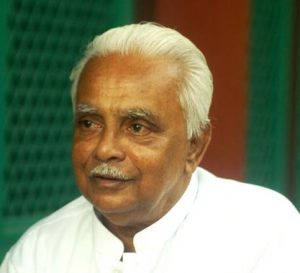
Dr. A.T. (Ari) Ariyaratne founded the Sarvodaya Shramadana Movement in Sri Lanka in the 1960s and still serves as its President. It is the world’s largest spiritually-based people’s development movement and is at work in 15.000 villages throughout Sri Lanka.
Since those early days, Sarvodaya has brought together tens of thousands of people to create housing, solar energy, food production, pre-school, legal services, women’s projects, orphanages, child welfare agencies and village banks.
Ari was strongly influenced by the economist Ernst Schumacher whose 1973 book Small is Beautiful proposes smaller appropriate technologies that truly empower people – and this notion informs the Sarvodaya attitude to development aid. Dr. Ariyaratne has described the goal of Sarvodaya as a “dual awakening” – that of the individual and that of society. Sarvodaya means “the awakening of all” and Shramadana means “sharing”.
“Sarvodaya is the essence of religion because it seeks to unite all people so that they may work together to build a non-violent and cooperative society. Everybody wakes up through sharing labour, energy, resources, and love.”
Dr. Ariyaratne is a Buddhist who cooperates with all – irrespective of religious and ethnic groupings – and has worked tirelessly to address the conflict in his country. Among his most treasured international accolades for development and peace efforts is the Mahatma Ghandi Peace Prize awarded by the government of India (1966).
You may have an interest in also reading…
Leo Burnett: The Man Who Gave Brands a Heartbeat
He believed in the power of simple truths, the inherent drama of everyday products, and the ability of advertising to

Mitsuko Tottori: Flying High at Japan Airlines
Mitsuko Tottori, a name synonymous with resilience, dedication, and a groundbreaking ascent in the aviation industry, has become the first
