









































































A Handbag’s World: How Hermès Handbags Became Blue-Chip Assets
A new kind of currency has emerged in high finance—soft to the touch, exquisitely crafted and wrapped in mystique. The iconic Hermès handbags, notably the fabled Birkin and Kelly, have transcended mere accessory status to become an asset class in their own right. Powered by deliberate scarcity, peerless craftsmanship and a booming secondary market, these pieces have, for decades, rivalled—or outpaced—traditional benchmarks from the S&P 500 to gold. This is not simply fashion; it is a study in value creation.
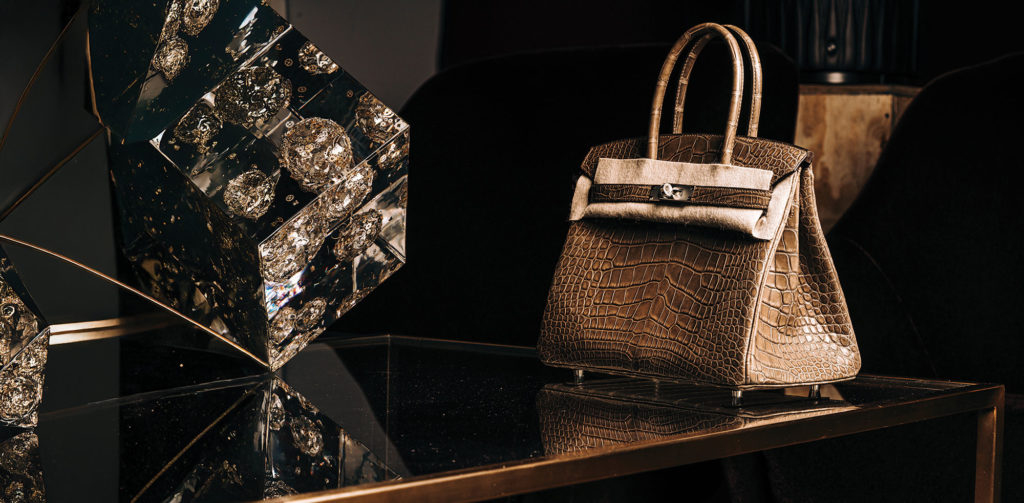
The Foundation of Value: Craftsmanship and Scarcity
Hermès’s journey from a Parisian harness workshop in 1837 to a global luxury powerhouse rests on an unyielding commitment to quality. The house’s philosophy is disarmingly simple: never compromise on craft. Each Birkin and Kelly is hand-made by a single artisan, a process that can take 18 to more than 40 hours. New makers spend years in training before they are entrusted with a bag. This human-centred production model imposes natural limits on output and is integral to the product’s aura—and its price.
Scarcity is not incidental; it is strategy. Unlike rivals that scale to meet demand, Hermès does the opposite. The most coveted bags are never casually available. They are offered to clients with a demonstrated relationship and meaningful purchase history, stewarded by sales associates who act as gatekeepers to the brand’s rarest pieces. The informal “quota” system—limiting most clients to two quota bags per year—perpetually tilts demand over supply, preserving mystique and, crucially, price integrity.
The Rise of the Resale Market
Tight primary-market controls have seeded a sophisticated secondary market. For buyers with capital but not patience, resale offers immediacy—at a premium. What was once the preserve of discreet dealers is now a data-driven global ecosystem of online platforms, specialist auction houses and informed collectors.
Digital marketplaces such as Vestiaire Collective and The RealReal, alongside niche operators and the salerooms, have widened access while professionalising authentication and pricing. Transparency has accelerated growth: a classic Birkin 25 in Noir or Étoupe can command premia well above retail, with market values tracked and shared in real time. Over the past decade, aggregated indices and auction records suggest annualised returns for select Hermès models in the low-to-mid teens—outperforming many conventional asset classes. The driver is not trend but permanence: the designs are canonical, the quality enduring.
What Makes a Bag a Blue-Chip Asset?
Not every Birkin or Kelly is equal in the eyes of the market. A handful of variables determine whether a piece is merely valuable—or truly investment grade.
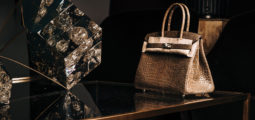
Rarity and Exclusivity. Scarce materials heighten appeal. Exotic leathers—Porosus or Niloticus crocodile, ostrich and alligator—are challenging to source and work, limiting production. At the apex sits the Himalaya Birkin, its painstaking gradient evoking alpine snow. With diamond hardware, examples have achieved record prices well north of £300,000 at auction.
Size and Colour. Shifts in lifestyle have favoured compact silhouettes: the Birkin 25 and Kelly 25 are highly sought-after. While seasonal shades have their moments, classic neutrals—Noir, Gold, Étoupe—consistently hold value, pairing effortlessly with wardrobes and outlasting trends.
Condition, Stamp and Provenance. Condition is paramount. “Store-fresh” pieces—unused, with plastics intact—achieve the highest multiples. The blind stamp (year code) can influence pricing, with newer pieces often trading at a premium, though rare vintage can buck the rule. Full provenance—original box, dust bags, rain cover, care booklet and receipt—bolsters value and confidence.
Famous Collectors and the Market’s Direction
The client base is broadening. While ultra-high-net-worth collectors dominate the trophy end, a new cohort of younger, globally connected buyers views these bags as both cultural artefacts and balance-sheet assets. High-profile owners—Victoria Beckham is rumoured to hold a three-digit Birkin collection; Singapore’s Jamie Chua and YouTuber Jeffree Star curate vault-like displays—add celebrity wattage that reinforces desirability and, by extension, liquidity.
Looking forward, the market’s infrastructure is maturing. Transparent pricing, richer data sets and third-party authentication standards are reducing information asymmetry. The sustainability lens is also relevant: pre-owned luxury is increasingly favoured as a low-waste, high-quality alternative to fast fashion. For diversified portfolios, the secondary market in Hermès bags offers a distinctive proposition: tangible assets with demonstrable resale demand, underpinned by a house that treats craft as doctrine and scarcity as policy.
Risk, Liquidity and Practicalities
No alternative asset is without caveats. Liquidity is episodic: the right piece can sell in hours; a less favoured size or colour can sit for months. Transaction costs matter—seller commissions at marketplaces and salerooms can range from the low teens to 30 percent—so underwriting a spread is essential. Currency swings can amplify or erode returns for cross-border buyers.
Condition risk is real. Storage should be climate-controlled, with bags kept stuffed and away from light to prevent creasing and colour fade. Insurance (often under valuable articles schedules) adds cost but protects capital. Counterfeits are increasingly sophisticated; buyers should insist on multi-point authentication (stitch count, font, hardware, leather grain, odour profile), preferably with a reputable third-party certificate and a robust return policy.
Regulation adds complexity at the high end. CITES documentation is mandatory for cross-border movement of exotics; incomplete papers can impair resale or invite seizure. Ethical considerations are moving up the agenda: some investors now screen for non-exotic leathers (e.g., Togo, Epsom, Clemence) to widen the buyer pool and sidestep regulatory friction.
Building a Collection Strategy
Treat acquisition as portfolio construction. Anchor with core, highly liquid SKUs—Birkin 25/30 and Kelly 25/28 in Noir, Gold or Étoupe with palladium hardware—then layer selective seasonals or rare leathers. Time-in-market generally beats timing-the-market: hold periods of three to seven years have historically captured step-ups tied to retail price rises, brand momentum and macro liquidity cycles. Diversify exit routes—trusted dealers for speed, auctions for theatre and peaks, peer-to-peer platforms for fee control.
Finally, correlations are attractive but not zero. Luxury resale values can soften in recessions or when global liquidity tightens; conversely, scarcity-led brands like Hermès have often proved resilient versus logo-heavy peers. The hedge, as ever, is quality: canonical models, impeccable condition, impeccable paperwork.
The conclusion is counter-intuitive only to those who view handbags as ephemera. In a world awash with mass production and copy-paste branding, Hermès has engineered a textbook case of value creation: timeless design, uncompromising manufacture and disciplined supply. The result is an object that signals taste, stores value and—properly selected—compounds it. Trends come and go. The Birkin and Kelly endure, functioning not only as emblems of luxury but, increasingly, as blue-chip assets in their own right.
***
From Air-Sickness Bag to Icon: The Serendipitous Birth of the Birkin
The Birkin’s origin story is a masterclass in chance meeting design. It captures Hermès’s human-centred philosophy: objects of desire shaped by real lives and practical needs.
In 1983, British actress and singer Jane Birkin—celebrated for her effortless, bohemian style—boarded an Air France flight from Paris to London. Struggling to stow her wicker basket in the overhead bin, she watched its contents—papers, a diary and a baby bottle—spill into the aisle and onto the lap of the man beside her. Exasperated, she remarked that it was impossible to find a weekend bag both elegant and genuinely useful for a young mother.
Her neighbour, courteous and curious, was Jean-Louis Dumas, then chairman of Hermès. Rather than offer platitudes, he posed a challenge: what would the perfect bag look like? Birkin sketched her answer on the back of an air-sickness bag—an unpretentious canvas for an enduring idea. She envisioned a supple, capacious tote with a clean, classic line, a protective flap and a discreet lock; larger than the Kelly yet smaller than a travel case, robust enough for daily life and refined enough for the front row.
A year later, in 1984, Dumas presented Birkin with a prototype in black leather and pledged to name the design in her honour. She accepted; an icon was born. That the silhouette has remained virtually unchanged since speaks to the clarity of the original brief: beauty anchored in function, craftsmanship serving real use. From a hurried sketch at 30,000 feet to the most coveted bag in the world, the Birkin endures as proof that great design often begins with a simple, human problem—and a willingness to listen.
You may have an interest in also reading…

UK Won’t ‘Move On’ After Brexit: It Will Move Forward
Many of the existential issues that have driven a period of prolonged introversion in the UK, hampering its international engagement,

UPDATED: Spain Still Up for a Class Ride
[update 06/08/2012: further gallery images added] Drive Espana – High Performance Luxury TouringThe CFI.co Perspective: We use a Constructive Journalism

Spain NAB: ‘Impact-Washing…? It’s a Thing, and to be Avoided at All Costs
The Spanish impact investment market is catching the eye of mainstream financiers — with increasing frequency. With that attention comes
