
































































EastWest Banking Corporation: Connecting Further in Philippine Consumer Finance
EastWest Banking Corporation has built its position in the Philippine market through a consumer-led strategy, broad physical reach, expanding digital platforms, and the institutional strength of the Filinvest Group. With net income rising to Php9.2bn in 2025 and dividends of Php1.8bn declared in 2026, the bank is reinforcing its role as a steady financial partner for consumers, affluent clients, SMEs, and growth-driven businesses.
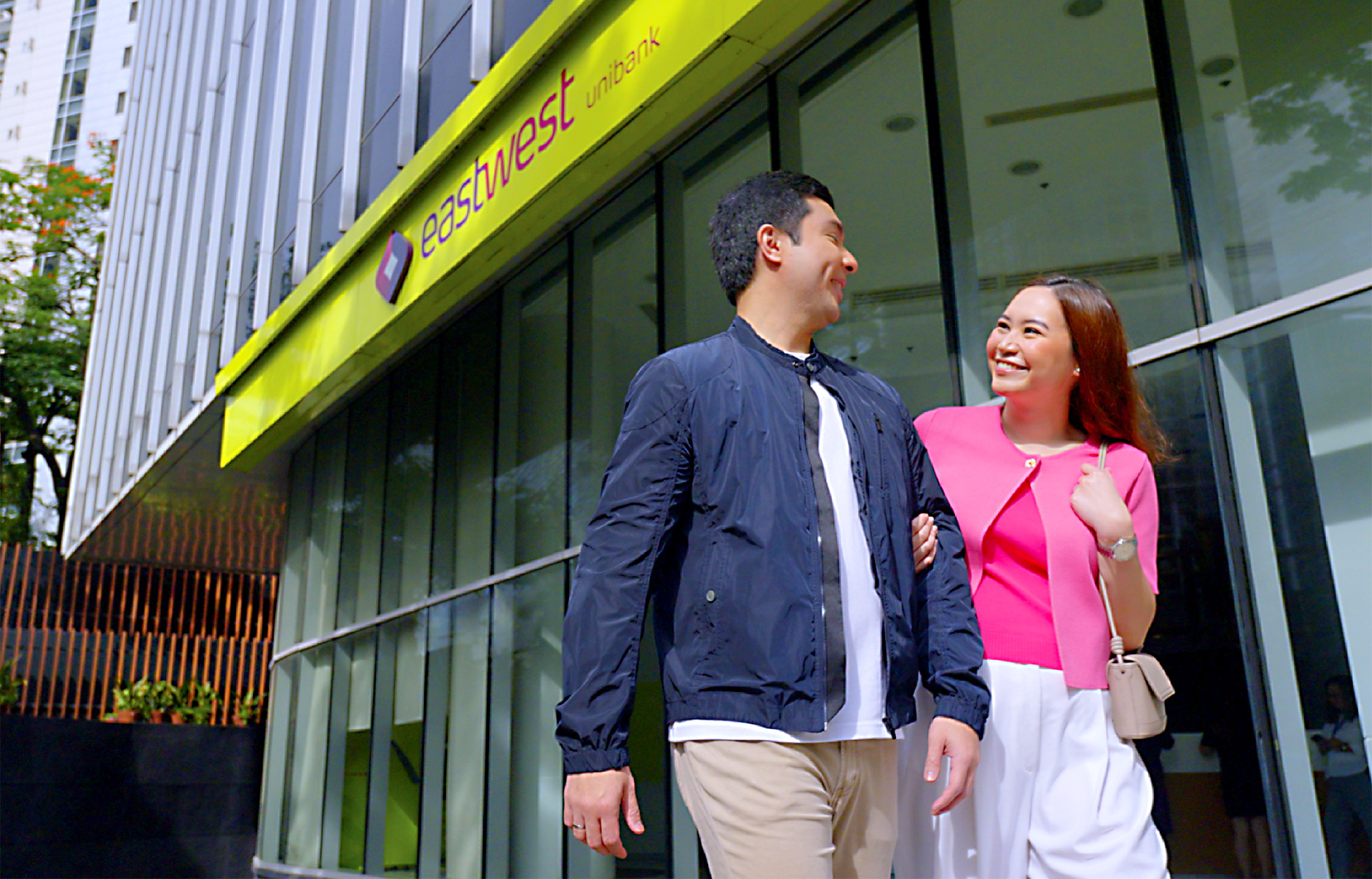
East West Banking Corporation, known by its brand name EastWest, has spent three decades building one of the Philippines’ most distinctive universal banking franchises. Established in 1994, the bank has grown from its first store on Senator Gil Puyat Avenue in Makati City into a nationwide institution serving consumers, middle-market corporates, the mass affluent, and small businesses through a broad suite of financial products and services.
Its offering spans peso and foreign currency deposits, consumer and corporate loans, credit cards, payment solutions, bancassurance, non-life insurance brokerage, leasing, and digital banking. The institution’s recent trajectory reflects a clear strategic focus: consumer-led growth, supported by improving digital capability and the backing of a diversified parent group.
EastWest is the universal banking arm of Filinvest Development Corporation, one of the Philippines’ leading conglomerates, with interests across real estate, hospitality, tourism, power generation, infrastructure, sugar, and banking. That connection gives EastWest more than balance-sheet support. It anchors the bank within a broader ecosystem built around long-term Filipino household and enterprise development.
A Young Bank with a Strong Consumer Core
EastWest describes itself as a young bank with a rich history. Its growth has been shaped by a strong consumer base and a proposition that blends “Eastern warmth and prudence” with “Western efficiency and innovation”. The formulation captures a practical business model: personal service, disciplined expansion, and relevant products for customers at different stages of financial life.
That model has translated into a strong position in consumer finance. As of end-2024, EastWest was the ninth-largest privately held domestic bank by assets and the 11th largest universal or commercial bank in the Philippines by asset size. It ranked fifth in total consumer loan portfolio among peer banks as of end-2023, with 82 percent of its loan base serving the consumer market, the highest proportion among its peers. The bank is also among the country’s leading providers of auto loans, salary loans, personal finance, and credit cards.
This consumer orientation matters in a market where household finance, mobility, savings, and small enterprise activity remain central to growth. EastWest’s product range is deliberately organised around customer realities rather than abstract banking categories. Young professionals are supported through mobile banking, credit cards, personal loans, savings products, and round-the-clock chatbot assistance. Family savers are served through joint accounts, home loans, auto loans, foreign currency accounts, and protection products. Upwardly mobile clients gain access to premium cards, salary loans, investment options, and foreign exchange solutions. SME owners and side-hustlers can use EasyBiz, business loans, fleet financing, corporate accounts, and hedging tools. Priority clients are supported through EastWest Priority Banking, wealth management access, advisory services, and premium deposit products.
Performance with Momentum
EastWest’s 2024 performance marked an important milestone, with the bank delivering its highest earnings to date at that point. Net income reached Php7.6bn, up 25 percent, while total loans and receivables stood at Php336.4bn, rising 15 percent. Total assets reached Php524.7bn, up 10 percent, and checking and savings accounts reached Php312.2bn, increasing seven percent.
The momentum continued in 2025. EastWest posted net income of Php9.2bn, a 21 percent year-on-year increase, supported by a well-positioned balance sheet and a loan portfolio oriented towards higher-yielding consumer assets. Total assets grew by 10 percent, while CASA deposits rose by 14 percent, supporting a CASA ratio of 82 percent. Net interest income increased 21 percent to Php40.6bn, return on equity reached 11.9 percent, and the cost-to-income ratio improved to 49.7 percent as revenue growth outpaced cost expansion.
The bank’s board also declared a Php1.8bn cash dividend, equivalent to Php0.82 per share, payable to shareholders on record as of 11 May 2026. The dividend, announced during the Annual Stockholders’ Meeting on 23 April 2026, reflects the bank’s ability to return capital to shareholders while sustaining investment in growth, technology, and customer service.
Chief Executive Officer Jerry G. Ngo framed the performance in terms of steadiness as well as profitability. In an uncertain environment for families and businesses, he said, a bank’s role is “not only to perform, but to remain steady, prepared, and responsive”. The statement captures EastWest’s broader positioning: growth anchored in discipline rather than expansion for its own sake.
Digital Reach, Human Relevance
EastWest’s strategy is not limited to traditional branch banking. Its digital ecosystem has expanded through EasyWay, EasyBiz, EastWest Pay, Komo, and ESTA, the EastWest System Tech Assistant. EasyWay provides everyday mobile banking for transfers, bills payments, and balance checks. EasyBiz supports SMEs and corporates with payroll, supplier payments, and business transactions. EastWest Pay enables secure credit and debit card payments across online and in-store channels. Komo offers a fully digital savings account, while ESTA provides 24/7 AI-powered account support, card servicing, and banking assistance.
The bank’s 2024 data already showed meaningful adoption. EasyWay registered 255,346 users, while 76.5 percent of EastWest Online users migrated to EastWest Online and EasyWay. Registered cards in ESTA increased by 33 percent, and 97 percent of EastWest cardholders enrolled in electronic statements of account. Cash management service enrolments rose 31 percent, reflecting stronger engagement from business clients.
In 2025, EastWest advanced this digital agenda further with the launch of EW Pay with Google Pay integration, making it the first bank in the Philippines to offer NFC tap-to-pay without requiring an e-wallet. The bank also expanded ecosystem partnerships with Unioil, foodpanda, Puregold, and Autodeal, embedding its payment and credit capabilities into everyday customer touchpoints.
The broader direction is clear. EastWest is attempting to combine the reassurance of a nationwide banking network with the convenience of digital access. That hybrid model is particularly relevant in a market where customer segments range from digital-first young professionals to affluent clients seeking personal advice and businesses requiring reliable transaction platforms.
Scale, Affluence, and Customer Proximity
Scale remains an important part of the proposition. As of December 2024, EastWest operated 488 stores, including rural bank branches, and 495 ATMs. Its physical network is distributed across Metro Manila, Luzon, Visayas, and Mindanao, allowing the bank to retain a meaningful on-the-ground presence even as digital adoption accelerates.
The Priority Banking business has also gained momentum. By 2025, Assets Under Management had grown 40 percent to more than Php100bn, supported by 13 Priority Centres across the country. This expansion reflects a broader opportunity in the Philippine market, where rising affluence is creating demand for more sophisticated advisory, wealth, and relationship-led banking services.
EastWest’s corporate structure supports this multi-segment strategy. Filinvest Development Corporation owns 80 percent of the bank, with the public and other shareholders owning 20 percent. EastWest Insurance Brokerage, incorporated in 2015, is wholly owned by the bank and serves as its non-life insurance brokerage arm. EastWest Rural Bank supports consumer-focused lending, particularly to public school teachers and underserved communities. EastWest Ageas, a 50 percent joint venture with Ageas Insurance International, provides life insurance and bancassurance capabilities.
This structure allows the bank to serve customers across banking, insurance, rural finance, and wealth protection, reinforcing its aim to offer integrated solutions across life stages.
Recognition Across Core Segments
EastWest’s awards in 2024 and 2025 underline the breadth of its franchise. The bank received recognition across priority banking, private banking, wealth management, digital experience, credit cards, consumer loans, foreign exchange, governance, human resources, and operations. Honours included Best Private Bank awards from several institutions, Best Priority Banking Experience, Best Credit Card for Cashback, Mobile Banking and Payment Initiative of the Year in the Philippines, Outstanding Digital Customer Experience in Banking App or Platform, and Great Place to Work certification.
These distinctions are not a substitute for execution, but they point to a bank competing across several fronts at once: consumer lending, digital service, affluent banking, and organisational development.
Connecting Further
EastWest’s strategic priorities are now centred on rebalancing the portfolio towards more secured asset classes, deepening operational efficiency through responsible use of technology, sustaining digital platform investments, and continuing to build the capabilities of its people.
Its 30th anniversary year was more than a symbolic milestone. It marked a period of record performance, digital expansion, and renewed clarity around the bank’s consumer-focused identity. The subsequent 2025 results and 2026 dividend declaration suggest that momentum has continued.
For the Philippine banking sector, EastWest represents a distinctive model: a relatively young universal bank with a strong consumer finance orientation, a broad physical footprint, a growing digital ecosystem, and the backing of a diversified domestic conglomerate. Its next phase will depend on maintaining that balance: scale without losing relevance, digitalisation without sacrificing service, and growth without compromising prudence.
In a market where financial needs are increasingly shaped by mobility, family aspiration, entrepreneurship, and digital convenience, EastWest’s proposition is clear. It aims to make banking simpler, faster, and more connected to real life.
