














































































The Hidden Titan: Why the American Rail Network is the Unsung Engine of Global Commerce
While attention often centres on congested highways and crowded airspace, a quieter system underpins the movement of goods across the United States. The country’s freight rail network, largely out of public view, remains one of the most efficient and high-capacity logistics systems in the world.
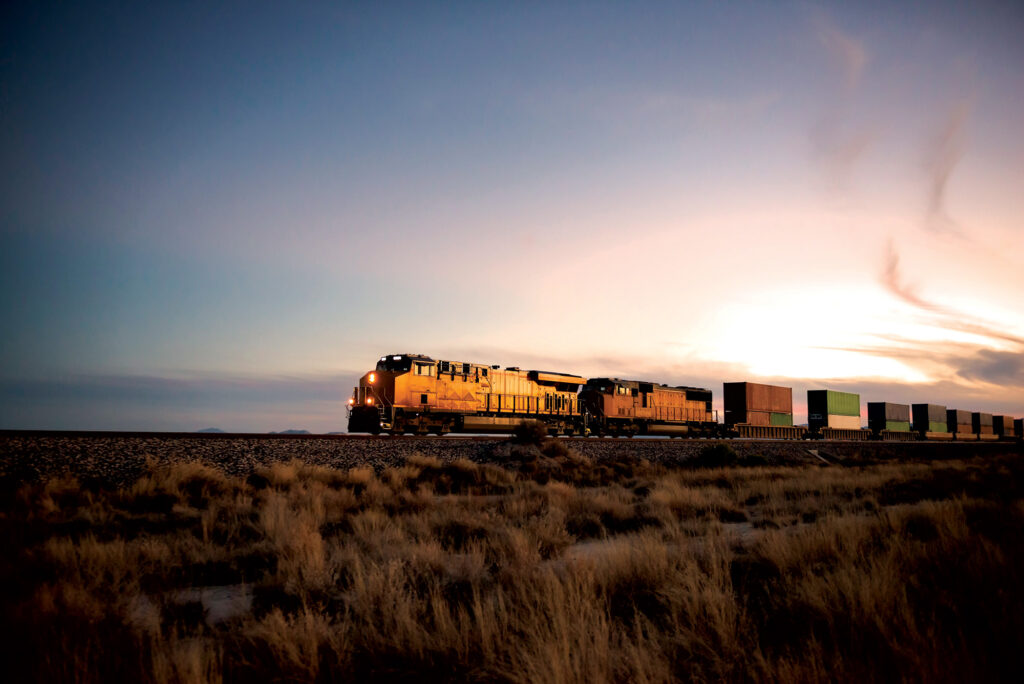
To a casual observer, particularly from the air, the US rail system can appear dated. Compared with the high-speed passenger networks of Europe or Asia, it lacks the same visual modernity. Yet this comparison overlooks a fundamental distinction. The American system has been optimised not for passenger velocity, but for freight efficiency at scale.
Passenger rail in the United States continues to face structural challenges, but freight rail has evolved into a highly effective industrial platform. It plays a central role in maintaining supply chains, supporting manufacturing and ensuring the consistent availability of goods across a geographically vast economy.
Two Systems, One Network
Understanding American rail requires recognising the coexistence of two distinct operating models. On one side is Amtrak, the publicly funded passenger service, which operates across long distances and shared infrastructure. On the other are the Class I freight railroads, including Union Pacific, BNSF, CSX and Norfolk Southern.
These privately owned companies control the majority of the approximately 140,000-mile rail network. Unlike highways or air traffic systems, which rely on public funding, freight rail infrastructure is maintained and upgraded through private investment. Annual capital expenditure by these operators is substantial, supporting ongoing improvements in track quality, signalling and rolling stock.
This model reflects a different conception of rail. It is not primarily a public utility, but a core industrial asset, managed with a focus on operational efficiency and long-term returns.
Scale and Economic Impact
The defining strength of the US rail system lies in its capacity. Freight rail accounts for roughly 40 percent of long-distance freight movement by ton-mile. It carries key commodities, including energy resources, agricultural products and industrial inputs, over distances that often exceed 1,000 miles.
The economics of this scale are significant. A single train can replace several hundred trucks, reducing both transport costs and pressure on road infrastructure. For businesses, this translates into lower input costs and greater supply chain reliability.
Rail therefore acts as a stabilising force within the economy. By enabling the efficient movement of bulk goods, it supports price competitiveness across multiple sectors. Attempting to replicate this capacity solely through road transport would place substantial strain on highways and increase overall logistics costs.
The Intermodal Shift
One of the most important developments in recent decades has been the growth of intermodal transport. This system allows shipping containers to move seamlessly between ships, trains and trucks without the need to unload cargo.
At major ports such as Los Angeles, containers arriving from Asia are transferred directly onto double-stack railcars. These trains function as a land bridge, moving goods across the continent to distribution centres in the Midwest and East Coast.
This approach reduces transit times compared with maritime routes that rely on the Panama Canal and enhances supply chain flexibility. Intermodal traffic now represents a significant share of rail revenue, underlining the continued relevance of rail in a globalised economy.
Passenger Rail and Geography
Passenger rail remains a more complex proposition in the United States. The country’s scale presents inherent challenges. Distances between major cities often exceed the range where rail can effectively compete with air travel.
Outside the Northeast Corridor, where distances are shorter and population density higher, rail journeys tend to be significantly longer than equivalent flights. As a result, passenger rail has struggled to capture market share in long-distance travel.
However, there are signs of change. Private initiatives such as Brightline in Florida have demonstrated the viability of higher-speed rail in regional corridors. By focusing on routes with strong demand and manageable distances, these projects suggest a more targeted approach to passenger rail development.
Environmental Considerations
As the United States advances its transition toward lower-carbon transport, freight rail is gaining renewed importance. Rail transport is considerably more fuel-efficient than road haulage, with a single gallon of fuel capable of moving one ton of freight over long distances.
This efficiency translates into lower emissions per unit of cargo. For companies seeking to reduce their environmental footprint, incorporating rail into logistics strategies offers a practical and scalable solution.
In response, major retailers and logistics operators are increasingly integrating rail into their supply chains. Partnerships focused on “green logistics” are becoming more common, reflecting both regulatory pressures and investor expectations.
Technology and Safety
The modern US rail network incorporates advanced technologies to enhance safety and performance. The nationwide implementation of Positive Train Control has introduced automated systems capable of preventing collisions and derailments.
In addition, rail operators are deploying data-driven maintenance systems. Sensors and imaging technologies monitor equipment condition in real time, identifying potential issues before they lead to operational disruptions.
These innovations contribute to a more reliable network, reducing downtime and supporting consistent freight movement across the country.
A Strategic Asset
The American rail system occupies a distinctive position within the global transport landscape. While it may not match the speed of passenger systems elsewhere, its ability to move large volumes of freight efficiently is unmatched.
It functions as a critical component of the national economy, enabling industries to operate at scale and supporting the distribution networks that underpin consumer markets. Its privately funded model also distinguishes it from many international counterparts, aligning infrastructure investment with operational needs.
As supply chains continue to evolve and sustainability considerations become more prominent, the role of freight rail is likely to expand further. It provides both economic and environmental advantages that are difficult to replicate through other modes of transport.
Enduring Relevance
The perception of American rail as outdated reflects a misunderstanding of its purpose. It is not designed to compete with high-speed passenger systems, but to fulfil a different and equally important function.
By focusing on efficiency, capacity and integration with global trade, the US rail network has remained central to economic activity. It continues to support industries, connect markets and facilitate the movement of goods across a vast and diverse geography.
In this context, the system is not a relic of the past, but a foundational element of the present. Its contribution may be less visible than other forms of infrastructure, but it remains essential to the functioning of the American and global economy.
You may have an interest in also reading…

The “Sell America” Trade Returns — With Greenland at the Centre
A familiar market pattern reasserted itself on 20 January 2026: the dollar slid, Treasury yields rose, US equities fell sharply,

A Simple Man with a Simple Plan: Saving the World Via Commitment to a Greener, Cleaner, Future…
The head of Thai group Bangchak, Chaiwat Kovavisarach, speaks to CFI.co about his vision for the future of clean energy

UAE’s COP28 Gathering Scores Some Initial Successes
White hydrogen and AI to the rescue…? Wim Romeijn reports. Beneath our feet, the Earth manufactures — and hides —
