

































































Accenture on Saudi Arabia’s AI Revolution: Leading the Next Wave of Enterprise Transformation
As the global technology landscape undergoes a seismic shift with the rise of agentic AI, Saudi Arabia stands at a pivotal crossroads. Accenture’s Technology Vision 2025 report highlights how enterprises worldwide are embracing this new paradigm—and the Kingdom is uniquely positioned to leverage these advancements to accelerate its ambitious Vision 2030 goals.
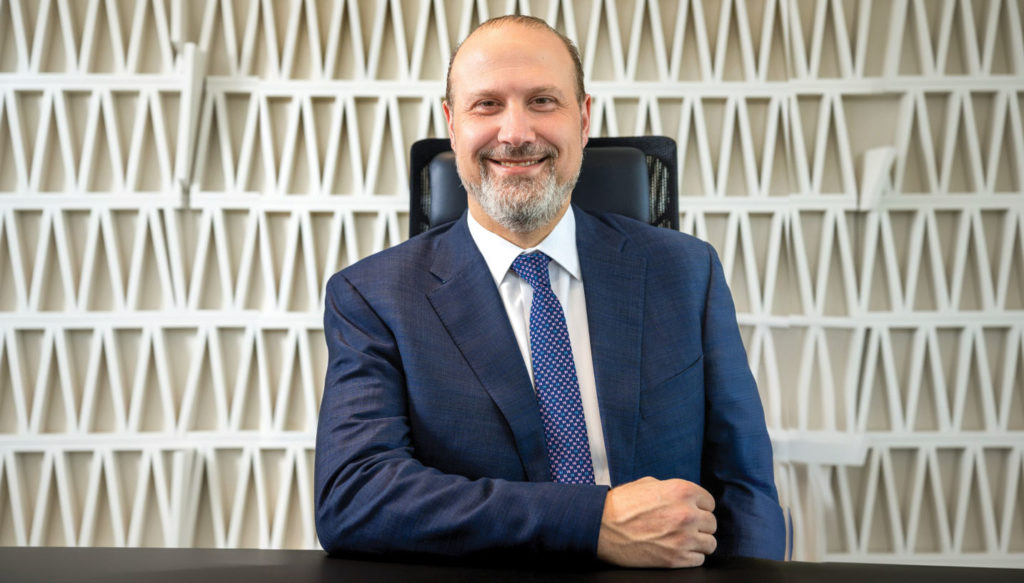
By Omar Boulos Accenture’s CEO of Middle East & Africa
Saudi Arabia is investing heavily in artificial intelligence and automation to enhance productivity across sectors. In March 2024, the government announced a $40bn fund dedicated to AI investments aimed at optimising operations, reducing waste, and strengthening decision-making. According to Accenture’s proprietary insights, generative AI could boost Saudi Arabia’s gross domestic product by approximately $42.3bn. At an aggregate level, AI is expected to augment or automate nearly one-third of all jobs, with highly skilled roles undergoing radical transformation in productivity, agility, and collaboration.
The Kingdom, however, is only just beginning. The transition from traditional AI to agentic systems represents more than an incremental upgrade—it is a fundamental reimagining of how technology can serve business objectives. Agentic AI can autonomously perform complex tasks with minimal human oversight, creating vast new possibilities for Saudi enterprises. Currently, one in three companies is pivoting towards innovating with agentic AI, and those that move swiftly stand to gain a significant competitive edge.
In the Kingdom’s rapidly diversifying economy, the integration of these systems is not a luxury but a strategic necessity. For example, oil giant Saudi Aramco has begun deploying agentic AI solutions to optimise extraction processes, predict equipment failures, and manage complex supply chains with unprecedented efficiency. Early implementations have already shown maintenance cost reductions of up to 30 percent, alongside measurable improvements in safety performance.
Agentic systems and composable digital cores are transforming how businesses interact with technology and what users expect from it—introducing entirely new enterprise considerations. For instance, 88 percent of executives in Saudi Arabia express concern that LLMs and chatbots could homogenise brand voices. Yet 94 percent agree this challenge can be addressed by embedding personified AI experiences infused with a brand’s unique culture, values, and tone. Leading institutions, such as the Saudi National Bank, are already pursuing this approach. The bank is leveraging AI-augmented functionality to develop innovative financial products that respond to Saudi Arabia’s distinct market characteristics—analysing datasets that include consumer behaviour, religious requirements for Shariah-compliant finance, and global trends to identify underserved niches and design tailored solutions.
The healthcare sector, too, is being reshaped by AI augmentation. Physicians at King Faisal Specialist Hospital now work alongside AI systems that not only relieve administrative burdens but actively support diagnostic accuracy, treatment planning, and medical research—all while respecting cultural sensitivities that are integral to healthcare delivery in the Kingdom.
Moreover, 86 percent of Saudi executives believe robots that collaborate with people and continuously learn from these interactions will increase trust and teamwork. This sentiment could soon pave the way for robotic surgical assistants to handle simple procedures, signalling a new era of human-machine cooperation in medicine.
For Saudi enterprises, the strategic implementation of agentic AI represents a potential leapfrog opportunity. Rather than incrementally modernising legacy systems, visionary organisations are rebuilding their operating models around AI capabilities from the ground up.
The journey towards AI-powered transformation, however, is not without challenges. As the Accenture report notes, organisations globally are grappling with the ethical dimensions of AI deployment, and Saudi enterprises face these same issues—alongside additional considerations of cultural alignment. The Kingdom has responded proactively. The Saudi Data and AI Authority (SDAIA) has developed comprehensive frameworks for responsible AI use, balancing innovation with ethical governance. These guidelines are helping enterprises navigate the complex terrain of AI implementation while remaining consistent with Saudi Arabia’s cultural and social context.
Equally important is the development of human capital capable of collaborating with these systems. Through initiatives like the Saudi Digital Academy, the Kingdom is investing heavily in technology education to cultivate a new generation of professionals prepared to work with AI rather than merely operate it.
A key priority for 81 percent of business leaders in Saudi Arabia—closely aligned with the global average of 80 percent—is ensuring a positive relationship between people and AI, preventing the transformation journey from being undermined by automation anxiety. Communicating clearly, involving employees early, and building trust will be vital. Establishing a virtuous cycle in which humans and AI co-evolve to reimagine business capabilities will be central to scripting the next chapter of Saudi Arabia’s remarkable transformation story.
You may have an interest in also reading…

Supporting African Businesses: A Focus on Sustainability and Close Customer Relationships
The Access Bank UK Ltd is making significant strides with its international expansion – and there are good reasons for

More Phones Than People in Brazil
With the privatization in 1998, Brazil stopped being a country where the telephone was a privilege for the few. With

Sustainable Stock Exchanges: The Relevance of Green Indices
At the fourth Global Dialogue of Sustainable Stock Exchange (SSE) Initiative, last Tuesday in Geneva, Nasdaq OMX vice-chairman Meyer “Sandy”
