






























































US Political Strife Threatens to Derail IMF Reforms
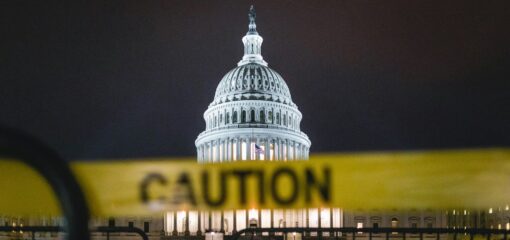
 The International Monetary Fund (IMF) has been reduced to a bargaining chip. Its request for $63bn (£38.3bn) in additional funding was unceremoniously discarded by the Appropriations Committee of the US House of Representatives where it fell victim to the increasingly acerbic political strife between Democrats and Republicans over a $1.1tn (£670bn) omnibus bill.
Committee Chairperson Jeb Hensarling, a Texas Republican, dryly pointed out that the IMF request fell outside the scope of “responsible use of taxpayers’ dollars”. Mr Hensarling was unmoved by an appeal from Treasury Secretary Jack Lew who emphasised that the IMF only needs $315m (£191m) in new funding to implement its structural reforms. The remainder had already been approved in 2009 and is now merely to be reallocated.
Pundits in Washington suspect Republicans hold the IMF funding hostage in order to force concessions from the Obama Administration on unrelated budget items.
IMF Managing Director Christine Lagarde called the withdrawal of US support “extraordinary and disconcerting”. All former Republican Treasury Secretaries going back to the times of Ronald Reagan signed a statement condemning the rejection of the IMF’s request.
“IMF Managing Director Christine Lagarde called the withdrawal of US support ‘extraordinary and disconcerting’.”
The IMF is currently in the process of doubling its lending capacity to $730bn (£444bn) in the wake of the global financial crisis. The fund is a lender of last resort for countries unable to raise money on capital markets.
In 2010 the US was instrumental in shaping an international deal that allows emerging nations to have a bigger say in the IMF’s governance. This pact is to see China become the third largest member of the fund and also increases the shares of Brazil and India. The US will maintain its veto share.
However, the Washington now runs the risk of not living-up to the deal it brokered. This would deny China and the other emerging powers increased voting power in the IMF. At the 2010 G-20 summit in Seoul, South Korea, the BRICS countries (Brazil, Russia, India, China and South Africa) were promised a combined share of 12.9% – up one third from the present arrangement.
You may have an interest in also reading…

The Economics of Christmas
Unwrapping the Global Trends in Online and High Street Shopping During the Festive Season The Christmas season has long been

Is the MBA Still Worth It? Weighing Value, ROI, and Leadership Impact
In an era of rapid disruption, does the traditional MBA still hold its weight? We explore the enduring value of

The Safety of the System: Why the Restaurant Franchise is Hospitality’s 2026 Safe Haven
In an era of volatile supply chains and discerning diners, the lone wolf restaurateur is an endangered species. As 2026
