












































































Sanae Takaichi – Becoming Japan’s First Female Prime Minister
The election of Sanae Takaichi as the President of the Liberal Democratic Party (LDP) in October 2025, and her subsequent appointment as Prime Minister, marks a watershed moment in Japanese political history. At 64, she shattered the decades-old “bamboo ceiling,” not only becoming Japan’s first female Prime Minister but also one of the very few post-war Japanese leaders who ascended to the top without the advantage of a political dynasty—a striking contrast to the customary Tokyo political elites. Her remarkable journey from a heavy metal drummer in Nara to the nation’s highest office is a testament to her tenacity, political skill, and strong connection with the LDP’s conservative grassroots base, forging a new, distinctly non-establishment path to power.
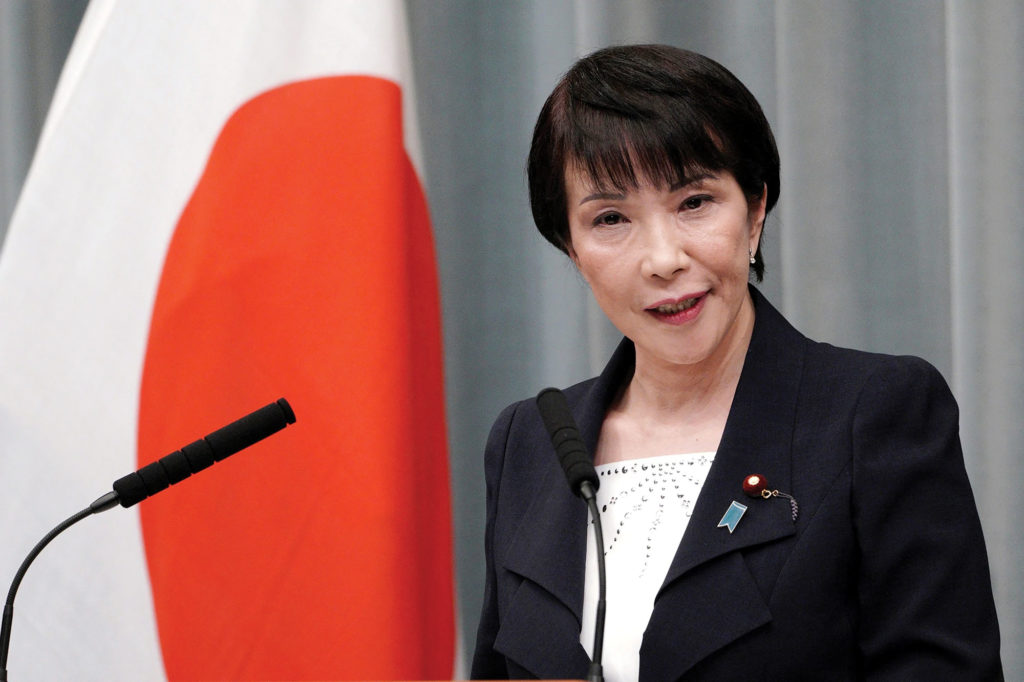
Prime Minister of Japan Sanae Takaichi (AP Photo/Eugene Hoshiko)
A Life Outside the Inner Circle
Japan’s political landscape has long been dominated by a relatively small group of powerful families and hereditary politicians, particularly within the LDP. Former Prime Ministers like Shinzō Abe, Tarō Asō, and others benefited from multigenerational political networks and inherited seats. Takaichi, however, arrived in the Diet as an outsider, making her ascent all the more notable.
Born in 1961 in Yamatokōriyama, Nara Prefecture, a region steeped in ancient history and far removed from the immediate political hub of Tokyo, Takaichi’s background was solidly middle-class and professional. Her father worked for an automotive firm, and her mother served in the Nara Prefectural Police. This grounding in the realities of a working family, rather than the rarefied air of Tokyo’s political kaki (cliques), has often been cited as a source of her perceived authenticity and popular appeal.
Her early life was unconventional for a future conservative leader. A graduate of Kobe University, she pursued interests far from the traditional political track. An accomplished musician, Takaichi played the drums and piano, famously performing in a heavy metal band during her university years. This unusual resume—heavy metal drummer and a motorcycle enthusiast—stands in stark opposition to the staid, conformist image often associated with Japanese political elites.
The Path to the Diet: Independent and Self-Made
Takaichi’s formal training for public life came from the Matsushita Institute of Government and Management, an academy founded by Panasonic’s Konosuke Matsushita to train future leaders outside the traditional bureaucratic track. Her time there included a stint in Washington D.C., working as a legislative aide for a Democratic Congresswoman, providing her with invaluable exposure to Western politics and governance.
Even after completing her fellowship and working as a newscaster and political analyst for TV Asahi, she did not immediately align herself with the LDP machine. When she first ran for the House of Representatives in the 1993 general election, she was elected as an independent candidate for the Nara at-large district. This initial victory, achieved without the backing of a major party, underscored her ability to connect with local voters based on her own merits and platform.
She later joined the LDP in 1996, eventually aligning herself with the Seiwakai (later the Mori and then the Abe Faction), the party’s largest and most conservative faction. This pragmatic political choice provided the necessary institutional backing, but Takaichi’s foundational political identity remained rooted in her grassroots origins and her unwavering, hard-line conservative principles, which resonated with the core of the LDP’s national membership.
The Abe Connection and a Rising Star
Takaichi’s career trajectory gained significant momentum through her close alignment with former Prime Minister Shinzō Abe, a fellow conservative and one of her longest-serving political mentors. They were both first elected in 1993, sharing similar ideological beliefs, particularly a desire for constitutional revision and a more assertive national defence posture. Abe championed her career, appointing her to various influential posts, including Minister for Internal Affairs and Communications and, more recently, Minister of State for Economic Security.
Her repeated appointments to these high-profile roles—often as the first woman to hold them (e.g., first female head of the LDP’s Policy Research Council)—established her as a competent administrator and a formidable conservative voice. However, unlike many of her predecessors, Takaichi did not benefit from a powerful political dairi (surrogate) to push her through. She leveraged her political competence and her authentic connection to the conservative grassroots, who viewed her as a figure of strength and clear ideology, a refreshing change from the often-compromised centrists who emerge from behind-the-scenes factional bargaining.
The 2025 Victory: Grassroots over Geopolitics
Takaichi’s path to the LDP presidency was a classic upset, largely powered by the party’s rank-and-file members outside the Diet. In the 2025 LDP leadership election, she defeated the younger, more establishment-friendly Shinjirō Koizumi in a runoff. At 64, she was not the youngest candidate, but she successfully channeled the political mood among LDP members and conservative voters disillusioned with the LDP’s handling of recent crises and scandals under her predecessors.
Her victory demonstrated that the LDP’s membership base was willing to look beyond hereditary privilege and establishment consensus, opting instead for a leader with unflinching conservative convictions and a compelling, self-made narrative. Playing up her background—a “woman of Nara” who grew up outside the Tokyo bubble—she effectively contrasted her life with that of the blue-blooded Koizumi, whose name alone symbolised political heritage.
This triumph—the first woman to lead the LDP and, by extension, become the Prime Minister—is a powerful narrative of a political outsider breaking the most stubborn of ceilings. It is a win for the self-made politician over the scions of the Diet, signalling a possible, albeit cautious, shift in the LDP’s internal power dynamics, demanding a leader with conviction whose story resonates far beyond the polished halls of Kasumigaseki. Takaichi, the heavy metal drummer from Nara, now wields the baton of power, a profound symbol of change in a nation famously resistant to it.
You may have an interest in also reading…

Nepal Minister of Industry, Commerce, and Supplies: Matrika Prasad Yadav on the Agenda for Prosperity and Catching Global Attention
Nepal should aim for annual GDP growth of at least 7% – and sustain that pace for 12 years –

China on the Way Back to Rebalancing
China’s economy keeps recovering from the coronavirus pandemic-led crisis through the third quarter of 2020, as revealed by the numbers

Asian Development Bank: Urban Transport Can Rebuild to Create a Greener Future
COVID-19 has resulted in drastic changes in travel behaviour. Society must now address how to better manage the mobility of
