





































































The Silent Giants: The Critical Role of MSMEs in the Global Future
Micro, Small, and Medium-Sized Enterprises (MSMEs) are more than just business units operating in the shadow of large corporations—they are the beating heart of national economies.
In every region of the world, from dense cities to remote rural communities, MSMEs fuel the engines of growth, job creation, innovation, and social cohesion. For countries striving toward economic resilience and inclusive development, empowering MSMEs is not just an option; it is an economic imperative.
When MSMEs succeed, nations prosper. Across many nations, MSMEs account for 50–90% of all jobs, providing employment opportunities across manufacturing, services, agriculture, digital industries, and retail. Economically, they contribute 40–60% of national GDP in many countries. They are the primary drivers of income generation and poverty reduction; when they thrive, families gain stability, communities prosper, and national development accelerates.
They are the connective tissue of entire value chains. Their activities stimulate local economies, circulate capital through communities, and support the operations of larger enterprises by serving as vital suppliers, subcontractors, distributors, and service providers.
The Engine of Innovation and Stability
MSMEs underpin economic dynamism through their entrepreneurial spirit. Their agility and capacity for rapid experimentation allow them to innovate faster than large corporations. Many of the world’s most transformative technologies and business models originate from small enterprises willing to take risks and enter niche markets.
Furthermore, MSMEs bring diversification. They spread economic activity across sectors and regions, protecting national economies from over-reliance on a handful of industries or large firms. When shocks occur—whether financial crises, geopolitical disruptions, or supply chain breakdowns—diversified MSME ecosystems soften the impact and accelerate recovery.
They also operate where large companies often do not: in rural towns, border communities, and underserved districts. By anchoring regional development and reducing migration pressures, they promote territorial cohesion. Their openness to youth and women entrepreneurship makes them powerful engines of inclusive growth.
And, in case governments need reminding, MSMEs are vital contributors to public finances. Individually, their tax contributions may be modest, but collectively, they represent a significant portion of government revenue, funding infrastructure, healthcare, education, and national development programmes.
The Great Barrier: Why MSMEs Struggle Globally
Despite their importance, MSMEs face an uphill battle when venturing into international markets. Success hinges on a delicate balance of strategic, operational, financial, and regulatory capabilities—areas where small firms are historically under-resourced.
- The Operational Capability Gap Limited organisational capacity hampers international expansion. Exporting is technical; it requires managing documentation, understanding HS codes (product classification), navigating Incoterms, and meeting market-specific labelling rules. Missteps here lead to held shipments, penalties, or rejected goods. Managing these cross-border logistics, customs agents, and foreign buyers requires a bandwidth many MSMEs simply do not have.
- The Financial Void MSMEs consistently name finance as their number one barrier. They face limited access to affordable trade finance or guarantees, leaving them vulnerable to currency volatility and shipping disruptions. Unlike better-capitalised multinationals, they lack the cushion to absorb delayed payments or cash flow shocks.
- The Digital Imperative Digital-enabled MSMEs are the fastest-growing category globally, but their success depends heavily on infrastructure and international interoperability. As the World Economic Forum’s recent white paper, “Empowering Small and Medium-Sized Enterprises through Digital Business Model Innovation,” notes: digital transformation is no longer a competitive advantage—it is a survival strategy.
With the climate transition set to dominate the global agenda (looking toward Davos 2026), MSMEs are heading toward a marketplace where capability, sustainability, and digital readiness will determine who thrives and who disappears.
A Multi-Layered Approach for Resilience
The major question before policymakers is how to strengthen MSME resilience. Collaboration is the strongest multiplier available; it helps MSMEs share risks, reduce costs, and amplify impact. This requires a coordinated effort:
- Governments must create enabling environments by simplifying regulations, reducing administrative burdens, and promoting digital infrastructure. They must provide vocational training and open public procurement opportunities to MSME participation.
- Large Enterprises must act as anchors. They should integrate small suppliers into their value chains, share technology and market intelligence, and, crucially, ensure fair payment terms to protect MSME cash flow.
- Multilateral Organisations must provide guarantees and blended finance for MSME lending. They should support trade facilitation, promote harmonized standards that MSMEs can realistically meet, and offer knowledge platforms to enhance competitiveness.
- Regional Trade Blocs (such as AfCFTA, ASEAN, and Mercosur) should rise to the challenge of harmonised global regulation by understanding the five pillars of MSME success: strategy, regulation, operations, finance, and capacity.
The Call to Action: An MSME Trade Council
Despite representing the vast majority of businesses in G20 economies, MSMEs enter the global arena vastly underpowered. While multinational corporations enjoy lobbyists, negotiators, dedicated trade desks, and access to policymakers, MSMEs navigate labyrinthine regulations alone.
The world needs an MSME Trade Council now.
A global champion bold enough is needed to reshape the rules of the game. MSMEs are everywhere yet represented nowhere. This Council would fill the gap, becoming a forceful, coordinated voice to influence international trade rules, AI regulation, and ESG standards.
The MSME Trade Council will:
- Engage with the WTO, G20, UN bodies, and development banks to ensure MSME priorities shape policy.
- Negotiate global financing platforms, blended finance solutions, and credit guarantees to fix the funding gap.
- Coordinate trade missions, global expos, and B2B matchmaking to connect small firms to new buyers.
MSMEs stand at a crossroads internationally. Those who digitise and professionalise will capture new opportunities; those who rely on outdated systems will fall behind. But they cannot do it alone.
What is missing is the structure—and the champion—to bring it all together. This is that moment. This is that mandate. This is the rise of the global MSME movement.
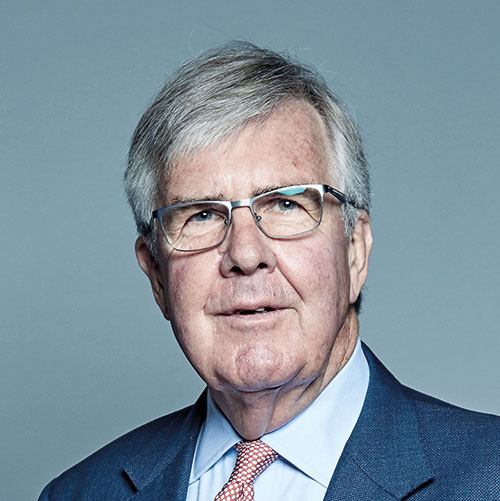
Author: Lord Waverley
By Lord Waverley – If you have any feedback or want additional information please feel free to contact me at [email protected].
You may have an interest in also reading…

CORDET Capital: Unlocking the Potential of Northern Europe’s Lower Mid-Market
With a sharp focus on delivering compelling risk-adjusted returns, CORDET Capital has positioned itself as a distinctive force in private

Up to Full Capacity with London’s Andrew Likierman
The London Business School benefits enormously from Prof. Likierman’s broad experience. Unlike many deans, Sir Andrew has spent much of

The Time Is Now: Paradigm Shift Signals Opportunity
Few people realise that in 2013 a turning point was reached. In that year, emerging economies displaced developed markets as
