






































































Sustainability
Back to homepage
Oil at the Edge of the World
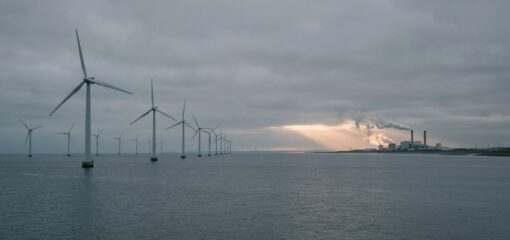
After fifteen years of delay, the Falkland Islands’ Sea Lion field has entered development. Successful delivery could reshape the territory’s economy while testing offshore execution, environmental safeguards and the political relationship between Britain and Argentina. Stanley is not a capital
Read More
The IMF’s Crosscurrents Update: Africa Is on the Wrong Side of Both Shocks, and Still Outgrowing the World
The July World Economic Outlook Update barely moves the Fund’s Africa forecasts, and its baseline has already been overtaken: the Strait of Hormuz was assumed to begin reopening in mid-July, and by 13 July fighting had resumed instead. Beneath the
Read More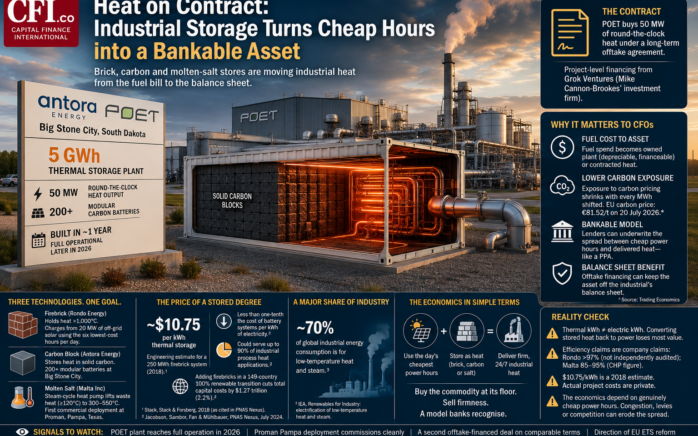
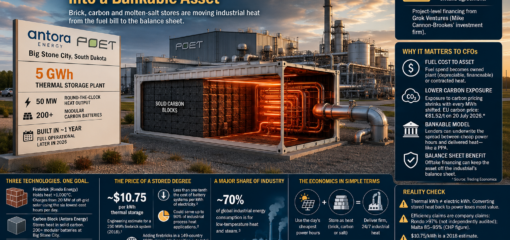
Heat on Contract: Industrial Storage Turns Cheap Hours into a Bankable Asset
Brick, carbon and molten-salt stores are moving industrial heat from the fuel bill to the balance sheet. The interesting part is not the hardware. It is the contracts now being written on it. In May, the American biofuels producer POET
Read More
The Safety of the System: Why the Restaurant Franchise is Hospitality’s 2026 Safe Haven
In an era of volatile supply chains and discerning diners, the lone wolf restaurateur is an endangered species. As 2026 unfolds, we examine why the franchise model has transformed from a corporate “cookie-cutter” cliché into a structured defence against industry
Read More
The Ghost in the Hiring Machine: Is AI About to Make the Recruiter Extinct?
As artificial intelligence promises to match candidates to roles with unprecedented speed and precision, the traditional recruitment consultant faces a structural shift. Yet in a landscape shaped by automation, bias, and synthetic profiles, human judgment may become more valuable, not
Read More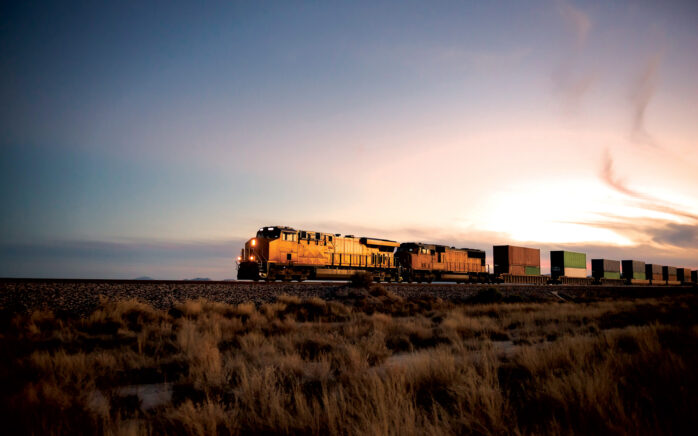
The Hidden Titan: Why the American Rail Network is the Unsung Engine of Global Commerce
While attention often centres on congested highways and crowded airspace, a quieter system underpins the movement of goods across the United States. The country’s freight rail network, largely out of public view, remains one of the most efficient and high-capacity
Read More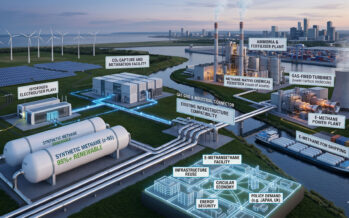
Synthetic Methane’s Opening Window for Investors and Policy Makers
Synthetic methane is moving from technical curiosity to investable relevance because it offers something rare in the transition: a lower-carbon molecule that can run through methane-native systems without forcing wholesale replacement of pipelines, storage, burners, turbines, and gas-linked industrial assets.
Read More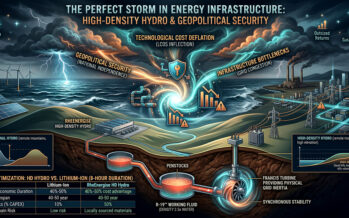
The Perfect Storm in Energy Infrastructure: High-Density Hydro, Cost Deflation, and Geopolitical Security
The hypothesis is clear. The energy transition has moved from a climate-led investment cycle to a security-led industrial buildout, and the binding constraint is no longer generation cost alone. As grids strain under intermittent supply and geopolitics reprices fuel risk,
Read More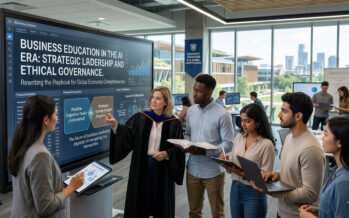
The AI Era Is Rewriting the Business Education Playbook: Opportunities for Global Economic Competitiveness
The hypothesis is straightforward. As AI augments and automates routine cognitive work, the economic value of business education shifts from execution to judgement. Countries and institutions that redesign curricula for human-AI leadership will gain an edge in productivity, financial-sector resilience,
Read More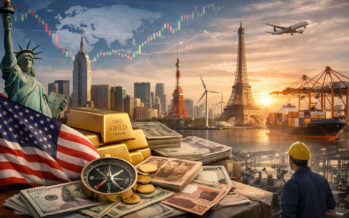
The Great Rebalancing: Capital Allocation in an Age of Fragmentation and Convergence
After a long stretch in which US markets served as the default setting for global portfolios, 2026 is beginning to look like a turning point. Concentration risk, stretched valuations, fiscal strain, and a rewiring of supply chains and reserves are
Read More