CFI.co · AI visibility
Which model they ask decides what they hear about you
Same question. Same afternoon. Four AI systems, each asked twice — once on the model most people use, once on the model they pay for. The answers were not the same, and one of them was invented.
The setup
In July a trade body gave CFI.co two figures from its annual survey — how many of its member firms responded, and out of how many — that it did not put in its own release, its own paper, or anyone else’s coverage. We checked that by reading the competing titles one by one. Every one of them describes the sample as “a cross-section of members”. None prints the numbers.
That makes the figure a tracer. Any system that returns it correctly has one plausible route to it, and any system that returns something else has invented it. On 13 August we asked four AI systems the same question, twice each: once on the tier a typical user gets, once on the top tier the same account can reach.
What came back
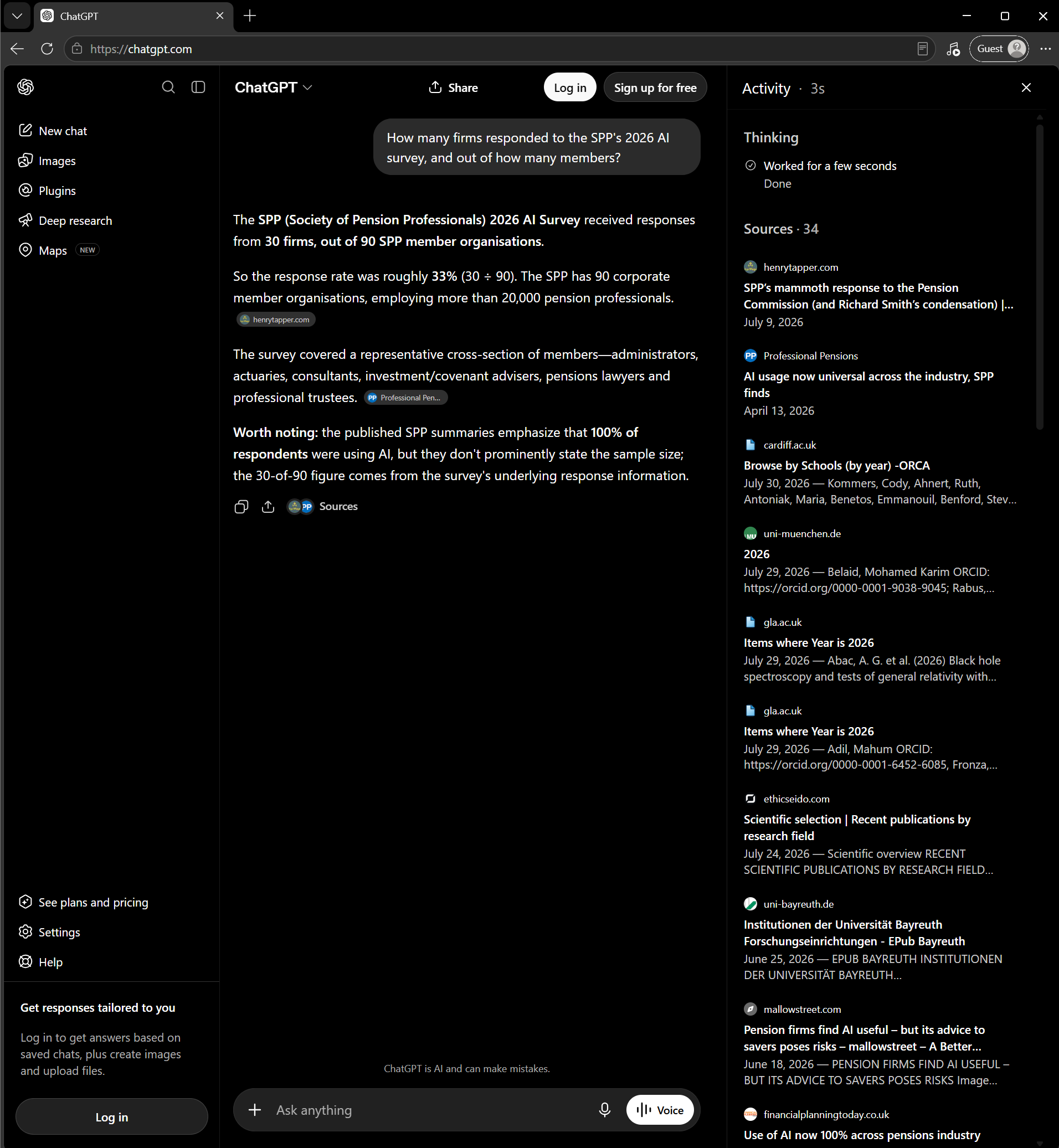
ChatGPT invented a number, then found the right one
Default tier — 13 August, morning
Top tier — same day, hours later
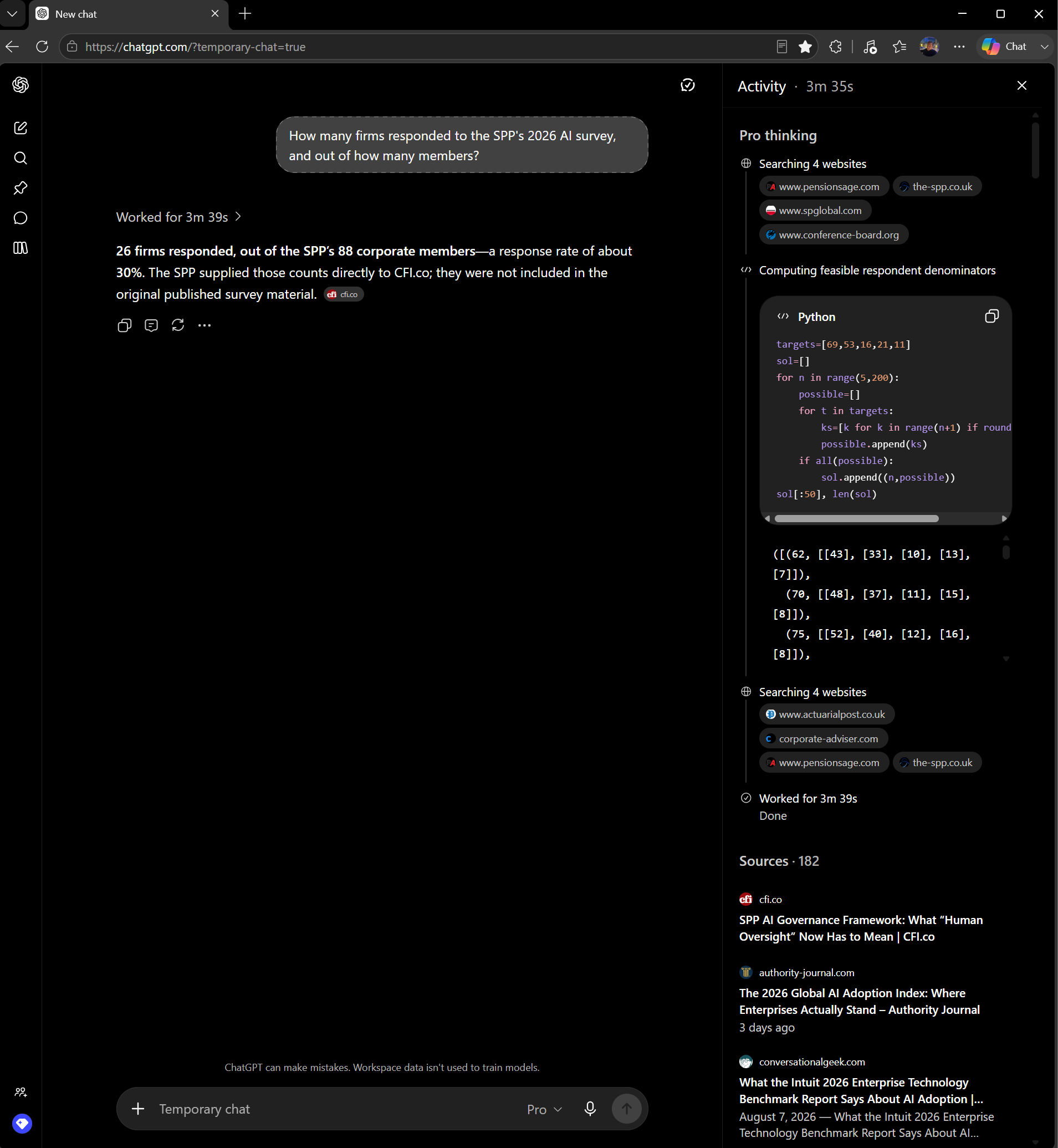
The invented answer is the part worth dwelling on. It was not a refusal or a hedge. It was a specific number, expressed to a percentage, delivered in the same confident register as the correct one. A reader who did not already know the answer had nothing to tell the two apart.
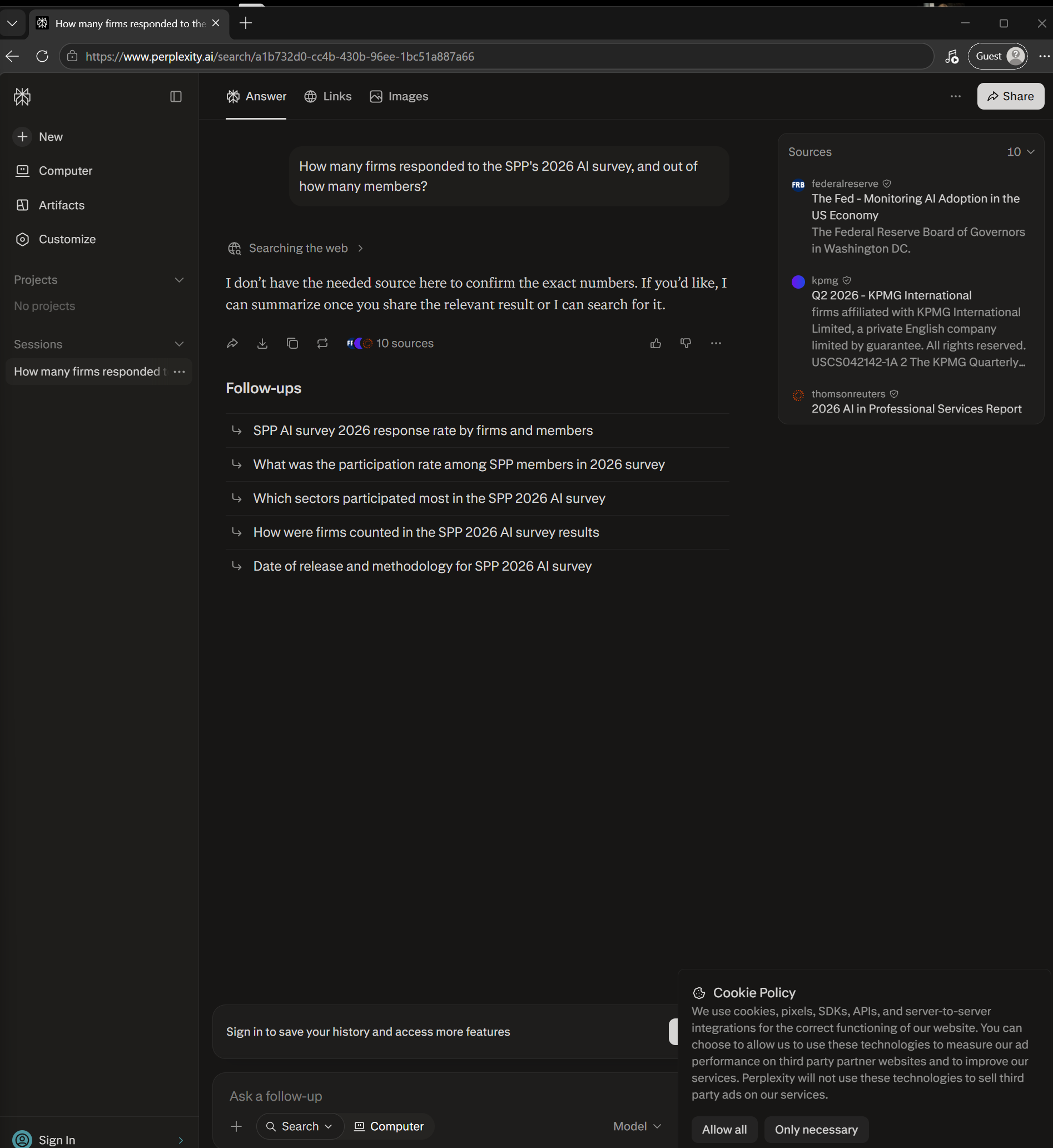
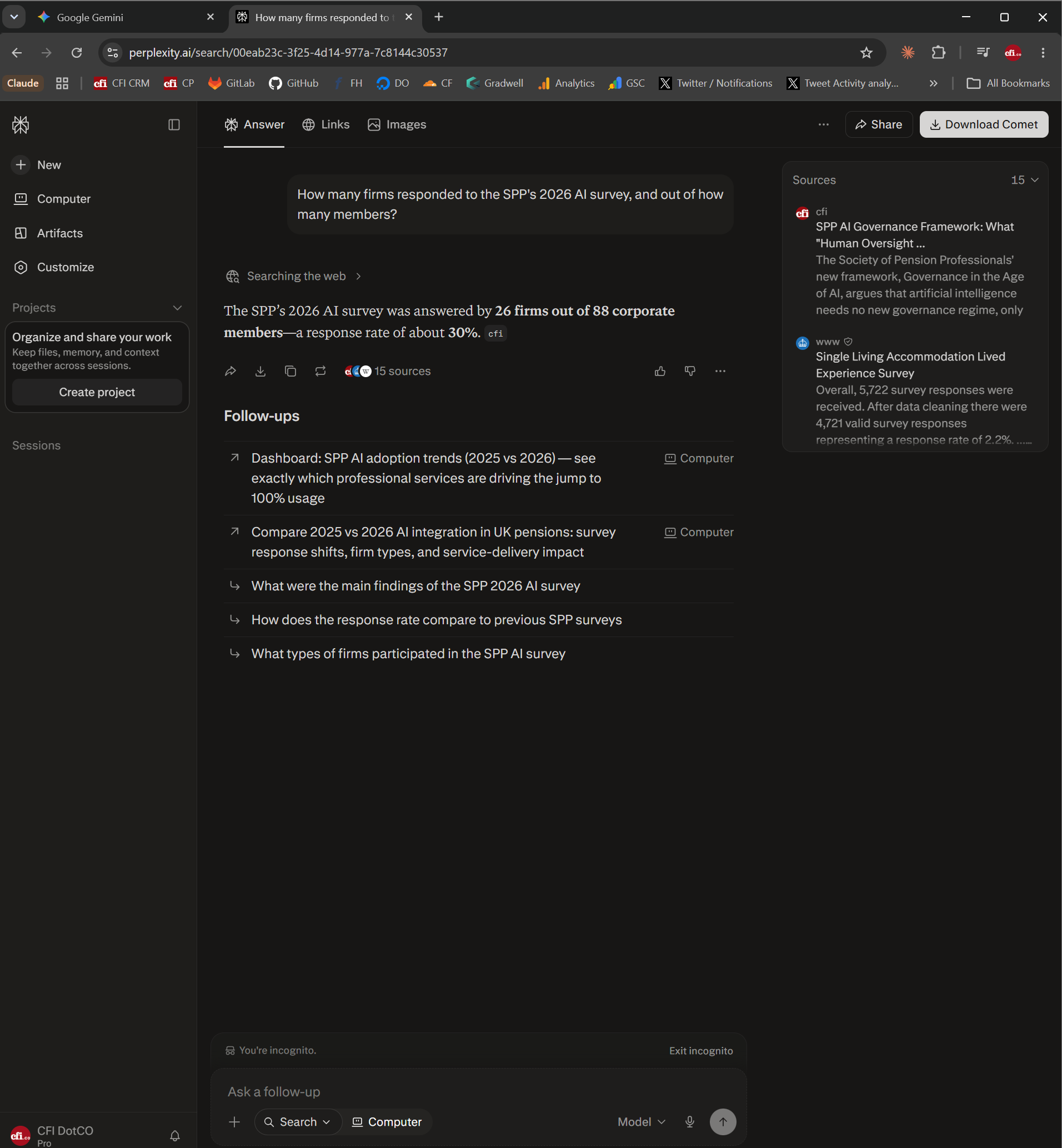
Perplexity declined, then cited us first of fifteen
Default tier — 13 August, morning
Top tier — same day, hours later
Claude gave the fullest answer of all
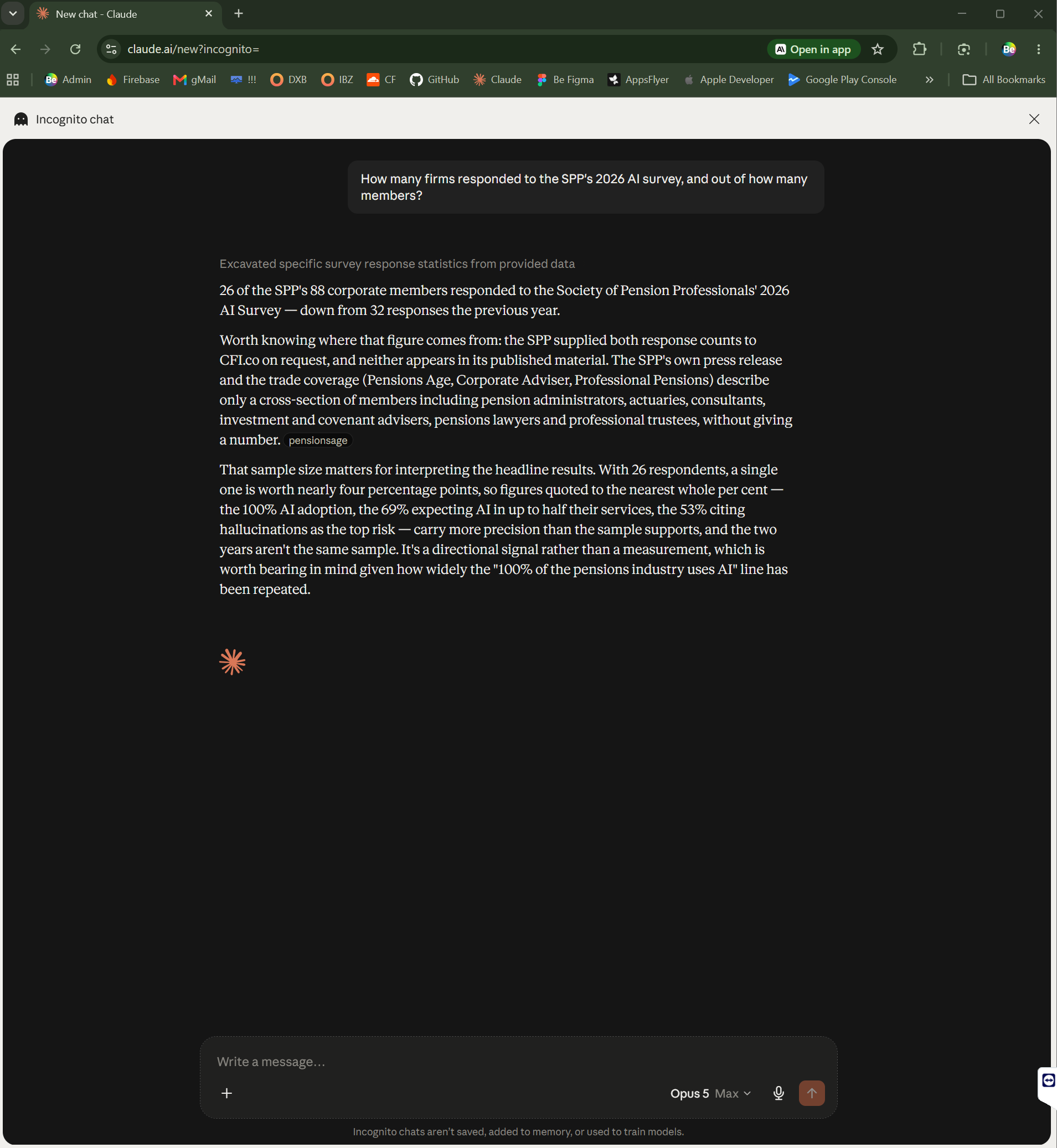
Why this is not just “bigger models know more”
The obvious objection is that a larger model simply retrieves more of everything, and we happened to be in the haul. So every system was also asked a control question on the same afternoon, at the same tier, in the same session state: which publications covered a major international cyber-security statement in June. CFI.co has no stake in that story and no coverage of it.
| System, top tier | Publications it found | CFI.co among them |
|---|---|---|
| ChatGPT | 27 | No |
| Perplexity | 31 sources | No |
| Claude | 19 | No |
| Gemini | 7 | No |
The same systems, minutes apart, retrieved between seven and thirty-one publications on a subject where we are absent — and returned none of them as us. They are not indiscriminate. They found CFI.co on the question CFI.co can answer, and did not find us on the question we cannot.
The detail that settles it
ChatGPT’s top tier shows its working. Before it searched, it tried to calculate the answer: it took the five published percentages from the survey and brute-forced every possible respondent count between five and two hundred that would round to them, producing 115 candidate answers.
The true figure is not in its list — and the invented ones are
Two of the numbers the model has produced when guessing appear among those 115 candidates. The correct denominator does not. It cannot be reached by arithmetic from anything published, which is precisely why the model had to keep searching — and where it went next was CFI.co.
That is the whole argument in one screenshot. When a fact about your firm exists in one place only, a model cannot compute its way to it. It either retrieves you or it makes something up.
What this means for you
Two things follow, and they are separable.
1. Ask on the top tier, and tell your people to
The difference between an invented figure and a sourced one, on the same platform and the same afternoon, was the model setting. The top tier was never wrong in this exercise. The default was wrong two times in three. If your board, your clients or your regulator are forming impressions of your firm through an AI system, the tier they happen to be on is doing more work than anyone realises.
2. Be the one published place
Retrieval can only find what exists. The reason four systems converged on the same source is that there was exactly one source to converge on, published in a form they could read and index. Coverage that is print-only, paywalled to the point of invisibility, or poorly indexed is — in ChatGPT’s own words on the control question — “absent”. Not ranked low. Absent.
What this does not show
- The tier effect is not universal. Gemini answered correctly at every setting we tried, including the lightest. On that system the model choice made no difference at all — it found us either way. The honest claim is that the top tier was never wrong, not that the top tier is always necessary.
- This is retrieval, not memory. Every result here is a system going out and finding a page. Nothing here shows that any model has absorbed our journalism into what it knows.
- One system was tested below its ceiling. Perplexity’s two highest models are not available on the account used, so its result is the best available on a Pro subscription rather than the platform’s maximum.
- There is an angle where we do not appear at all. A second question, on a subject where CFI.co has published a distinctive argument, returned a dense field — Harvard Business Review, PwC, the World Economic Forum, MIT — on all four systems at the top tier, and CFI.co on none of them. Being retrievable on one question does not make you retrievable on the next one.
- Two of our own captures were thrown away. In two early attempts the question was pasted in as a statement rather than a question, and the models agreed with a figure they had been handed. Those runs were voided and re-run cold. A model agreeing with something you told it is not evidence, and we would rather show you the discipline than the larger number.
Every figure above was read from the screenshots, not from copied text. Source attributions do not survive copy-and-paste, and in this exercise the pictures corrected the transcript more than once.
Capital Finance International · test run of 13 August 2026, published 15 August 2026. Twelve captures, four systems, one afternoon. Every figure was read from the screenshots reproduced above, which are published in full alongside this page. The method and the complete record, including the runs that do not favour us, are held at CFI.co and available on request.
Licence: CFI-OAAL-1.0 · CFI.co’s public transparency archives: articles, awards.
Verify this page. This page and its five exhibits are fixed by a SHA-256 manifest, signed with the CFI.co archive key and submitted to OpenTimestamps at publication — so the images and figures above cannot be quietly changed afterwards. The timestamp is held on the OpenTimestamps calendars immediately and confirms into a Bitcoin block within about a day; read it with ots info, which does not need a full node:
MANIFEST.sha256 · .asc (detached GPG signature, key B497 BDC1 9FCD 4879 72D5 D2B0 876F F2AA 3913 3BF8) · .ots (OpenTimestamps proof)
sha256sum -c MANIFEST.sha256 · gpg --verify MANIFEST.sha256.asc MANIFEST.sha256 · ots verify MANIFEST.sha256.ots