











































































Fishing for a Sustainable and Equitable Future in the Pacific
World Bank approves US$32.97 million for regional fisheries program.
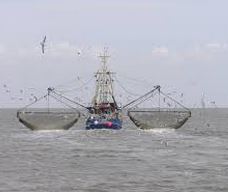 The World Bank’s Board of Executive Directors today approved US$32.97 million in International Development Association (IDA) grants and credits to support the Pacific Islands Regional Oceanscape Program (PROP) – a regional program of operations to strengthen the management of select Pacific Island fisheries.
PROP will initially provide funding to the Federated States of Micronesia, the Republic of the Marshall Islands, the Solomon Islands, Tuvalu and the Pacific Islands Forum Fisheries Agency to improve the sustainable use of oceanic fisheries, coastal fisheries, and the critical habitats on which they depend.
“The social and economic benefits gained from ensuring the strength and sustainability of what is a major source of national revenue and livelihoods in many countries will be significant,” said Franz Drees-Gross, Country Director for the World Bank in Timor-Leste, Papua New Guinea, and the Pacific Islands. “Improved management of this vital resource offers significant revenue potential for Pacific Island Countries – revenue which will ultimately help reduce poverty and boost shared prosperity.”
Specifically, PROP will target the sustainable management of oceanic fisheries by strengthening the capacity of regional and national institutions to manage fisheries and ensure the benefits they produce are equitably shared within Pacific Island countries. The project will support the sustainability of coastal fisheries by helping to empower stakeholders to better manage fisheries, and by linking sustainable coastal fish products to regional markets.
“The social and economic benefits gained from ensuring the strength and sustainability of what is a major source of national revenue and livelihoods in many countries will be significant.”
– Franz Drees-Gross, Country Director for the World Bank in Timor-Leste, Papua New Guinea, and the Pacific Islands
PROP will also protect critical fishery habitats by creating financing mechanisms to fund the conservation of the growing number of protected marine areas in the region, and providing funds to ensure a coordinated regional approach to the implementation, monitoring and evaluation of the program.
“Oceanic and coastal fisheries in the Pacific are reaching their long-term sustainable limits due to environmental changes and overfishing by vessels from outside the region,” said James Movick, Director General of the Pacific Islands Forum Fisheries Agency.“Collaboration among Pacific nations to secure the health of fisheries is essential to regional economic integration and growth. PROP will support this by building on existing fisheries management policies and frameworks already adopted by governments and administrations in the region.”
The program will promote the local implementation of shared regional objectives, together with coordination from the Pacific Islands Forum Fisheries Agency. PROP will eventually expand the number of countries involved over its six to 10 year duration, with the potential to involve all 11 eligible Pacific Island Countries.
“Pacific Island countries’ economies are in many cases driven by a strong reliance on healthy coastal ecosystems for food, livelihoods, weather protection, and resilience to shocks,” said John Virdin, Senior Natural Resources Management Specialist for the World Bank and task team leader for the project. “As the threat from climate change grows throughout the region – including sea-level rises and the potential for more intense and frequent storm events – maintaining or restoring healthy ocean environments and resources will be fundamental to building resilience to climatic shocks.”
PROP will be funded through a US$32.97 million in grants and credits from the IDA, the World Bank’s fund for the poorest countries. An additional US$6.3 million will be provided by the Global Environment Facility (GEF) Trust Fund to the Solomon Islands, Tuvalu and the Pacific Islands Forum Fisheries Agency. Source
You may have an interest in also reading…

Investors Depart as Tech Stocks Come Under Assault
Zoom zonked out this week. Investors dumped shares in the videoconferencing service during a wholesale selloff that drove the company’s

Christopher Colford, World Bank: Competitive Cities Can Meet the Challenge of Job Creation
Focusing policies on competitive industries can provide jobs for the impoverished, hungry, restive urban millions As magnets for talent and

UNCDF: Growth Capital Plan to Assist the World’s Least-Developed Nations
The International Municipal Investment Fund and allied initiatives will support entities with the potential to make a real difference in
